






Your AC blows warm air when the compressor is off, the indoor coil is blocked or frozen, or the outdoor coil cannot shed heat. Four checks take ten minutes, starting with the thermostat. We answer around the clock. Call (541) 461-2101 for Eugene, Springfield and Lane County, or (503) 581-9982 for Salem, Keizer and Marion County.
Why is my AC blowing warm air?
Your AC blows warm air when one link in the heat-moving chain breaks, from the thermostat and filter to the indoor coil, refrigerant, outdoor unit or ducts.
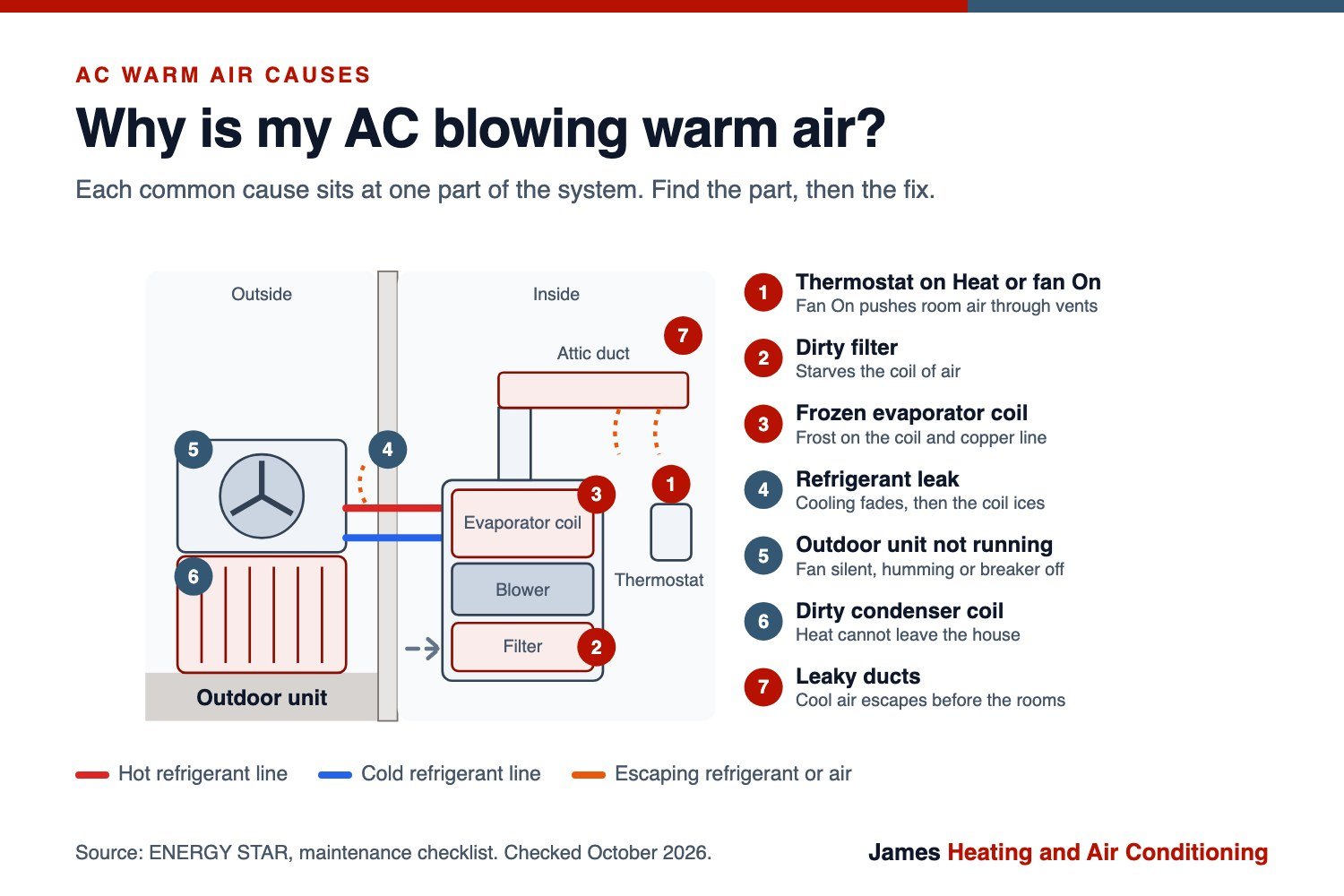
A central air conditioner pulls heat out of your house at the indoor coil and releases it at the outdoor coil. Leave the thermostat on Heat or the fan on On and room air pushes through your vents. A dirty filter starves the coil of air, and a frozen coil blocks it. Low refrigerant from a leak stops the coil from absorbing heat, and a silent outdoor unit stops the whole cycle. We check the thermostat first, we test the outdoor unit last, and we inspect the refrigerant side only after the airflow checks pass, because the first causes cost you nothing to rule out.
What should I check first when my AC blows warm air?
Check the thermostat, the filter, the outdoor unit, and then ice and the breaker, in that order.
You need a flashlight and ten minutes. We run the same four checks on a service call.
- Thermostat. Confirm it reads Cool, not Heat or Fan only. Set the fan to Auto, because On runs the blower constantly and pushes room-temperature air through the vents whenever the compressor is off. That feels exactly like a broken AC. Drop the setpoint five degrees below the room temperature. We replace dead batteries before we test the thermostat’s call for cooling. We check the fan setting before anything else.
- Filter. Pull it out and hold it to a light. If you cannot see light through it, replace it. We apply the same test, and we replace any filter that blocks the light. ENERGY STAR covers filter care in its maintenance checklist, which says to inspect, clean or change air filters monthly.
- Outdoor unit. Stand near it. Is the fan spinning? Does it hum? Is grass, a fence or a shrub within a couple of feet of it? We inspect that clearance on every outdoor unit we visit.
- Ice and breaker. Look at the indoor coil access and the thick copper line for frost. Check the breaker and the disconnect box beside the outdoor unit. We check both before we open any panel.
If you find ice, switch the thermostat to Off, set the fan to On and let it melt. Do not chip it. Follow the step-by-step frozen evaporator coil thaw. A breaker that trips once can be reset once. If it trips again, leave it off. The next question covers what a silent outdoor unit means.
Is my outdoor unit running when the air is warm?
Stand beside the outdoor unit and listen, because a silent unit and a running unit point to different causes.
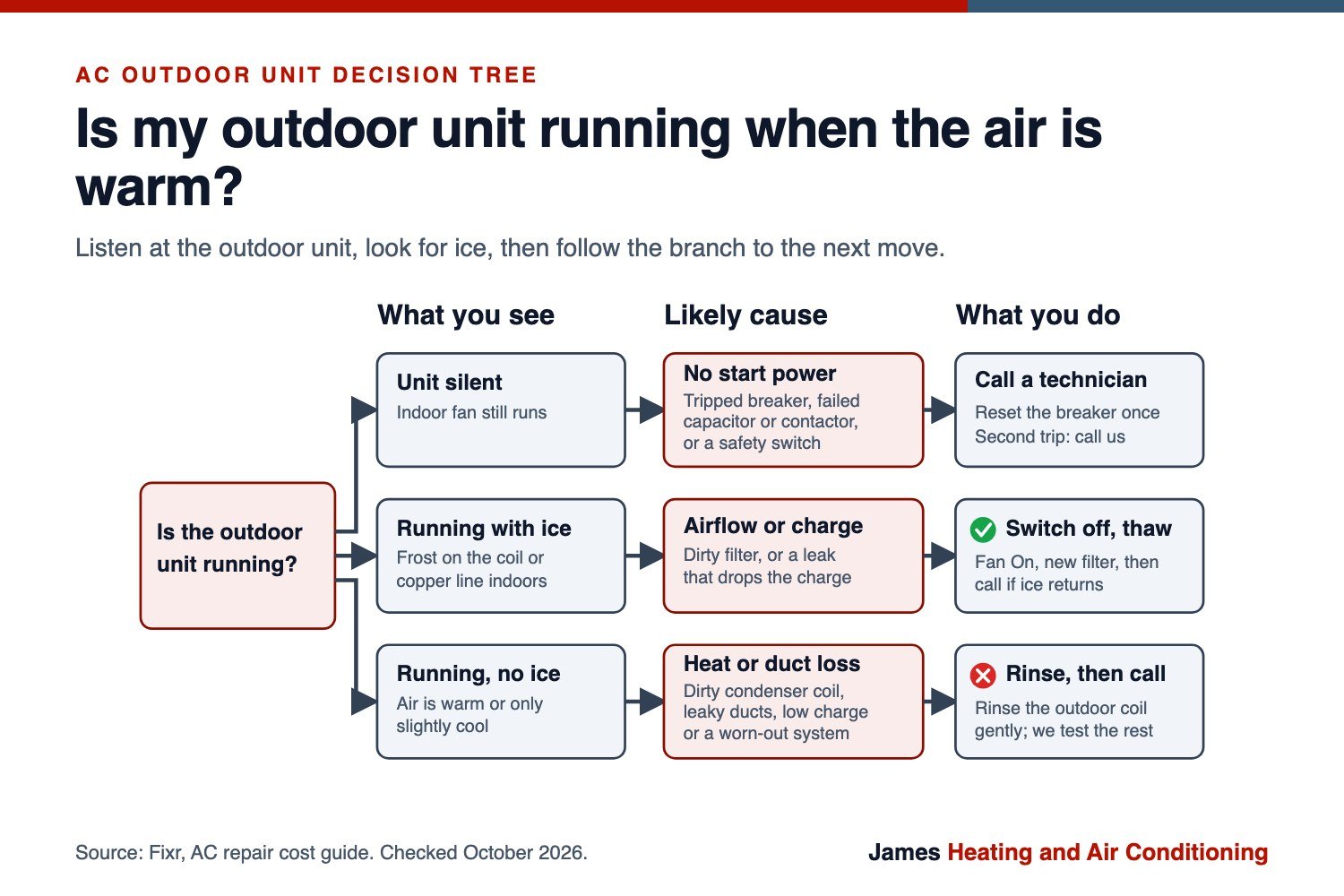
- Silent unit, indoor blower running. The compressor and condenser fan are not getting power or not starting. A tripped breaker or disconnect, a failed capacitor, a worn contactor or a safety switch can each cause it. We check for power at the disconnect before we blame a part. The capacitor helps start the fan and compressor motors, and Fixr calls its failure one of the most frequent and least expensive AC repairs. If the unit will not start at all, read AC won’t turn on: what to check before you call.
- Running unit with ice on the coil or copper line. Airflow or refrigerant charge has dropped. Thaw it with the steps in the frozen-coil guide, then find out why it froze.
- Running unit, no ice, warm or slightly cool air. The electrical side works, so we test for a dirty condenser coil, leaky ducts, a low charge or a worn-out system. The sections below take each one.
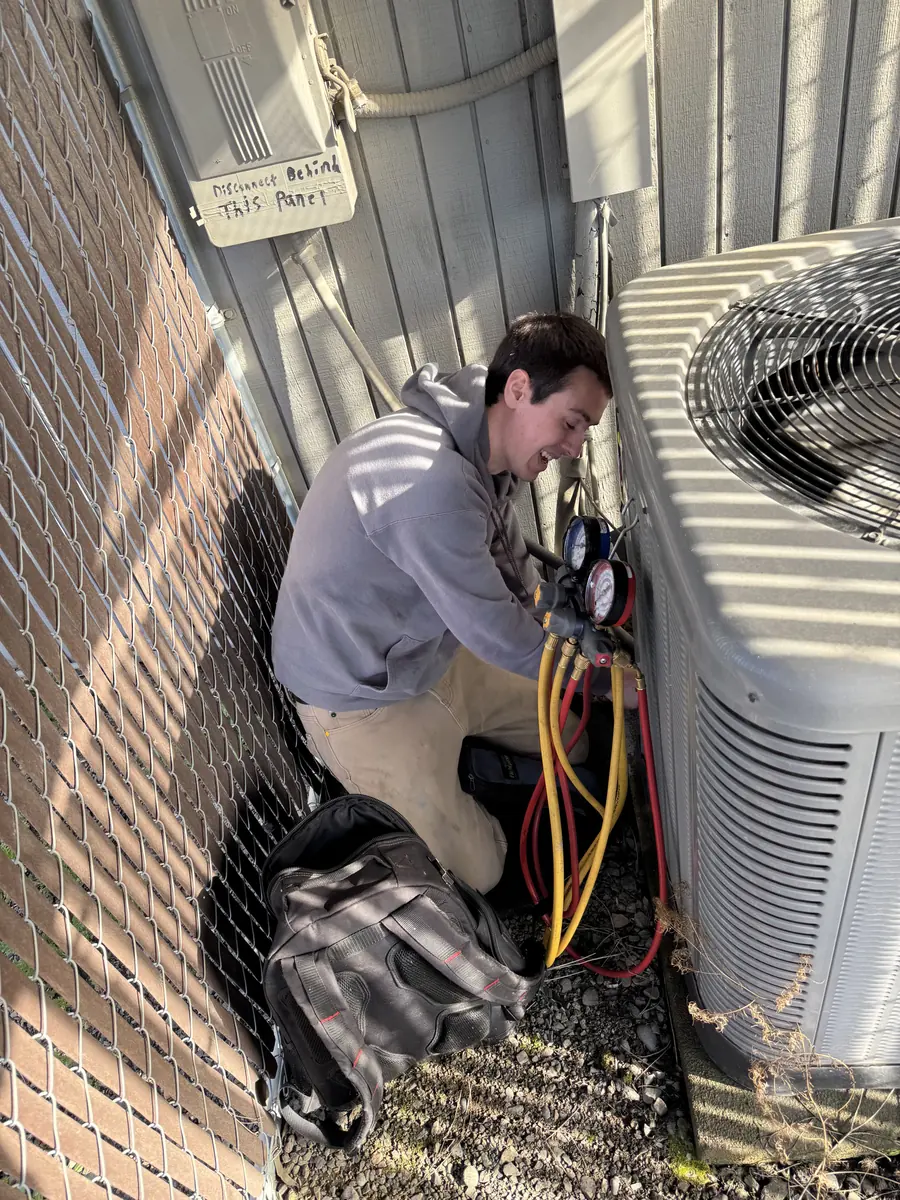
Capacitors, contactors and fan motors carry line voltage, and a capacitor can hold a charge after the power is off. Leave all three to a technician. We test a capacitor before we replace it. If the outdoor unit also rattles or screeches, what your AC noises mean explains the sound.
Can a dirty filter make my AC blow warm air?
Yes. A clogged filter starves the coil of air, so the coil gets too cold, can freeze and then passes little cooling into your house.
We replace a clogged filter and thaw any ice first, and the problem often clears. If the coil keeps icing with a clean filter, we check the refrigerant charge next. Follow how often to change your air filter for the schedule with pets, dust and wood smoke.
Can low refrigerant make my AC blow warm air?
Yes. Low refrigerant weakens cooling and can freeze the coil, and a low charge always means a leak.
Refrigerant is not fuel, and a sealed system does not use it up. Adding more without repairing the leak buys a few weeks of cooling and nothing else. We locate the leak and quote the repair before we recharge. The low refrigerant symptoms guide lists the signs, from hissing to ice.
You cannot legally buy the stuff anyway. The EPA requires a Section 608 certification to buy air conditioning refrigerant, and an employer of a certified technician may buy through an authorized representative, per its refrigerant sales restriction.
The refrigerant type matters for cost. R-22 production ended in 2020, so an old R-22 system gets expensive to recharge. We service R-410A systems, and new residential equipment sold since 2025 uses R-454B or R-32, which are mildly flammable A2L refrigerants that need technicians trained for them.
Why is my AC not cooling like it used to?
A slow fade over two or three summers usually means a dirty condenser coil, a slow leak, leaky ducts or a marginal system.
One that stopped cooling overnight failed. One that lost ground over a few summers wore down. We test the temperature drop across the coil and check the charge to tell which.
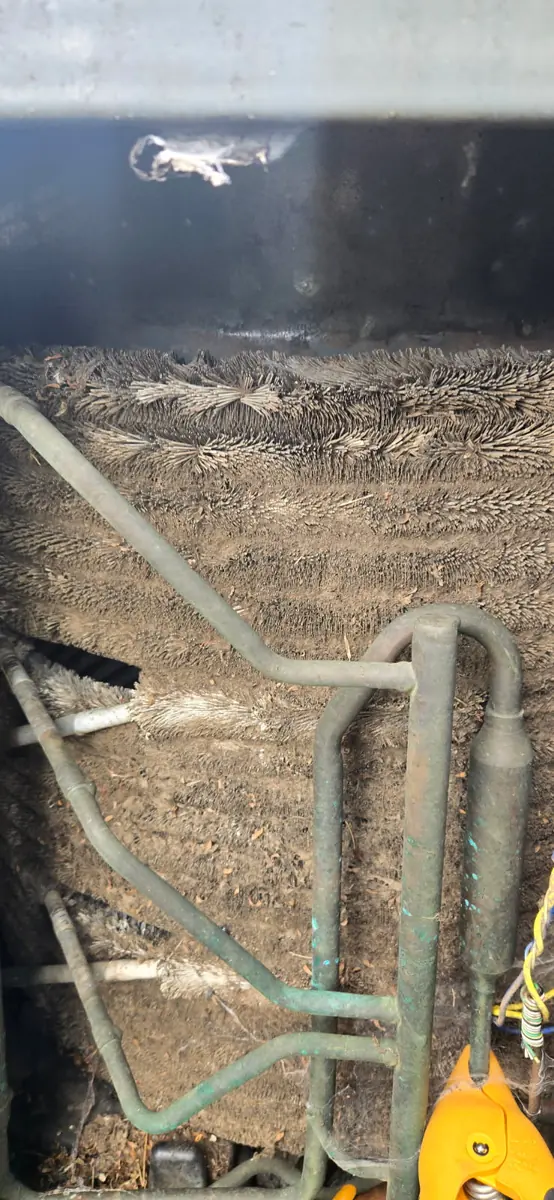
- A dirty condenser coil. The outdoor coil sheds the heat your house gave up. Packed with dirt, it cannot, and the compressor works harder for less cooling. ENERGY STAR covers cleaning both evaporator and condenser coils, and we inspect the condenser fins for packed dirt.
- A slow refrigerant leak. Cooling slips a little each year, then the coil ices on a hot day.
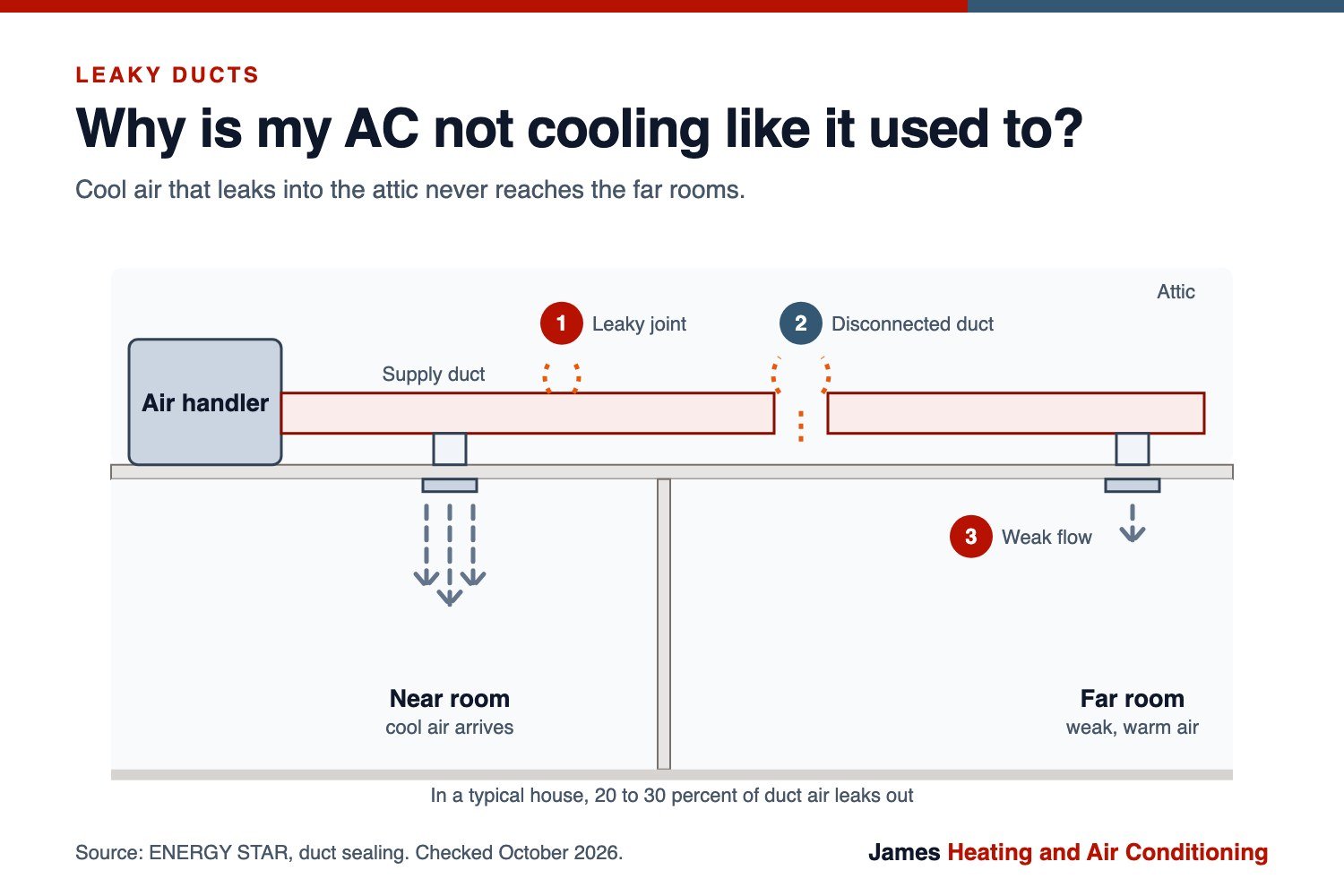
- Leaky or disconnected ducts. ENERGY STAR says about 20 to 30 percent of the air in a typical duct system is lost to leaks, holes and poorly connected ducts. Rooms at the far end get hit first. We check airflow at each register and inspect accessible ducts for loose joints. See uneven cooling in your house and weak airflow from vents.
- A system that was marginal to begin with. Oregon summers are dry and mostly mild, then a heat wave arrives. A unit that holds 75 degrees on an 88-degree afternoon may fall behind at 105. Age and poor original sizing show up on exactly those days.
Duct cleaning is not the fix for any of these. We clean ducts for mold, vermin or heavy debris, and the EPA draws the same line when it says to clean ducts only for mold, vermin or heavy debris, and our post on whether duct cleaning really helps explains when it does.
Why is my heat pump blowing warm air in cooling mode?
Your heat pump blows warm air in cooling mode when the thermostat is on Heat or Emergency Heat, or when the reversing valve is stuck in its heat position.
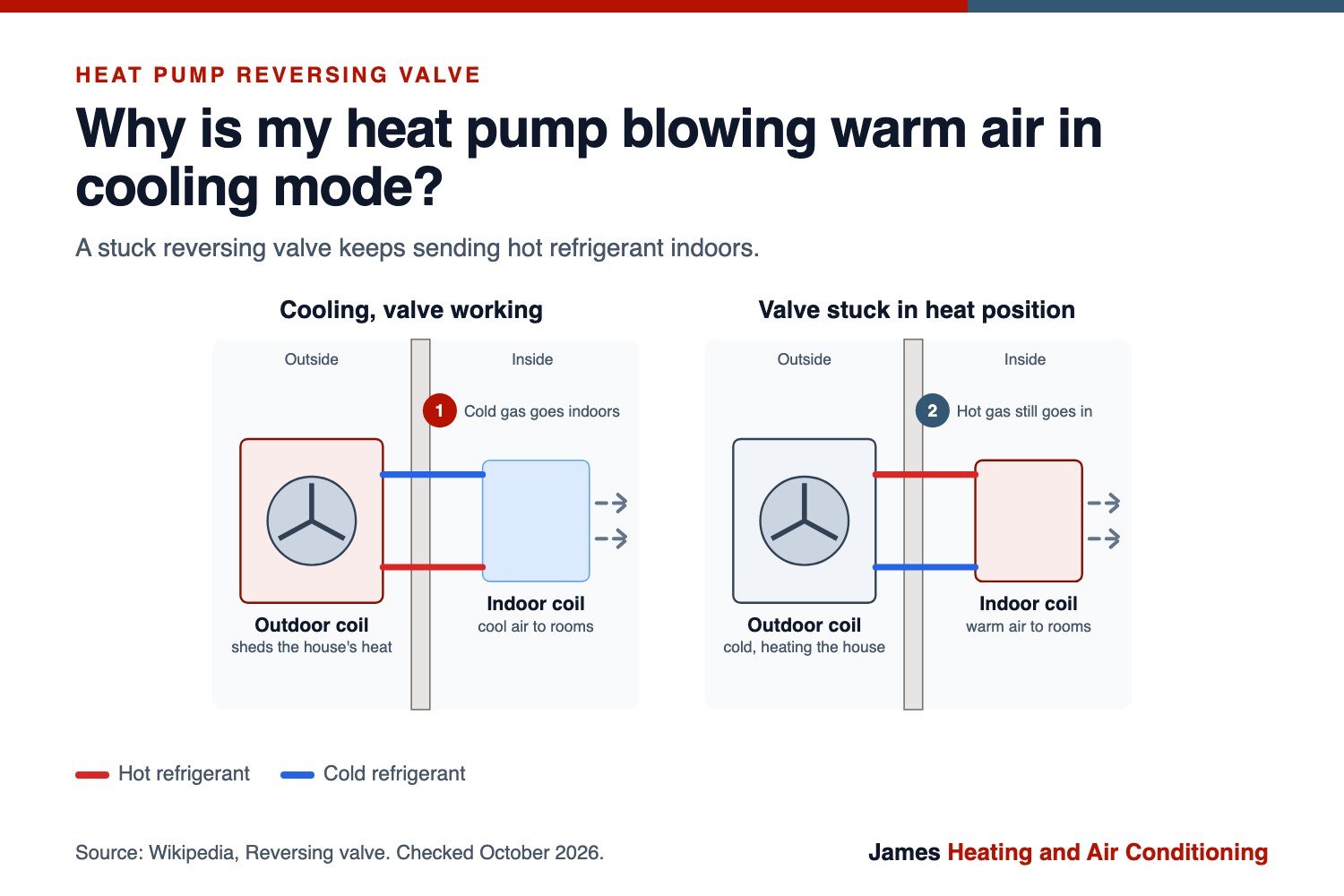
A heat pump cools and heats with the same equipment, and the reversing valve flips the refrigerant flow between the two. We check the thermostat mode first, so switch it to Cool and wait several minutes. If the air stays warm, the valve or its solenoid has likely stuck, so the unit keeps heating even though the thermostat says Cool. Wikipedia notes that a technician must replace a failed valve, and the refrigerant has to be recovered and refilled properly. We test the valve and its solenoid, and we recover the refrigerant before we replace a valve, so this is not a DIY repair.
Is it OK to run an AC that is blowing warm air?
Not for long. Switch the system off if you see ice or the outdoor unit hums without starting, and otherwise run the fan only while you fix the cause.
Continued running can overheat the compressor, the most expensive part to replace. Fixr puts a compressor at $800 to $2,800, against $100 to $400 for a capacitor. We test the capacitor and contactor early on a warm-air call for that reason.
Is an AC that stopped cooling worth repairing?
Repair it when the fix costs less than half of a replacement, and replace it when the repair passes half.
The U.S. Department of Energy’s Building America guide sets that half-the-cost rule for heating equipment, and we apply the same arithmetic to an air conditioner. We check the unit’s age and repair history before we quote either one, so you can hold both quotes against that line. CBS News describes another rule of thumb: multiply the system’s age by the repair cost, and a result above $5,000 favors replacement. If you replace, Oregon requires a mechanical permit for the work, and we pull it as part of the job. The new air conditioner cost guide shows what installation involves, and how long air conditioners last shows where yours sits in its life. Sizing should start with a Manual J load calculation, the ACCA sizing standard, not a swap of the old size.
What does it cost to fix an AC that blows warm air?
Warm-air repairs run from about $100 for a capacitor to $2,800 for a compressor in Fixr’s national guides, and the cause sets the price.
The table pairs each cause with what you notice, whether you can safely handle it, and a national repair range. These are guide figures from Fixr, not James prices. We quote a firm written price after we inspect your home. A diagnostic visit, per Fixr, runs about $75 to $200 and may be credited to the repair, so ask when you book.
| Likely cause | What you notice | DIY-safe? | National repair range (Fixr) |
|---|---|---|---|
| Thermostat on Heat or fan On | Room-temperature air, compressor silent | Yes | None |
| Dirty filter | Weak airflow, long run times, sometimes ice | Yes | Filter only, no service call |
| Frozen evaporator coil | Frost on lines, water dripping, weak or warm air | Thaw only | Coil cleaning $100 to $400; replacement $600 to $2,000 |
| Low refrigerant (a leak) | Slow loss of cooling, hissing, ice | No | $200 to $1,600 for leak repair and recharge |
| Failed capacitor | Outdoor fan or compressor will not start, humming | No | $100 to $400 |
| Worn contactor | Outdoor unit will not start or will not stop | No | $150 to $400 |
| Failed condenser fan motor | Compressor runs, fan does not spin, unit overheats | No | $200 to $700 |
| Dirty condenser coil | Warm air on hot afternoons, high run times | Light rinse only | Written quote |
| Leaky or crushed ducts | Weak flow, hot rooms, dust | No | Air duct repair $500 to $2,600 |
| Worn-out or undersized system | Cannot keep up on the hottest days | No | Compressor alone $800 to $2,800 |
| Heat pump stuck in heat mode | Warm air in cooling mode | Check mode only | Written quote |
Which part failed, the warranty, the refrigerant type, access to the coil or motor and the hour of the call all move a price within a range. Warranties often cover parts but not labor. We show you the failed part or the test reading and write the price before we start. If a quote arrives without a diagnosis, ask for one.
Who do I call when my AC blows warm air?
Call the office that covers your town, any hour, because we answer emergency calls around the clock.
Run the four checks first. Ice, a repeat breaker trip, a burning smell or a hissing line mean you should switch the system off and call us, and we dispatch emergency calls around the clock. For Eugene, Springfield and Lane County, call (541) 461-2101. For Salem, Keizer and Marion County, call (503) 581-9982. We handle air conditioning repair across both areas under Oregon CCB license 47396.
FAQ
Why is my AC not cooling even though it is on?
The compressor may not be running, or the coil cannot absorb heat. Check for a thermostat set to Fan or Heat, a clogged filter, ice on the coil and a silent outdoor unit. If those are clear, we test for a failed capacitor, a refrigerant leak or a dirty condenser coil next.
Does the fan setting On make my AC blow warm air?
Yes. On runs the blower constantly, so it pushes room-temperature air through the vents whenever the compressor cycles off. Set the fan to Auto and the air turns cool during each cooling cycle. We check the fan setting first on every warm-air call and test the cooling cycle after.
Can I add refrigerant to my AC myself?
No. The EPA requires a Section 608 certification to buy air conditioning refrigerant. A low charge also means a leak, and we repair the leak first.
Why does my AC blow warm air only on the hottest days?
A marginal system runs out of capacity first. Dirty coils, a slow leak, leaky ducts or an undersized unit show up when a heat wave pushes the load past what the system can handle. We test the temperature drop and the charge to find which.
How do I know if my AC capacitor failed?
Suspect it when the indoor blower runs and the outdoor fan or compressor will not start, or hums without starting. We test the capacitor before we replace it, and you should leave the replacement to a technician.