






Some rooms stay hot because not enough cool air reaches them, through leaky or overlong ducts, a missing return, attic heat or a badly placed thermostat. The air conditioner itself works fine in most of these homes. Airflow is the problem. Call us at (541) 461-2101 in Eugene and Springfield or (503) 581-9982 in Salem and Keizer, and we’ll check where the airflow is going.
James Heating and Air Conditioning, Oregon CCB #47396 and in business since 1983, diagnoses room-to-room comfort problems in Eugene, Springfield, Salem and Keizer homes. We service ducted systems and we install ductless heat pumps. We quote the fix that suits your house, not the one that costs the most.
Why is one room in my house always hotter than the others?
One room runs hotter when it gains heat faster than the ducts deliver cool air, and where that room sits shows you the cause. Find your pattern in the table, then follow the row across.
| What you notice | Likely cause | First thing to try | Call a technician when |
|---|---|---|---|
| Whole upstairs hot, downstairs cold | Heat gain through the roof plus one thermostat downstairs | Close blinds, run the fan On | Upstairs still runs warm at night |
| One far room, end of the duct run | Long run, leaks, or a weak branch | Open the register fully, check the filter | Airflow is faint even with the system running |
| Bonus room over the garage | Hot garage below, thin attic insulation above, long flex duct | Block sun, check the register | Room never cools after dark |
| One room hot, one nearby cold | Unbalanced dampers or too little return | Open the door, feel for air under it | Door open fixes it (a return problem) |
| Rooms hot only on sunny afternoons | West-facing glass | Shade the window | Equipment runs nonstop and still falls behind |
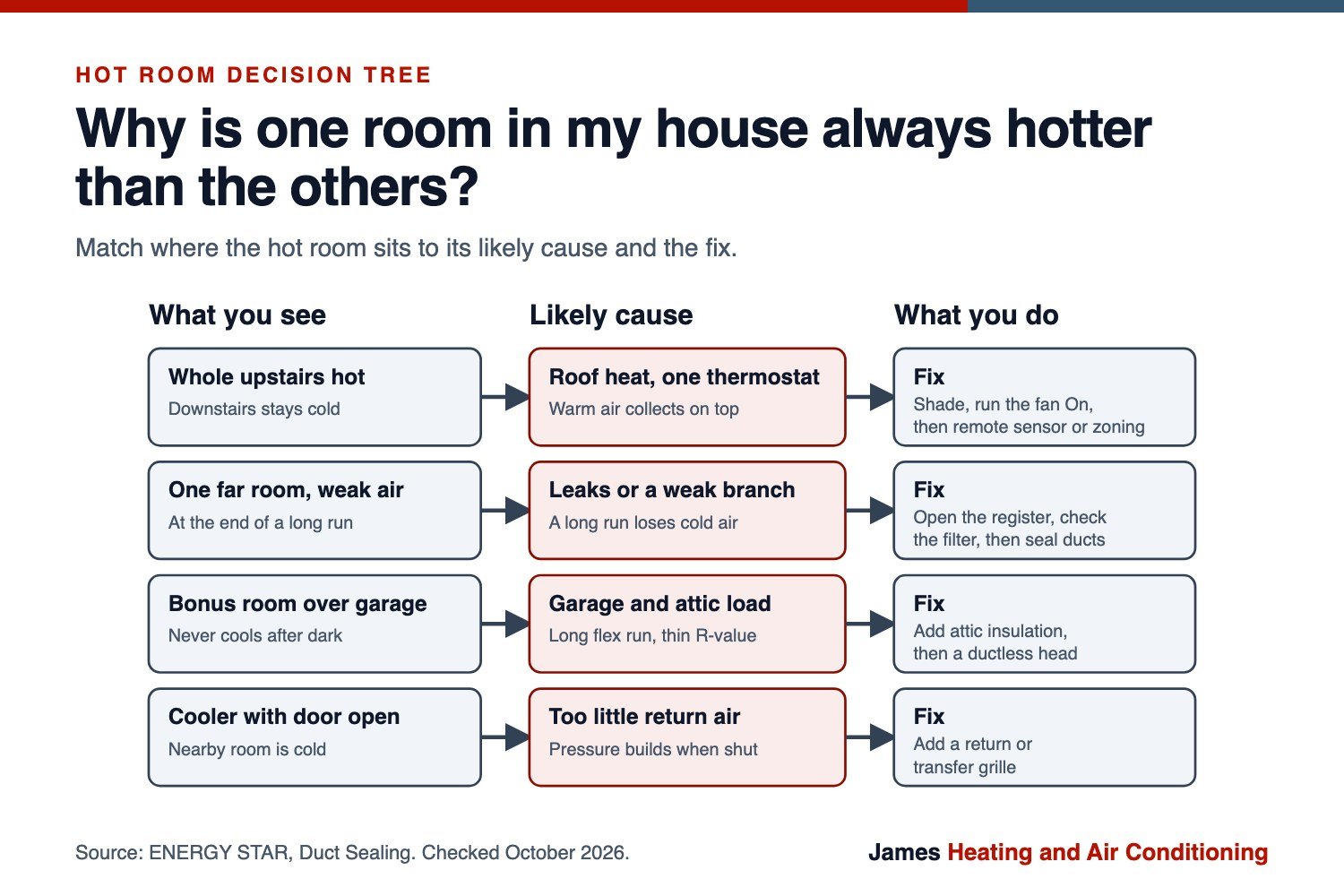
We run every room-to-room call the same way: which pattern fits your house? Our technicians check the upstairs pattern first, because most two-story owners ask about it. It is the common one. We test the other four rows the same way. Same steps.
Why is my upstairs so much hotter than downstairs?
Your upstairs runs hotter because it sits under the roof and a single downstairs thermostat shuts the system off before the bedrooms cool down.
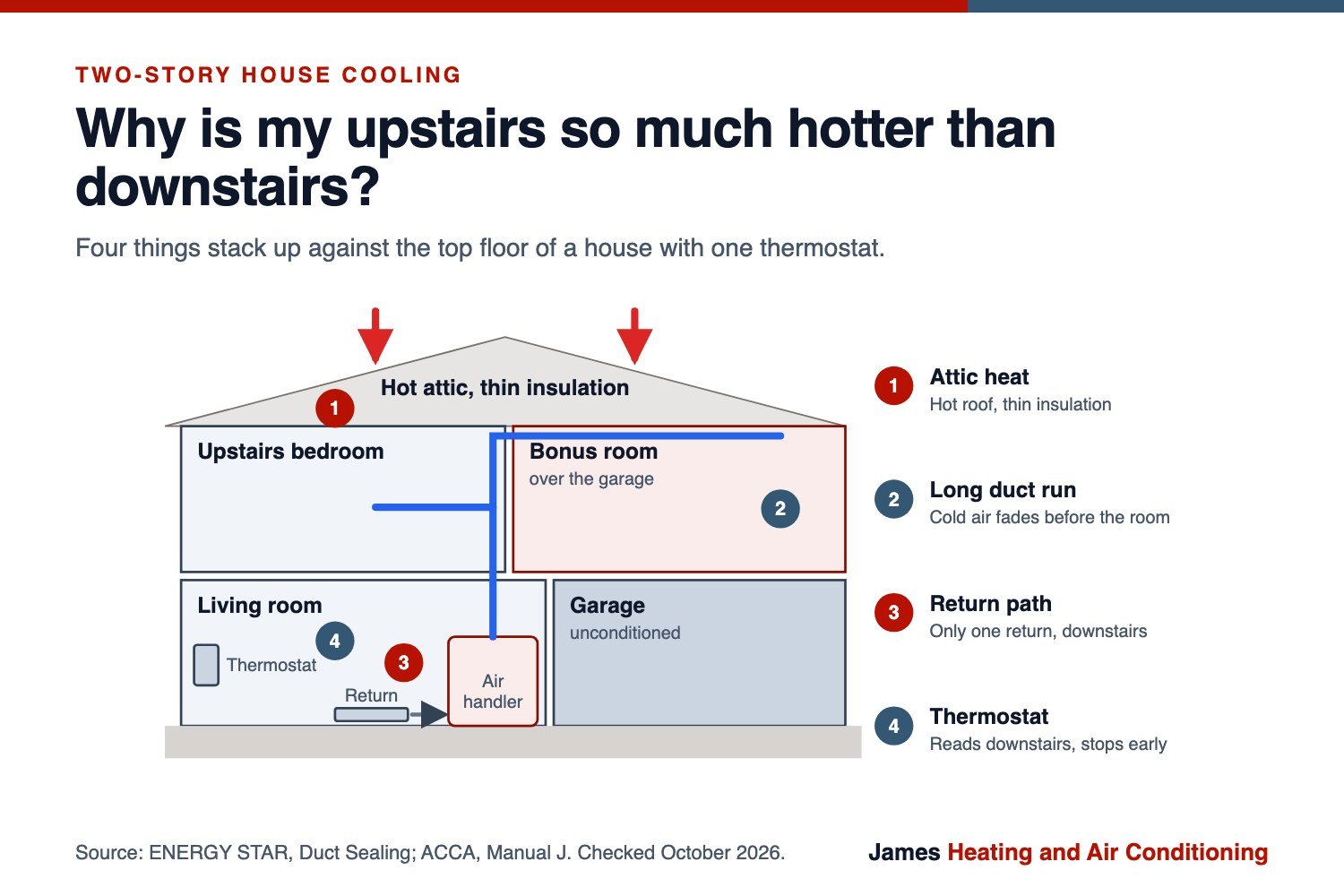
Warm air rises, so the upper floor collects heat from the house and from the attic above it. In summer your cold supply air sinks, so the downstairs overcools while the bedrooms lag. The thermostat sits on the main floor in most homes. It reads a comfortable downstairs, ends the cycle and never sees the bedroom heating up at night. That is the gap. Our technicians check the reading against a second thermometer upstairs.
The ducts add to it. Supply air for the upstairs travels the longest run, through the attic in many houses, and loses cold on the way. If the only return grille sits downstairs, your upstairs air has no easy path back to the blower. We check each of those four spots, from the attic runs down to the thermostat, before we recommend a fix. We inspect the attic runs first, because they carry the longest load.
Sizing matters on top of that. Oversized equipment cools the thermostat’s zone fast, shuts off and never mixes the house. Undersized equipment can’t hold on a hot afternoon. ACCA’s Manual J load calculation is the standard for sizing, and we size equipment against it. Ask whoever installed your system whether anyone ran one for your house.
A bonus room over the garage gets all of this plus a harder problem underneath it.
Why is the bonus room over my garage always hot?
A bonus room over a garage stays hot because it sits between a hot attic and an unconditioned garage, at the end of a long flex duct.
The garage floor and the roof both trade heat with your room, and sun on west-facing glass adds to the load. At the end of a long flex run, the supply can’t keep up. Close the blinds before the afternoon heat arrives, check that the register is fully open and see whether the room cools after dark. Our technicians check the same three things, then inspect the flex run. We inspect the garage ceiling too. If it never does, the room’s heat load is bigger than the duct feeding it, and the zoning and ductless options below apply.
Before you spend on that, we inspect the duct itself.
Can leaky or long ducts cause uneven cooling?
Yes. ENERGY STAR covers duct leakage and says about 20 to 30 percent of the air moving through a typical duct system is lost to leaks, holes and poor connections, and it lists rooms that are hard to heat or cool as a classic sign.
Where ducts run matters as much as how tight they are. A duct in a hot attic or a crawlspace picks up heat or dumps cold air into a space nobody lives in. The rooms at the end of a long run get what’s left. Flex duct that sags or kinks in the attic chokes a branch even when nothing leaks, and a choked branch can look exactly like a weak system from the room at the end of it. We inspect those runs. We seal the leaks we find and we repair sagging or kinked flex runs. If your whole house feels weak rather than one room, start with weak airflow from vents, which shows where ducts leak in a crawlspace.
Design is the other half. ACCA’s Manual D is the residential duct design standard, and it sizes each duct to the airflow its room needs. If someone finished a room or added one after the system went in, nobody may have run those numbers. We recommend sizing each branch against Manual D when a room has been added. Cleaning won’t fix that; the EPA recommends duct cleaning only for mold, vermin or heavy debris.
We test each branch with an airflow meter before we touch a duct. A sealed, well-sized duct still needs air to come back, which is the next suspect.
Can a closed door or a missing return make one room hot?
Yes. A bedroom with the door shut and no return grille or transfer grille builds up pressure, and the supply airflow into that room drops.
The test is simple. Doors matter. If your room cools better with the door open, the return path is the problem, and we’d add a return or transfer grille. Balancing dampers sit on branch ducts and trim the air each room gets. They get set once, by guess, and never revisited. Our technicians test airflow at each register. We reset the dampers so over-cooled rooms give some air back to the hot ones, and we check the return path at the same visit.
Sometimes the airflow is right and the room is still hot, because it gains heat faster than anyone planned for.
Can attic insulation and west windows make one room hot?
Yes. A room under a thin or compressed attic blanket gains more afternoon heat than the room next door, and west glass adds sun on top.
DOE’s insulation guide explains R-value as resistance to heat flow: the higher the R-value, the less heat gets through. Fix the load first. Added attic insulation and shaded west windows help no matter what the system does, and neither touches the ducts. We inspect the attic run at the same time, because insulation that covers a duct changes how that duct behaves. We check the insulation depth over your room. Then your ducts and your thermostat only have to cover the heat that remains. That order saves money.
Speaking of the thermostat, it decides when the system stops, and its location can fool it.
Does thermostat placement cause uneven cooling?
Yes. A thermostat in direct sun, over a supply register or in a hallway that never changes misreads your house and ends cooling cycles too early.
On a two-story house the single thermostat usually sits on the main floor, so it measures the cool floor rather than the hot one. A remote sensor in the upstairs bedroom is one way around it. Moving the thermostat to a typical living space, away from sun and registers, is another. We check where it sits on every comfort call. We test the reading against a separate thermometer in the hot room, and we recommend a new spot when the sun or a register skews it.
If you’d rather test the cheap causes first, we use this order.
What can I check myself before I call?
You can run four free checks in about an afternoon, and they sort out a surprising number of hot rooms. We run the same four at the start of a visit. Do them in this order.
- Open every supply register fully. Furniture, rugs and drapes block more of them than people expect.
- Check the filter. A clogged one cuts airflow to the whole house, and the far rooms lose first. If your whole house feels weak, start with weak airflow from vents.
- Set the thermostat fan to On for a day. The blower then runs continuously and mixes air between floors. It uses more electricity. Treat it as a test, not a fix.
- Shade the hot room. Close blinds on sun-facing glass before the afternoon heat arrives, not after.
Skip the closed-vent trick. It backfires. Shutting registers in cold rooms can raise pressure in the ducts and push more air out of the leaks, so close one or two at most. If your room is still hot after all four, the fix needs a change to the system.
Will zoning or a mini split fix a hot room?
Zoning fixes floor-against-floor problems when your ducts are sound, and a ductless head fixes one stubborn room the ducts can’t serve.
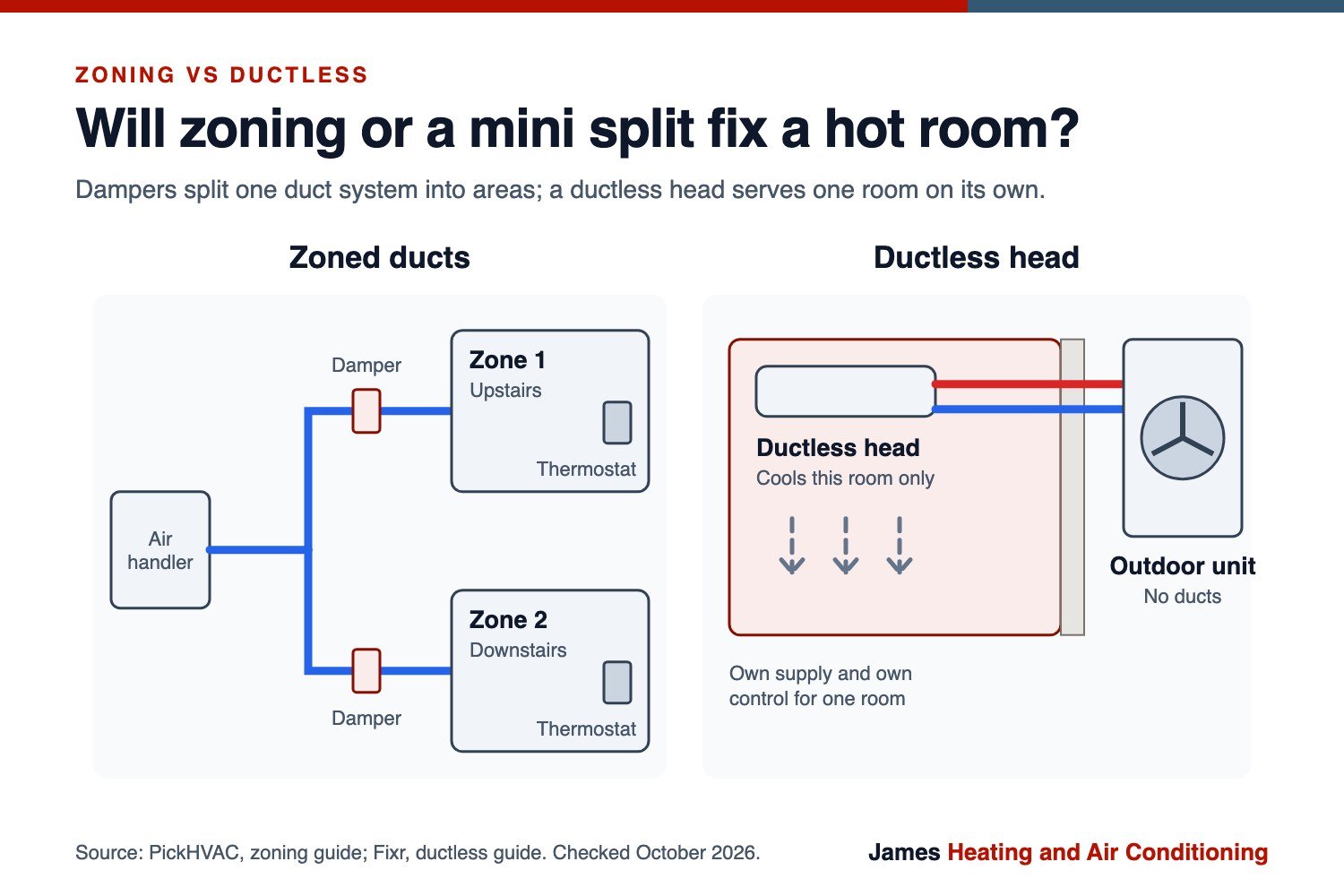
Zoning adds motorized dampers and a control board, so each area gets its own thermostat. The dampers open and close the branch to each zone while one blower and one set of ducts serve both. It works well when the problem is the upstairs against the downstairs and your existing ducts are sound. Leaky or undersized ducts still need repair first, so we check duct condition before we recommend zoning.
A ductless head adds cooling without touching the ducts. Your bonus room or converted garage gets its own air supply and its own control, and we install ductless heat pumps for exactly that job. We pull the permits a ductless install requires. We quote both options side by side, so you see when zoning is the cheaper answer.
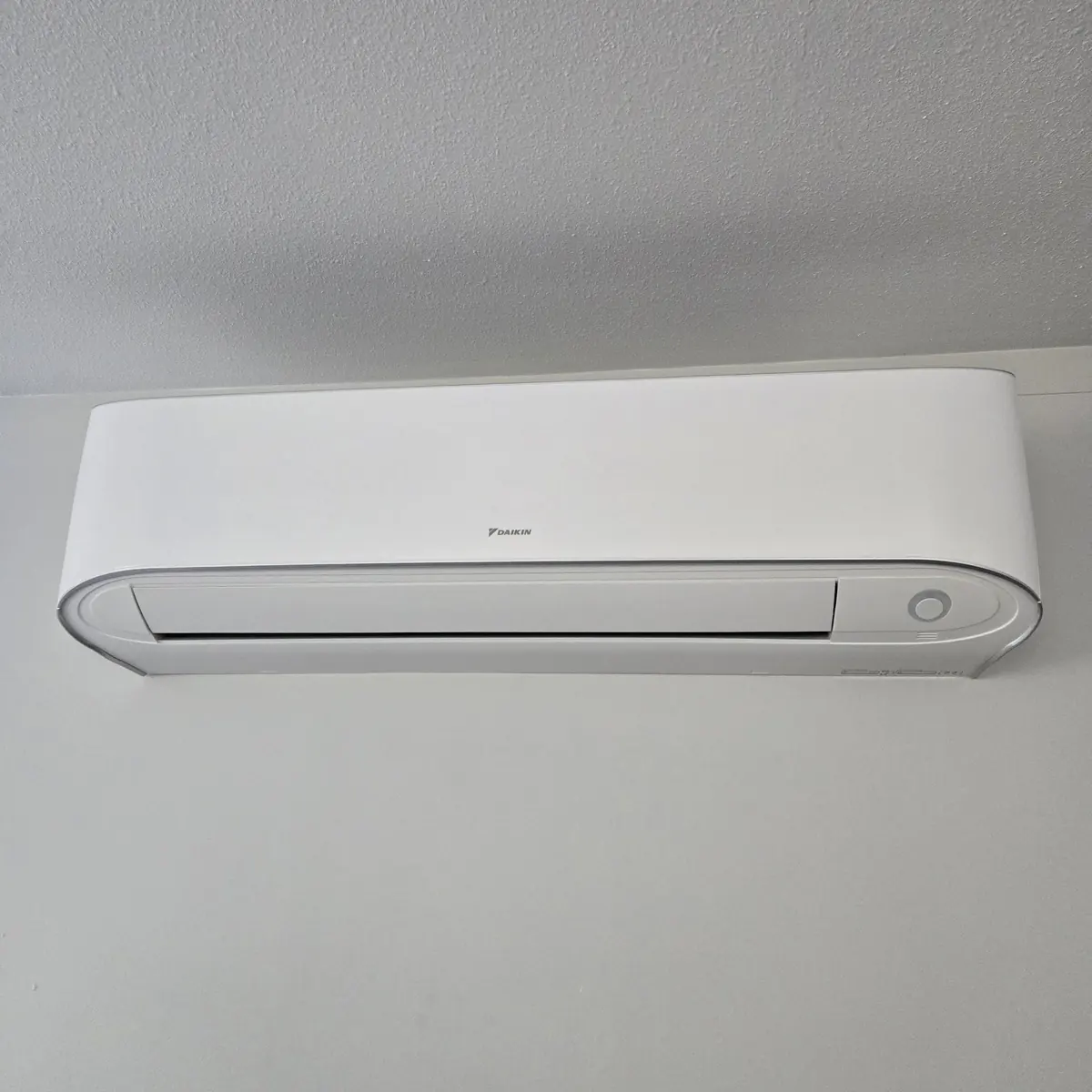
Read what a mini split is, with pros, cons and cost, then weigh mini split vs central air for the rest of your house. On the ducted side, our duct and ventilation services cover leak repair and airflow work. Which option fits depends on what each one costs.
How much does it cost to fix uneven cooling?
Fixes run from free to a few thousand dollars, and a ductless head sits at the top of that range. Costs below are national and regional guide ranges, not James quotes. You get a firm price after a visit. We quote each fix separately, so you can compare.
| Fix | Typical cost | Source |
|---|---|---|
| Open registers, filter, blinds, fan On | $0 to the price of a filter | n/a |
| Manual duct sealing, whole house | $300 to $1,800 (average $800) | PickHVAC, May 2026 |
| Aeroseal duct sealing, whole house | $800 to $3,800 (average $1,800) | PickHVAC, May 2026 |
| Zoning retrofit, 1 to 2 zones, existing ducts | $800 to $2,400 (average $1,500) | PickHVAC, May 2026 |
| Ductless head for one problem room | $2,000 to $5,000 | Fixr, January 2026 |
PickHVAC’s duct sealing figures assume a 1,500 to 2,500 square foot home with standard access. Balancing dampers and adding a return grille usually run small next to these, though no neutral guide we checked prices them on their own. We quote them in writing before we start. Ask any contractor for the number before you agree to the work.
When should I call a technician?
Call when your room stays hot after the four checks, the system runs nonstop, or one branch has almost no airflow.
Our technicians test supply and return airflow. We inspect the attic runs, we check sizing and we handle the repair, instead of guessing at one fix after another. We quote the price before we start, whether the answer is a duct repair, a return, a damper reset or a ductless head.
Frequently asked questions
Why is one room in my house always hotter?
Most often it’s the end of a long duct run, a leaking or kinked branch, no return path, or heavy sun on that room. The table above sorts them by symptom, and we test each branch to find yours.
Why is my upstairs so much hotter than downstairs?
The upstairs sits under the roof and gets the most attic heat, while a single downstairs thermostat shuts the system off before the bedrooms cool down. We check the attic runs and the thermostat first.
Should I close vents in the rooms that are too cold?
Close one or two at most. Shutting more raises duct pressure and can push more conditioned air out through leaks.
Will zoning fix uneven cooling?
Yes, if the ducts are sound and the problem is one floor or area against another. We check the ducts first, because leaky or undersized ducts need repair before zoning.
Can a mini split fix a hot room?
Yes. A ductless head cools that room on its own, which suits a bonus room or addition the ducts can’t reach well. We install ductless heads for exactly those rooms.
How do I balance airflow in my house?
Open all registers, set branch dampers so hot rooms get more, and confirm each room has a return path. Our technicians balance the dampers so each room gets its share.
Get the hot room measured
If the checks above don’t settle it, call us at (541) 461-2101 for Eugene and Springfield, or (503) 581-9982 for Salem and Keizer. We check airflow at the rooms that run hot or cold. Our technicians diagnose whether it’s a duct fix, a return or a ductless head, and we quote it before we start. For broader system questions, see HVAC diagnostics and repair.