


Commercial Duct Cleaning in Eugene & Salem, Done Around Your Hours
James Heating & Air Conditioning cleans the ducts in offices, clinics, schools, shops, restaurant dining rooms and rental buildings across Eugene-Springfield and Salem-Keizer. A walkthrough comes first, then a written scope that says what we'll clean, what we won't and how the work fits your schedule.
Commercial duct cleaning services we provide
We clean the trunk lines, branch runs, return grilles and air handler blowers that serve a working building, and our technicians inspect each system first so the scope fits its access and its hours. A clinic, a church hall and a duplex each get a different plan.
Offices and professional suites
We clean office suites, small office buildings and houses converted into offices. In many drop-ceiling offices the air returns through the open space above the tiles rather than a duct, so we clean the return grilles, the air handler and the supply runs.
Retail shops
A door that stays open all day pulls in street dust and the valley's late-spring grass-seed pollen. We clean both out of the supply runs, and right after a remodel is a good time to call, before the contractors' dust settles in.
Restaurant dining rooms
James Heating cleans the heating and cooling ducts that serve your dining room and front of house. Tell us when you book which ducts feed the dining room, so the scope stays on that system and away from the kitchen exhaust.
Churches and halls
A hall's system sits idle most of the week and runs hard for one or two big gatherings, so dust settles in the ducts and blows out when the fan starts. We service halls on a weekday, so the building stays clear for gatherings.
Rentals and duplexes
We clean single-family rentals and duplexes in the empty weeks between tenants, when no one has to work around furniture or a daily routine. It's the easiest time to reach the registers and returns in each room.
Small apartment buildings
Whether each unit has its own furnace or several units share one system, we clean unit by unit or at each move-out. A small building with many systems can run over several visits, planned so tenants aren't left without heat.
When we recommend cleaning a commercial system
NADCA, the duct cleaning trade association, recommends inspecting commercial air handlers, supply ducts and return ducts once a year, then cleaning only when that inspection turns up a reason. We inspect on the same yearly rhythm, and we'll tell you when a cleaning can wait.
- Wait if the only dust is on the face of a grille. A damp cloth handles that.
- Hold off if a calendar reminder is the only reason.
- Look for water first if a musty smell hasn't been traced, such as a wet drain pan under the coil.
No study the EPA cites shows that duct cleaning prevents health problems, so we don't sell it as a health fix. Stale or smoky indoor air comes down to fresh-air supply and filtration, which our ventilation and indoor air quality work addresses.
Signs we look for in a commercial duct system
These six turn a yearly inspection into a cleaning. The first three are the EPA's own reasons to clean, and the rest come from how buildings get used.
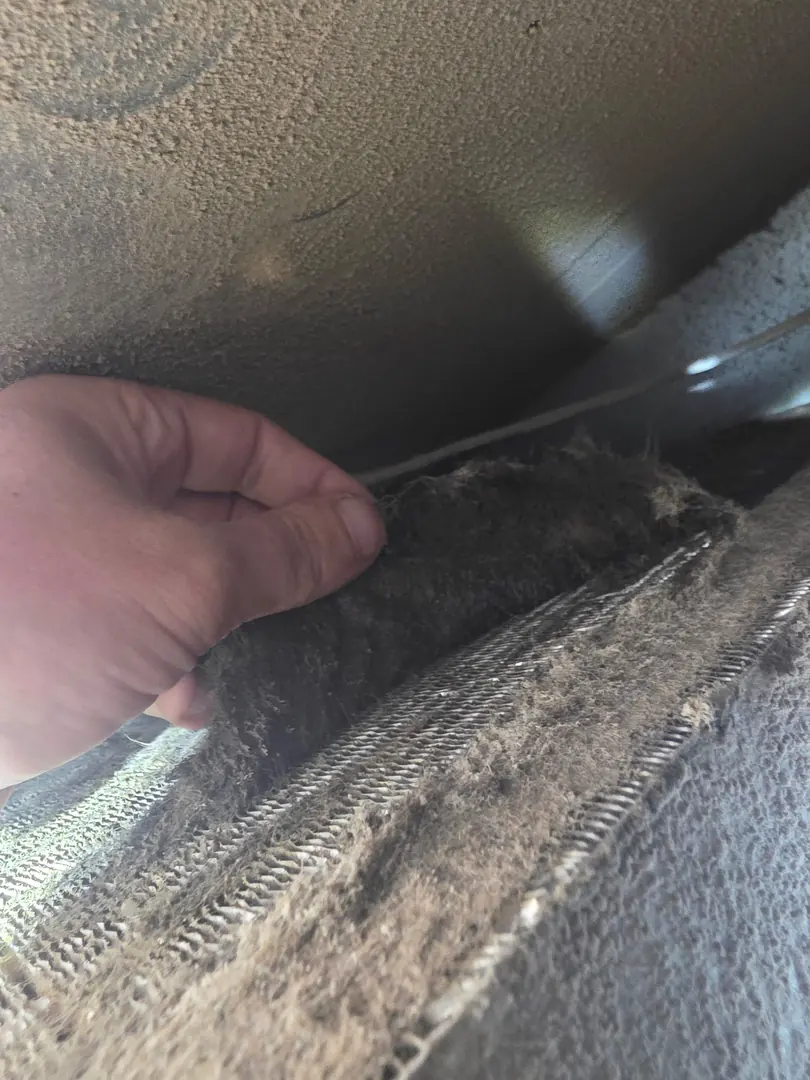
Dust from the registers at startup
When the air handler kicks on and a puff of dust leaves the supply registers, the ducts are shedding into the space your staff or tenants breathe. We check for it at the walkthrough.
Droppings or nests in the system
Rodent debris in a duct, a return plenum or the air handler cabinet calls for a cleaning once the entry point is closed. We check where they got in and mark it, so your maintenance crew can seal it.
Mold on metal duct or the coil
Growth on bare metal or around the cooling coil means water, such as a blocked drain pan or a duct in a damp crawlspace. We clean metal duct after the moisture is fixed, because otherwise the growth comes back.
Dust from a remodel or build-out
Drywall and sanding dust from a tenant improvement lands in the nearest returns. A cleaning right after the contractors leave clears it before staff or tenants move back into the space.
Heavy smoking or pets at move-out
A tenant who smoked indoors or kept several pets can leave residue and odor in the supply runs. The turnover window is the time to deal with it, before the next lease starts.
Soot or ash after a smoke event
After a heavy wildfire-smoke week, put fresh filters in first. If the inspection then finds soot or ash inside the ducts, a cleaning is justified, while a faint smell on its own seldom is.
What we clean and what we leave to other trades
A commercial building has more than one air path, and not all of it belongs to a duct cleaner. We put this split in writing before the job starts.
Supply and return ducts, registers and grilles
Who handles itWe clean them
WhyThe core of the job, done under negative pressure
Air handler, blower and coil
Who handles itWe clean them where they can be reached
WhyThey sit in the same air path as the ducts
Ceiling-plenum return (open space above drop-ceiling tiles)
Who handles itNo one cleans it like a duct
WhyWe clean the return grilles and the equipment instead
Wet or moldy fiberglass-lined duct
Who handles itReplaced, not cleaned
WhyThe EPA says it can't be cleaned well; you get photos and a repair quote
Kitchen hood and grease exhaust
Who handles itAn exhaust-cleaning specialist
WhyFire code NFPA 96 governs it, and it's a trade we don't do
Rooftop unit repairs and service
Who handles itOur commercial HVAC technicians
WhyWe service them on separate commercial HVAC service visits
How we plan for medical offices, schools and childcare
Clinics, schools and childcare buildings get the same cleaning as any office. The planning starts earlier, because patients, children and staff can't simply move to another room.
- Timing. Ask for a closed day, an evening or a school break, and we'll plan the work so nobody is in a room while its registers are open.
- Your rules in the scope. Your facility manager tells us what the building requires, such as a clinic's infection-control steps, and we write it into the scope before work starts.
- Room order. We agree in advance which rooms come first, and our crew seals off sensitive areas while the work goes on.


How we schedule around your business and tenants
Small offices, shops and single rentals can fit in one visit, while bigger buildings go one system or one floor at a time. The walkthrough settles how many visits yours needs.
- Restaurants. We clean dining-room ducts between services or on a day you're closed.
- Rentals. Between tenants is easiest, since no one has to be notified or work around us.
- Occupied units. Oregon's ORS 90.322 requires a landlord to give tenants at least 24 hours' notice and to enter at reasonable times. A written repair request from the tenant lets the landlord enter without further notice for seven days.
- Your notice. Our office sends you an arrival window to put in the tenant notice.
This is general information, not legal advice.
How our commercial duct cleaning process works
Each job runs on a plan you've seen in writing.
- Walk the building. We inspect the systems, registers, air handlers and filters, and find how the ducts are reached.
- Write the scope. You get a written plan of what gets cleaned, what doesn't, when, and the price.
- Set up. Drop cloths go down, registers get covered and a vacuum holds the ducts under negative pressure.
- Clean the runs. Rotary brushes or air whips loosen the dust while the vacuum pulls it out.
- Clean the equipment. We clean the air handler, blower and coil, and flag a failing motor or loose duct for a separate diagnostic visit.
- Check and record. We inspect the cleaned runs and photograph them for your file.
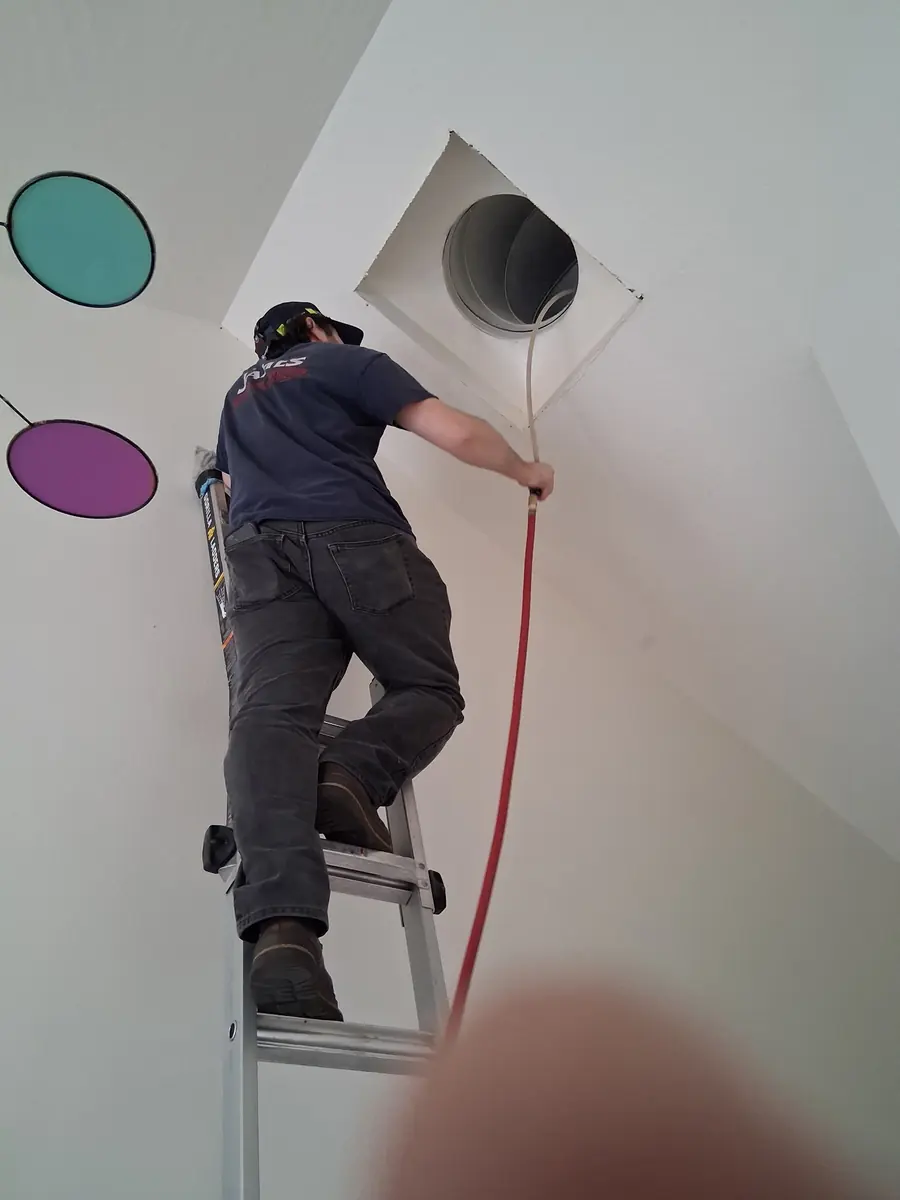
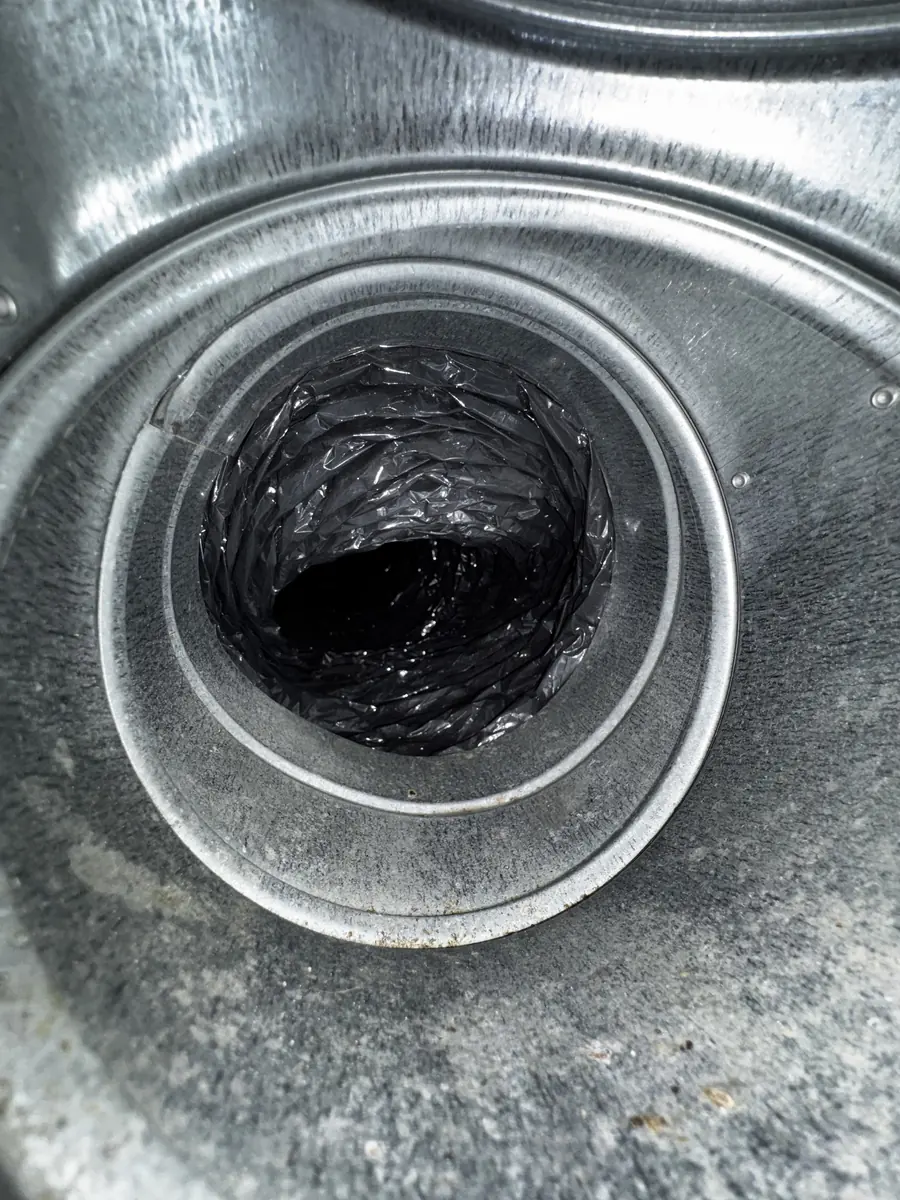
What our job report gives you
Ask us for a written record that you, a property manager or an insurer can check later. NADCA's commercial checklist tells owners to expect post-project records like this, along with a written work plan and Safety Data Sheets for any chemical used.
- Before-and-after photos for each system
- What we cleaned and what we left out
- Anything we found, such as disconnected or crushed duct, moisture, rodent entry points or damaged liner
- The filter size and rating we fitted
Why property managers choose us for commercial duct cleaning
James Heating repairs and services heating and cooling equipment as well as cleaning ducts, so a loose run or a tired blower motor gets noticed on the same visit.
- A walkthrough before a price. You see the written scope and the total before any work is booked.
- No routine fogging. A sanitizer goes in only for a reason, such as rodent debris, and only one labeled for that duct type.
- Licensed, bonded and insured under Oregon CCB #47396, and family-owned since 1983.
- Lines that answer 24/7. James Heating answers emergency calls day or night, when a building's heating or cooling fails.

Commercial duct cleaning questions
What is commercial duct cleaning?
Commercial duct cleaning removes built-up dust and debris from a building's supply and return ducts, registers, grilles and air handlers. Unlike a house, where home air duct cleaning deals with one or two systems, a building may have several systems, rooftop units and ceiling returns, so the job starts with a walkthrough rather than a phone quote.
What does commercial duct cleaning cost?
We quote it after the walkthrough, since a two-system office and a 40-unit apartment building aren't the same job. The number of systems, the registers and length of duct, access through ceilings, attics, crawlspaces or the roof, the amount of debris, after-hours or phased visits and occupied units all move the number. NADCA publishes no commercial prices and tells owners to define a scope instead.
Can my business stay open while the ducts are cleaned?
Usually, yes. We clean in phases, before opening, after close or on a weekend when you ask, and only the system being cleaned goes offline. Covered registers keep dust out of the rooms still in use.
Is a landlord required to clean air ducts in Oregon?
No. Oregon has no duct-cleaning law for rentals. ORS 90.320 requires a landlord to keep the heating in good working order, and any ventilation or air conditioning the landlord supplies in good repair, and a dated cleaning record helps show it. None of this is legal advice.
Do you clean restaurant kitchen hoods?
No. Hoods, grease ducts and rooftop exhaust fans are cleaned to bare metal by exhaust-cleaning specialists, on a schedule set by cooking volume and enforced by the fire marshal. We clean the dining room's heating and cooling ducts, which are a separate system.
How do we keep the ducts cleaner between cleanings?
Filters do most of the work. Change them on the schedule your filter type calls for, and sooner during pollen season, smoke events and remodels, using the highest MERV rating the system was built for, since too fine a filter can choke the airflow. Keep return grilles clear of stored boxes, and give single-family rentals a yearly tune-up so the furnace side stays clean too.
Our commercial duct cleaning service areas
Call the office nearer your building. Each one runs its own crews and phone line.
What our customers say
"Thank you for the Prompt attention given to the installation of the new furnace at my office. I appreciate the workmanship that was given to this installation."
G. English Jr.
"We appreciate your courteous and prompt service, it is so reassuring to know that we can depend on you to help us if we have problems."
The Richmonds
Gallery
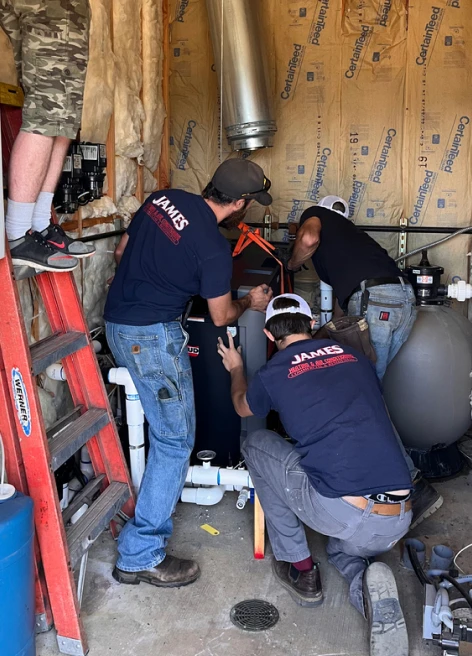
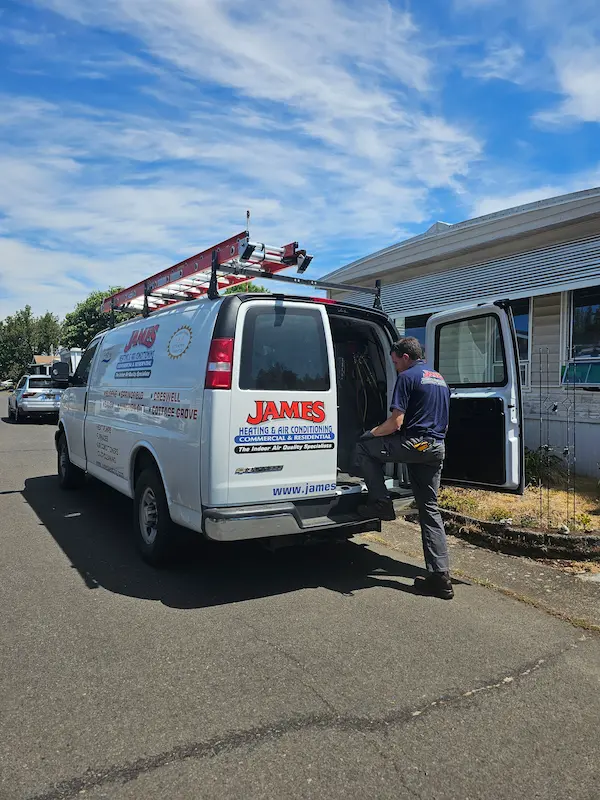
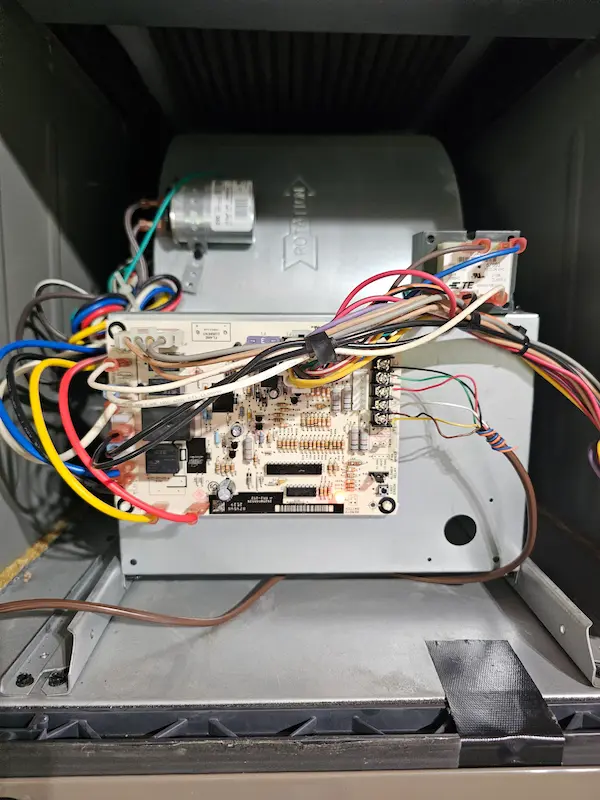
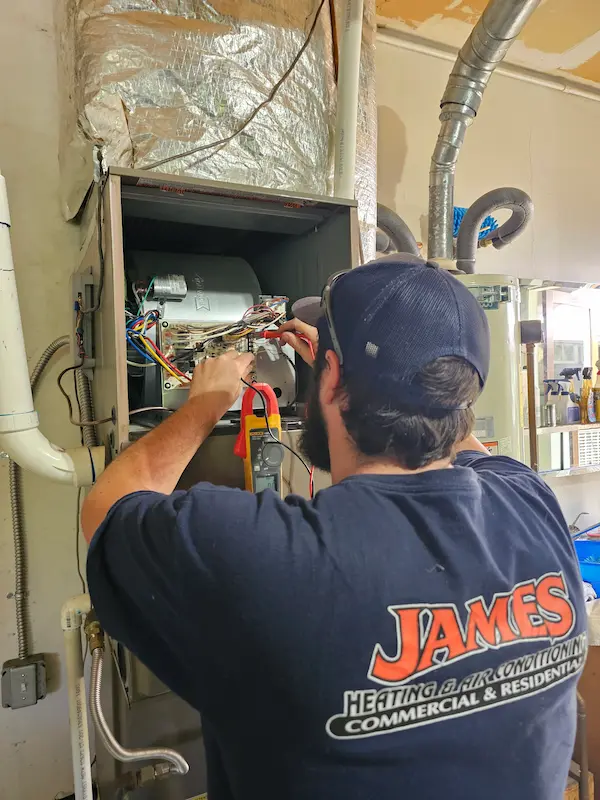
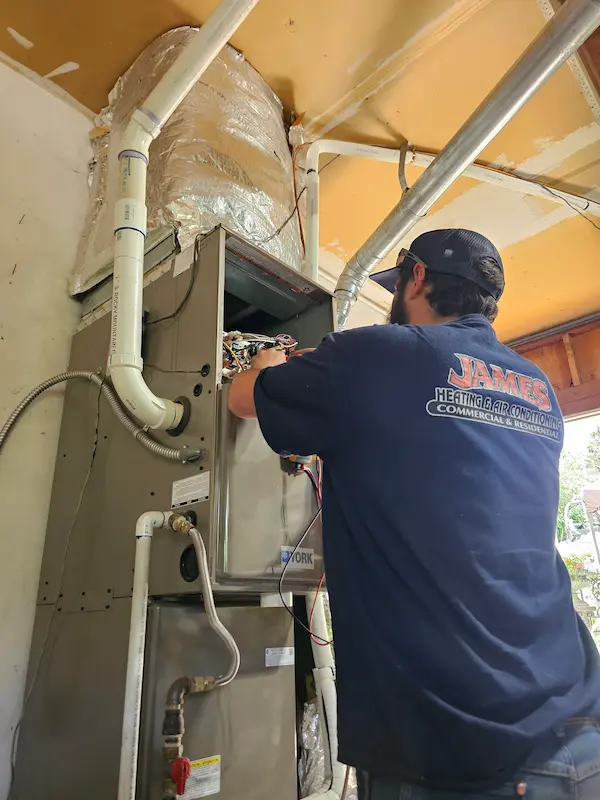
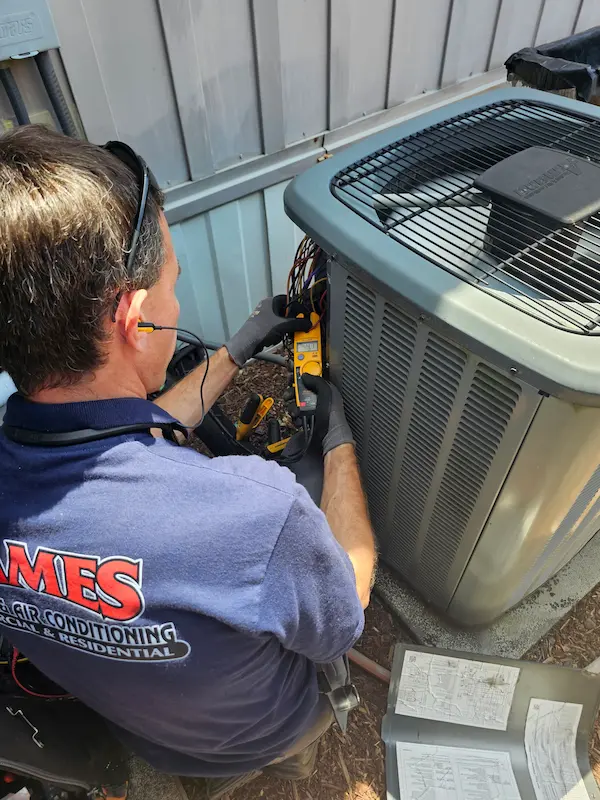
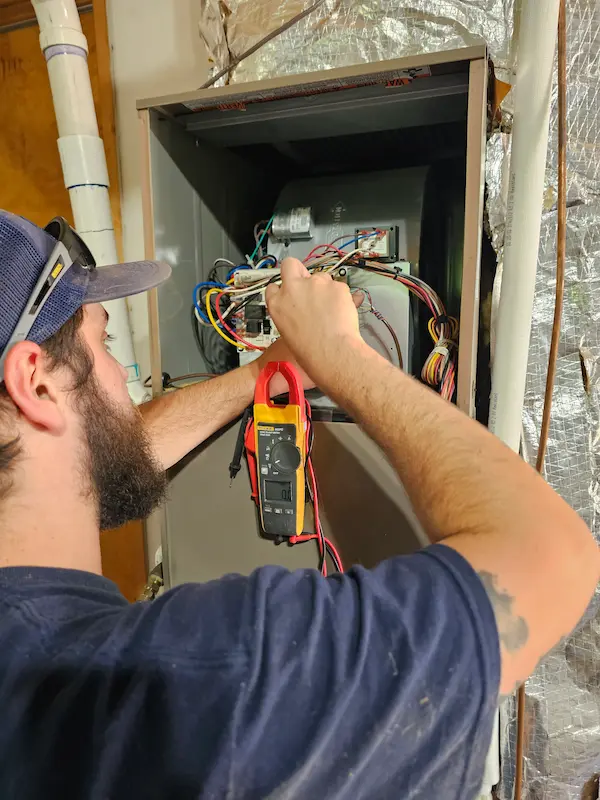
See James Heating and Air Conditioning at work. Explore our gallery of residential and commercial HVAC installations and repair services.

Book a commercial duct cleaning walkthrough
Tell us the building type, how many systems or units it has and what prompted the call, and we'll set up a walkthrough. Call Eugene at (541) 461-2101 or Salem at (503) 581-9982, or send us a message.
Call Eugene at (541) 461-2101 or Salem at (503) 581-9982.
Oregon CCB #47396 · Family-owned since 1983 · Licensed, bonded and insured