






Usually not, if you want routine upkeep. The EPA says duct cleaning has never been shown to prevent health problems and recommends it only for visible mold, vermin or heavy debris. We quote a cleaning when one of those shows up and tell you to skip it when none does. Call (541) 461-2101 in Eugene and Lane County, or (503) 581-9982 in Salem and Marion County.
What does the EPA say about duct cleaning?
The EPA says duct cleaning should happen only as needed, not on a schedule, because it has never been shown to prevent health problems.
The EPA’s page on whether to have your air ducts cleaned explains why. Much of the dirt in a duct sticks to the duct surface and does not necessarily enter your living space. The EPA finds no evidence that a light amount of household dust in the ducts poses a risk to your health. It sees little evidence that cleaning only the ducts improves system efficiency.
That cuts against a lot of marketing. A cleaner who promises fewer allergies or a lower power bill is promising something nobody has demonstrated. James Heating and Air Conditioning cleans ducts in Eugene, Springfield and Salem under Oregon CCB #47396. We check for the EPA’s triggers before we quote a cleaning, and we tell you plainly when none of them is present. Which situations does the EPA say are worth the money?
When is duct cleaning worth it?
Duct cleaning is worth it for substantial visible mold, vermin in the ducts, or ducts clogged with excessive dust and debris, and for little else.
| Situation | Clean the ducts? | Reason, per the EPA | Do this first |
|---|---|---|---|
| Substantial visible mold on sheet metal ducts | Yes | EPA lists it as a trigger | Find and fix the moisture source |
| Mold on fiberglass duct liner | Replace, do not clean | Cleaning cannot stop regrowth once liner is moldy | Replace the lined section |
| Rodents or insects living in the ducts | Yes | EPA lists vermin as a trigger | Remove the pests and seal the entry |
| Heavy debris, or dust and particles blowing from registers | Yes | EPA lists clogged ducts as a trigger | Look inside with a camera or open a register |
| Routine “every few years” cleaning | No | EPA: only as needed | Change the filter on schedule |
| Dusty house, registers look clean | No | No proven link to duct contents | Check the filter and the rooms |
| After a dusty remodel | Only if debris is visible | EPA advises sealing registers during the work | Inspect before paying |
| Musty smell, nothing visible | Not yet | Smell alone does not prove mold in the ducts | Inspect ducts, coil and drain pan |
The same EPA page says wet or moldy insulation cannot be cleaned effectively and should be replaced. Moisture is the real problem in that case. Our technicians check each row of that table against what they find in the duct, and we quote only the rows that apply. We check for the water source first, because duct cleaning on top of a damp crawlspace just resets the clock. So how do you find out which row of that table your house sits in?
How do I know if my ducts need cleaning?
You know your ducts need cleaning when a look inside shows mold, droppings or a thick mat of debris, not a thin film of dust.
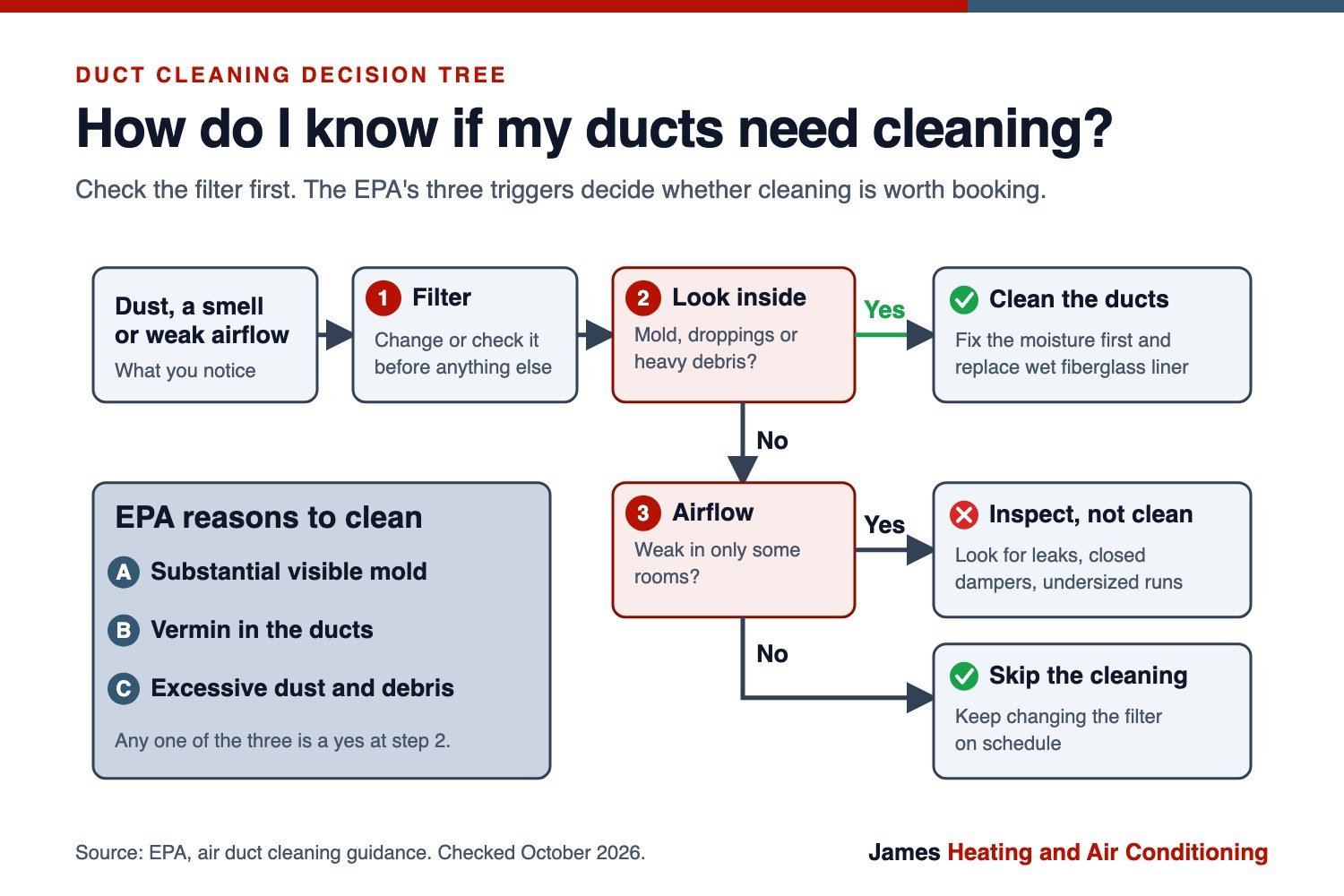
Four steps settle most cases before anyone books a crew.
- Change or inspect the filter. Our technicians check the filter before anything else, because a clogged filter causes weak airflow and dusty registers far more often than dirty ducts do. Set a schedule for how often to change your air filter so it stays off the suspect list.
- Look inside a register. Take off a supply register and shine a flashlight down the duct, or have a technician put a camera in. Our technicians check the run with a camera when a flashlight does not reach. We check for mold, droppings or a thick mat of debris as a yes. A thin film of dust is normal.
- Note which rooms have weak airflow. If one room gets little air, we test for a leak, a closed damper or an undersized run before we blame dust. Start with weak airflow from vents.
- Call us when you see mold or pests. Describe what you saw. We check it against the EPA’s three triggers and tell you whether cleaning, replacement of wet liner or neither fits.
A musty smell with nothing visible is not a yes yet. The smell can come from the coil or drain pan rather than the ducts, so our technicians inspect those along with the ducts. But where inside the system does the stuff actually sit?
Where do debris, mold and pests collect in ducts?
Debris settles inside the duct runs, mold grows where moisture reaches the system, and vermin leave droppings in the runs they get into.
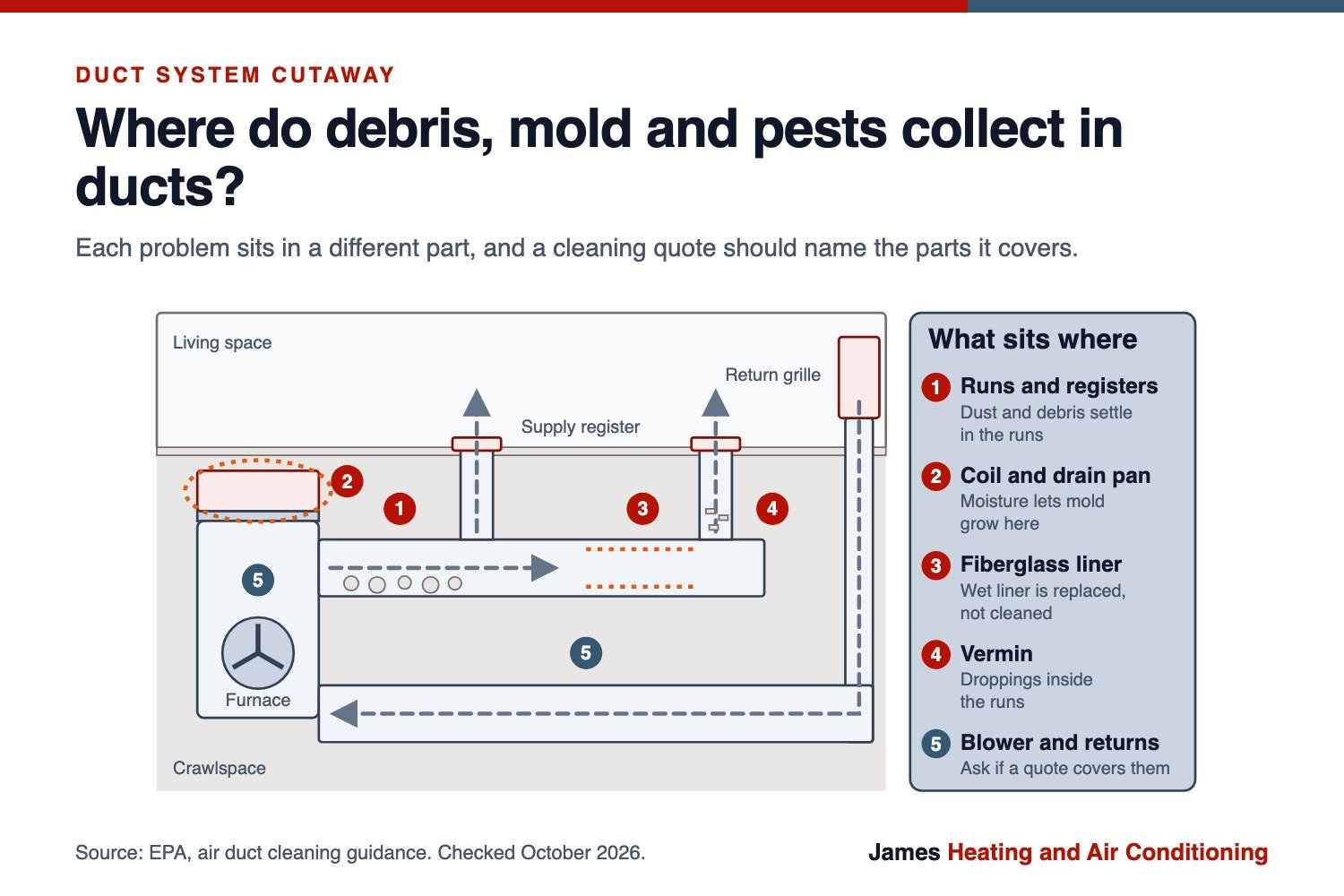
The EPA says moisture should not be present in ducts, because moisture is what lets mold grow. So wet fiberglass liner, a leaking coil drain or a damp crawlspace around the ducts tells you more than a dusty register does. The EPA points to NAIMA’s practice for fiberglass-lined ducts and says wet or moldy liner should be replaced. We inspect the coil, the drain pan and the liner together. Our technicians check the crawlspace runs for damp, and the quote covers only what the inspection finds.
A cleaning reaches the supply runs, the return runs and the registers, and a thorough job also covers the furnace blower and the coil. We cover each of those parts when the inspection shows debris there. Ask any provider whether the quote covers the returns, the blower and the coil. A bargain that cleans only the registers is a bargain on a smaller job.
Is duct cleaning worth it when ducts are full of debris?
Yes, heavy debris is the one case where cleaning clearly earns its cost, and the EPA lists clogged ducts as a trigger.
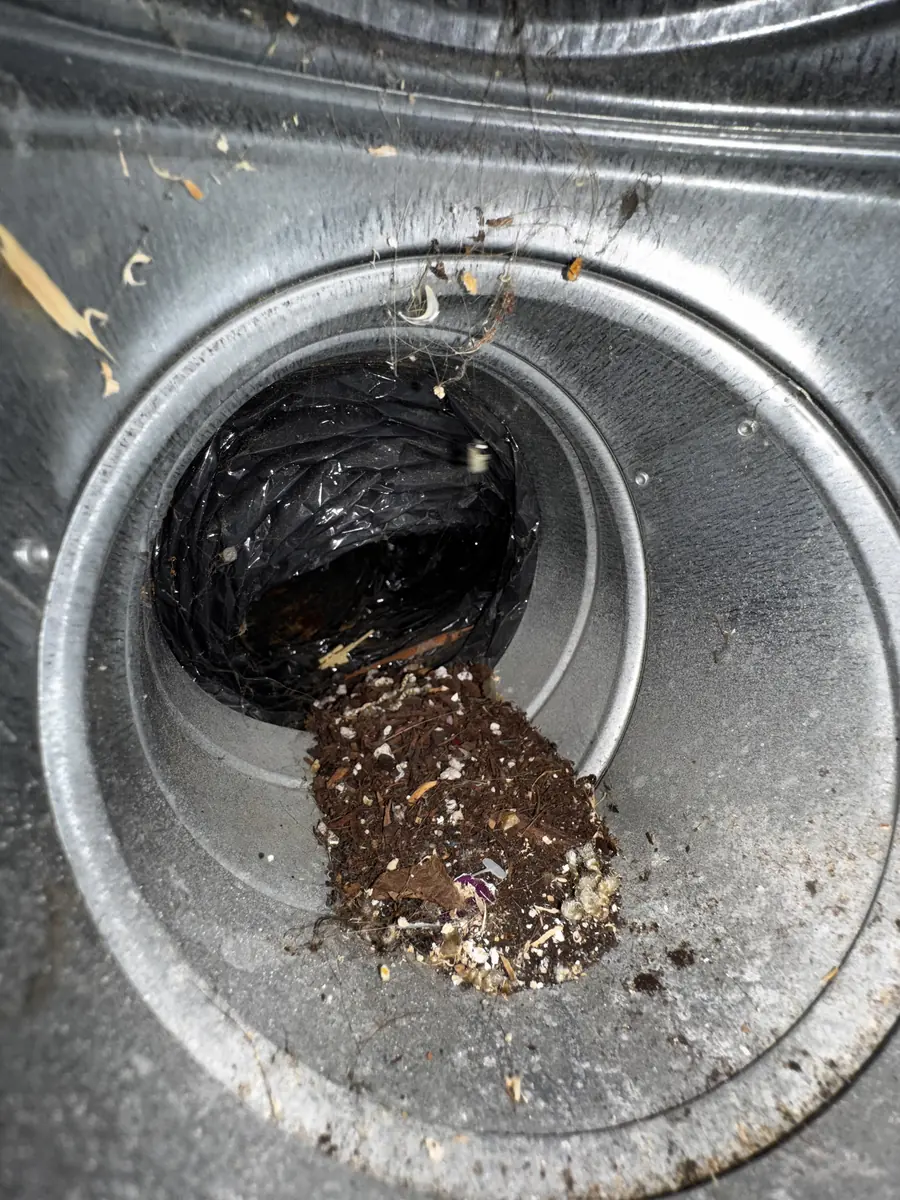
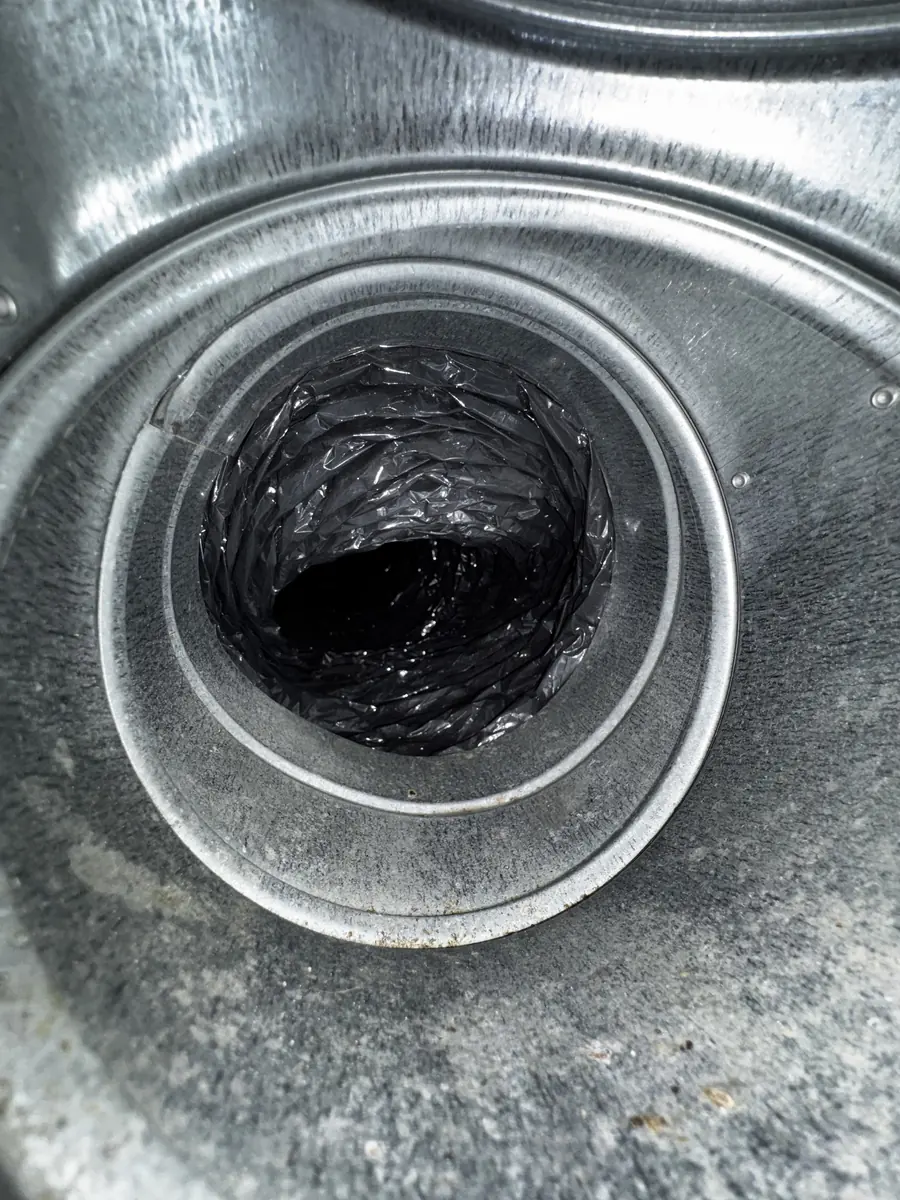
That pair shows what the EPA means by clogged. Wood dust, drywall dust and construction scraps end up inside a system that ran during a remodel. A proper cleaning pulls the debris out through a negative-pressure vacuum while brushes or air tools knock it loose. The EPA warns that an inadequate vacuum collection system can release more dust and dirt into your home than leaving the ducts alone, so ask how the debris leaves the ducts. We check the vent and return count before we quote the job. We inspect the duct before we quote the job.
NADCA, the duct cleaning trade association, publishes ACR, its standard for assessing, cleaning and restoring HVAC systems. The 2025 edition includes two verification checks, the Surface Comparison Test and the NADCA Vacuum Test, so a cleaner can show the work is done instead of asking you to take their word. Does a clean duct also fix weak airflow?
Does duct cleaning improve airflow or lower my energy bill?
Not by itself, because the EPA says little evidence exists that cleaning only the ducts improves system efficiency.
Weak airflow usually has other causes, and cleaning leaves all of them in place. A clogged filter, a closed damper, an undersized run or a leak at a joint each cuts the air that reaches a room. Our technicians check the damper positions. When we trace a weak room, our technicians check the filter, the dampers and the joints before we recommend a cleaning. One of those causes, the leak, wastes a large share of your air. How large?
Is duct sealing better than duct cleaning?
Sealing and cleaning solve different problems, and only sealing closes the leaks that waste about 20 to 30 percent of your airflow.
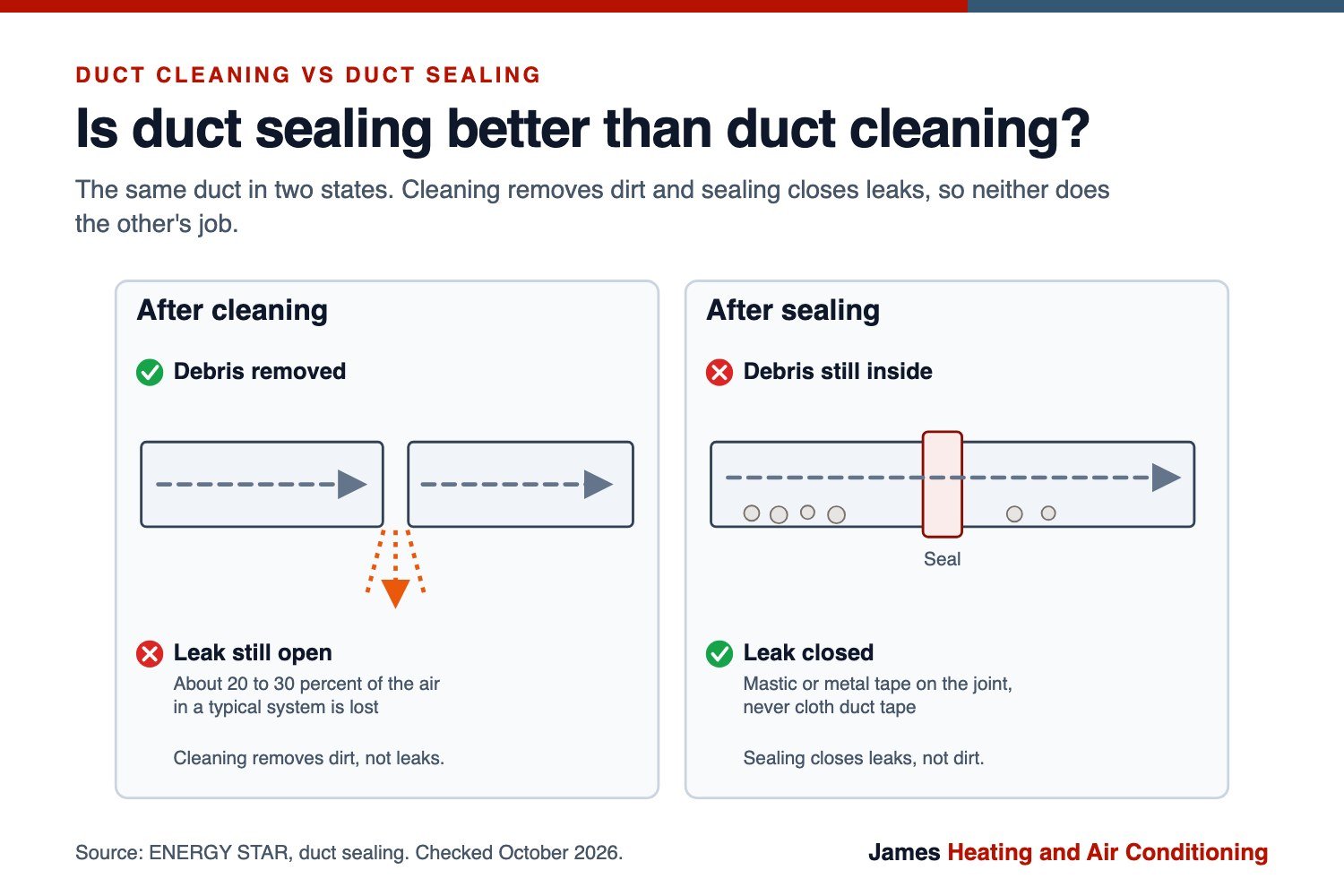
ENERGY STAR says about 20 to 30 percent of the air moving through a typical duct system is lost to leaks, holes and poor connections. Cleaning removes none of that. ENERGY STAR covers sealing materials on its duct sealing page. It rates mastic sealant and metal tape as the right choice for the joints, and never cloth duct tape, because cloth tape does not last. Ducts in a crawlspace or attic matter most, since a leak there dumps conditioned air outside the house or pulls dusty crawlspace air into the system. We inspect those runs for open joints on a system inspection. Our technicians check crawlspace and attic joints for gaps.
If a duct is both leaky and full of debris, you need both jobs. The EPA says sealants should never cover wet liner, active mold or debris, so we clean the debris first and the seal goes on after. Is cleaning at least good for allergies?
Does duct cleaning help with allergies and dust?
Not reliably, because the EPA says duct cleaning has never been shown to prevent health problems and its page links no allergy benefit to clean ducts.
The EPA does say that contaminants like mold may cause allergic reactions or other symptoms in people who are exposed to them. That is a reason to deal with real mold, and we check for it first, not a reason to clean a duct that only holds a light layer of dust. For ordinary household dust, the filter and the rooms do more. We check your filter and your registers before we quote a cleaning for dust alone.
How much does duct cleaning cost?
Most homes pay $300 to $700 in national price guides, and the EPA quotes a typical range of $450 to $1,000 per system.
These are national guide figures, not a James quote. We quote a firm written price after we see the home.
| Item | National range | Source |
|---|---|---|
| Whole house, typical | $300 to $700 | Fixr, Jan 2026; PickHVAC, May 2026 |
| Whole house, 2,000 sq ft average | $500 | Fixr, Jan 2026 |
| Per heating and cooling system | $450 to $1,000 | EPA, Feb 2026 |
| Per supply vent | $25 to $50 (up to $75 per return) | Fixr, Jan 2026 |
| Per vent | $35 to $60 | PickHVAC, May 2026 |
| Dryer vent add-on | about $140 | Fixr, Jan 2026 |
| Dryer vent add-on | $100 to $175 | PickHVAC, May 2026 |
| Mold testing | $150 to $400 | PickHVAC, May 2026 |
| Mold remediation, average | $800 to $2,000 | PickHVAC, May 2026 |
| Sanitizer or antimicrobial add-on | No price in either guide | See the next section |
Price climbs with the number of vents and returns, how hard the ducts are to reach, and how much debris is in them. We cover returns, vents and access in the written quote. If a price looks far below this table, what is the catch?
Is duct cleaning a scam?
The service is real, but low-price offers that jump on arrival are a known scam pattern, such as NADCA’s $79 ad that became $1,200.
NADCA describes the pattern in its guide to duct cleaning scams. The ad quotes $79, the crew finds “mold” in minutes, often after an instant test, and the real price appears. NADCA tells you not to rely on instant mold tests and to require proof of insurance.
The EPA adds its own checks. It tells you to get written estimates from at least three providers, to walk away from anyone making sweeping health claims, and to be wary of anyone who says they are EPA certified. The EPA certifies no duct cleaners. Sanitizers and sealants are the other upsell. The EPA registers no chemical biocides for internally insulated ducts. We put every line of the job in writing. We walk you through the quote line by line, and you can compare it against two others. Does anything about Oregon change the picture?
Do wet Oregon winters or wildfire smoke change the answer?
Yes, wet Willamette Valley winters raise the odds of moisture in the ducts, but wildfire smoke calls for a new filter, not a cleaning.
Mold in ducts needs water. The EPA covers moisture as the key risk factor. Around Eugene, Springfield and Salem that usually means a damp crawlspace, a clogged condensate drain or a leaking return in an unconditioned space. Our technicians check the return in a crawlspace for leaks. If you smell mustiness when the system starts after a wet winter, we check those sources before we quote anything. We inspect the condensate drain, the coil and the crawlspace runs first.
After a smoke event, the air in your house is the problem, not the ducts. Replace the filter first. Our technicians inspect the filter and the coil on a system inspection, which is the better start when you have a smell or weak airflow and do not yet know the cause.
Frequently asked questions
How often should air ducts be cleaned?
There is no set interval. The EPA recommends cleaning only as needed, such as visible mold, vermin or heavy debris. Many homes never need it. We check ducts when you buy a house or finish a remodel, and we quote a cleaning only if we find a trigger.
Does HVAC maintenance include duct cleaning?
No. Our technicians check the electrical parts, coils, filter and airflow on a tune-up. We treat duct cleaning as a separate job, done only when the ducts need it.
Can duct cleaning make things worse?
It can, if it is done badly. The EPA says an inadequate vacuum collection system can release more dust and dirt than leaving the ducts alone. Ask how the debris leaves the ducts, and ask for before and after photos.
How do I know if my ducts have mold?
We check for visible growth on duct surfaces, not just a smell. Instant mold tests are unreliable, according to NADCA. If you see mold, fix the moisture source, and replace wet fiberglass liner.
Should I clean my ducts after a remodel?
Only if you can see debris in them. The EPA advises sealing supply and return registers and keeping the system off during dusty work, so check inside a register before you pay for a cleaning. We check the same spot before we quote, and we tell you what we find.
Call James Heating and Air Conditioning
If the checks above turn up mold, pests or heavy debris, duct cleaning at James is the next step. Tell us what you are seeing and we will say whether cleaning, wet-liner replacement or neither fits. We inspect the ducts and quote in writing.
In Eugene, Springfield and Lane County, call (541) 461-2101. In Salem, Keizer and Marion County, call (503) 581-9982. Or send a request online.