





What to Do When Your Air Conditioner Won’t Turn On
Few home comfort problems are more frustrating than discovering your air conditioner not turning on during a warm day. One moment everything seems fine, and the next, your home starts heating up with no cool air in sight.
Fortunately, a system that won’t start doesn’t always mean a major repair is needed. In some cases, the solution can be surprisingly simple. In others, the issue may require professional service to prevent further damage.
For homeowners in Eugene, Springfield, and throughout Lane County, knowing a few troubleshooting steps can help determine whether the problem is minor or something that needs immediate attention.
Let’s look at the most common reasons an air conditioner not turning on can happen and what you should do next.
Check the Thermostat First
Before assuming the air conditioner has failed, start with the thermostat.
Many service calls turn out to be thermostat-related issues such as:
- Incorrect temperature settings
- Dead batteries
- Accidental programming changes
- Display malfunctions
Make sure the thermostat is:
- Set to “Cool”
- Set below the current room temperature
- Displaying power properly
If the thermostat screen is blank, replacing the batteries may solve the issue immediately.
Inspect the Circuit Breaker
Air conditioners require a significant amount of electricity to operate. Power surges or electrical faults can trip a breaker.
Visit your electrical panel and check for:
- Tripped breakers
- Partially switched breakers
- HVAC-labeled breakers in the off position
If you find a tripped breaker, reset it once.
If the breaker trips again shortly afterward, stop resetting it and contact a professional technician. Repeated breaker trips often indicate an electrical problem inside the HVAC system.
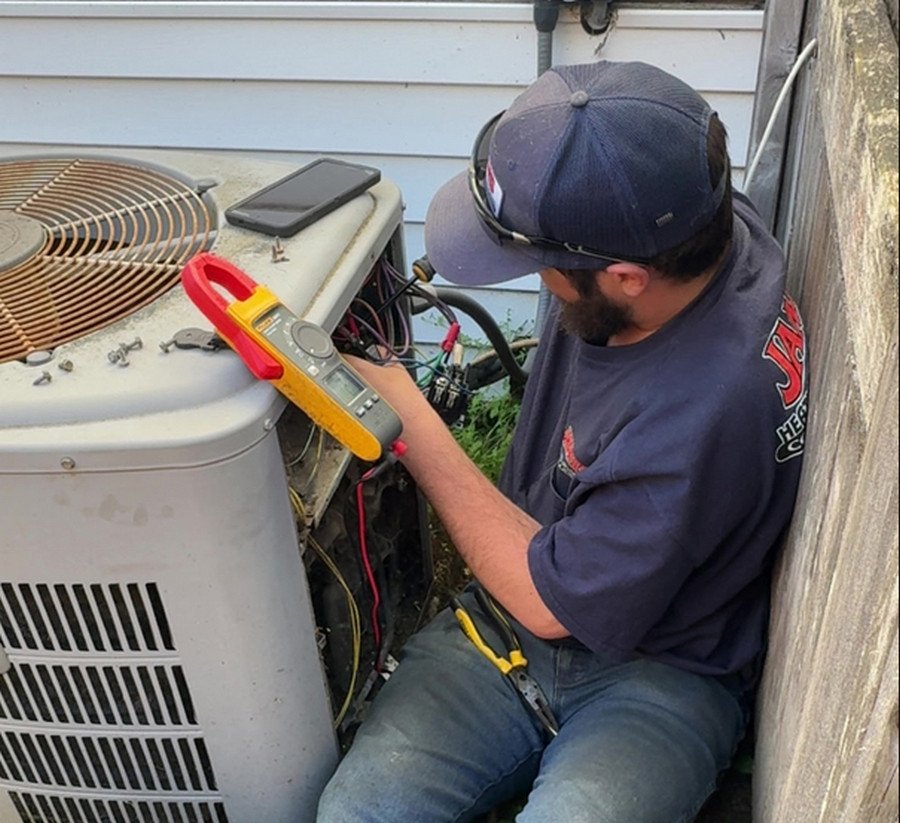
Verify the Outdoor Unit Has Power
Many homeowners focus on the thermostat and forget about the outdoor condenser unit.
Walk outside and check:
- Whether the fan is running
- Whether you hear operating sounds
- Whether the disconnect switch is on
Sometimes landscaping work, storms, or maintenance activities can accidentally affect the disconnect switch that supplies power to the outdoor unit.
If the indoor system appears operational but the outdoor unit remains silent, professional diagnosis may be needed.
Check Your Air Filter
A dirty air filter can create several HVAC problems.
When filters become heavily clogged, they can:
- Restrict airflow
- Cause overheating
- Lead to frozen coils
- Trigger safety shutdowns
Pull out the filter and inspect it.
If it appears covered with dust and debris, replace it before restarting the system.
Regular preventive maintenance helps prevent filter-related issues from affecting system performance.
Look for Frozen Evaporator Coils
Frozen coils can prevent an air conditioning system from operating correctly.
Signs of frozen coils include:
- Ice buildup near the indoor unit
- Weak airflow
- Water around the equipment
- Warm air coming from vents
Frozen coils often result from:
- Dirty filters
- Airflow restrictions
- Refrigerant problems
If you suspect frozen coils, turn the system off and allow it to thaw before attempting to restart it.
Inspect the Condensate Drain Line
Modern HVAC systems often include safety switches that shut the system down when the condensate drain becomes clogged.
This protects your home from water damage.
Signs of a clogged drain include:
- Water near the indoor unit
- Damp areas around equipment
- Musty odors
A blocked drain line can trigger a complete shutdown even though the cooling system itself is still functional.
Air Conditioner Not Turning On After a Storm
Lane County occasionally experiences storms that affect HVAC equipment.
After severe weather, check for:
- Tripped breakers
- Power outages
- Damaged outdoor equipment
- Debris around the condenser
Storm-related electrical problems should always be inspected by a qualified HVAC technician.
Listen for Unusual Sounds
Sometimes the system attempts to start but cannot complete the process.
You may hear:
- Clicking sounds
- Buzzing noises
- Humming without startup
- Repeated attempts to turn on
These sounds often point to:
- Capacitor failure
- Contactor issues
- Electrical component problems
- Motor failure
These repairs typically require professional service.
Dirty Outdoor Units Can Cause Startup Problems
Your outdoor condenser needs proper airflow to operate correctly.
Leaves, grass clippings, and debris can block airflow and contribute to system issues.
Inspect the area around the unit and remove:
- Leaves
- Branches
- Weeds
- Dirt buildup
Maintaining clear airflow helps improve system performance and reliability.
When Air Conditioner Not Turning On Means Professional Service Is Needed
Some issues go beyond simple troubleshooting.
Professional service may be needed if:
- The breaker repeatedly trips
- The thermostat works but the system stays off
- The outdoor unit won’t start
- Refrigerant issues are suspected
- Electrical components have failed
- The system is more than 10 years old and frequently has problems
Modern heating and air conditioning systems contain many components that require specialized tools and training to diagnose safely.
Why Quick Repairs Matter
Waiting too long to address HVAC problems can make repairs more expensive.
Small issues can grow into:
- Compressor damage
- Motor failures
- Electrical component failures
- Reduced efficiency
- Complete system breakdowns
Addressing the problem early often saves money and helps avoid emergency service calls during peak summer weather.
Don’t Forget About Indoor Airflow
Even if the system turns on, poor airflow can create similar symptoms.
Problems inside ductwork can restrict cooling and make it seem like the system isn’t operating correctly.
Professional duct cleaning can help improve airflow and remove buildup that affects overall HVAC performance.
Frequently Asked Questions
1. Why is my air conditioner not turning on at all?
Common causes include thermostat problems, tripped breakers, clogged drain lines, electrical issues, or component failures.
2. Should I reset my breaker if the AC won’t start?
Yes, you can try resetting it once. If it trips again, contact a professional.
3. Can a dirty filter prevent my AC from turning on?
Yes. Severe airflow restrictions can trigger safety shutdowns.
4. What does it mean if I hear clicking but the AC won’t start?
Clicking often points to capacitor, contactor, or electrical component issues.
5. Can frozen coils stop an air conditioner from running?
Yes. Frozen coils can affect operation and prevent proper cooling.
6. Why is my thermostat on but my AC isn’t running?
The issue may involve power supply, wiring, safety switches, or equipment components.
7. Can a clogged drain line shut down my AC?
Yes. Many systems include safety switches that stop operation when drainage problems occur.
8. Is it safe to troubleshoot my AC myself?
Basic checks like filters, thermostat settings, and breakers are generally safe. Electrical repairs should be left to professionals.
9. How often should HVAC systems be inspected?
Most systems benefit from professional maintenance once or twice each year.
10. When should I call an HVAC technician?
If basic troubleshooting doesn’t solve the problem or electrical issues are suspected, schedule professional service.
Get Your Cooling System Running Again
An air conditioner not turning on can result from something simple or something more serious. The key is identifying the issue early before it turns into a larger repair. If basic troubleshooting doesn’t restore operation, professional service can quickly pinpoint the cause and get your system back to cooling properly.
Call to Action
If your air conditioner not turning on is leaving your home uncomfortable, James Heating & Air Conditioning is ready to help. Our experienced technicians diagnose HVAC problems quickly and provide dependable solutions throughout Eugene, Springfield, and the rest of Lane County. Call (541) 461-2101 today or Contact Us to schedule service and restore comfort to your home.