






Maintain your heating and air conditioning by checking the filter every month, keeping the outdoor unit clear and watching the condensate drain. Book a licensed technician once a year for refrigerant, electrical and gas work. Call (541) 461-2101 in Eugene or (503) 581-9982 in Salem. We answer both lines around the clock.
What HVAC maintenance can I do myself each season?
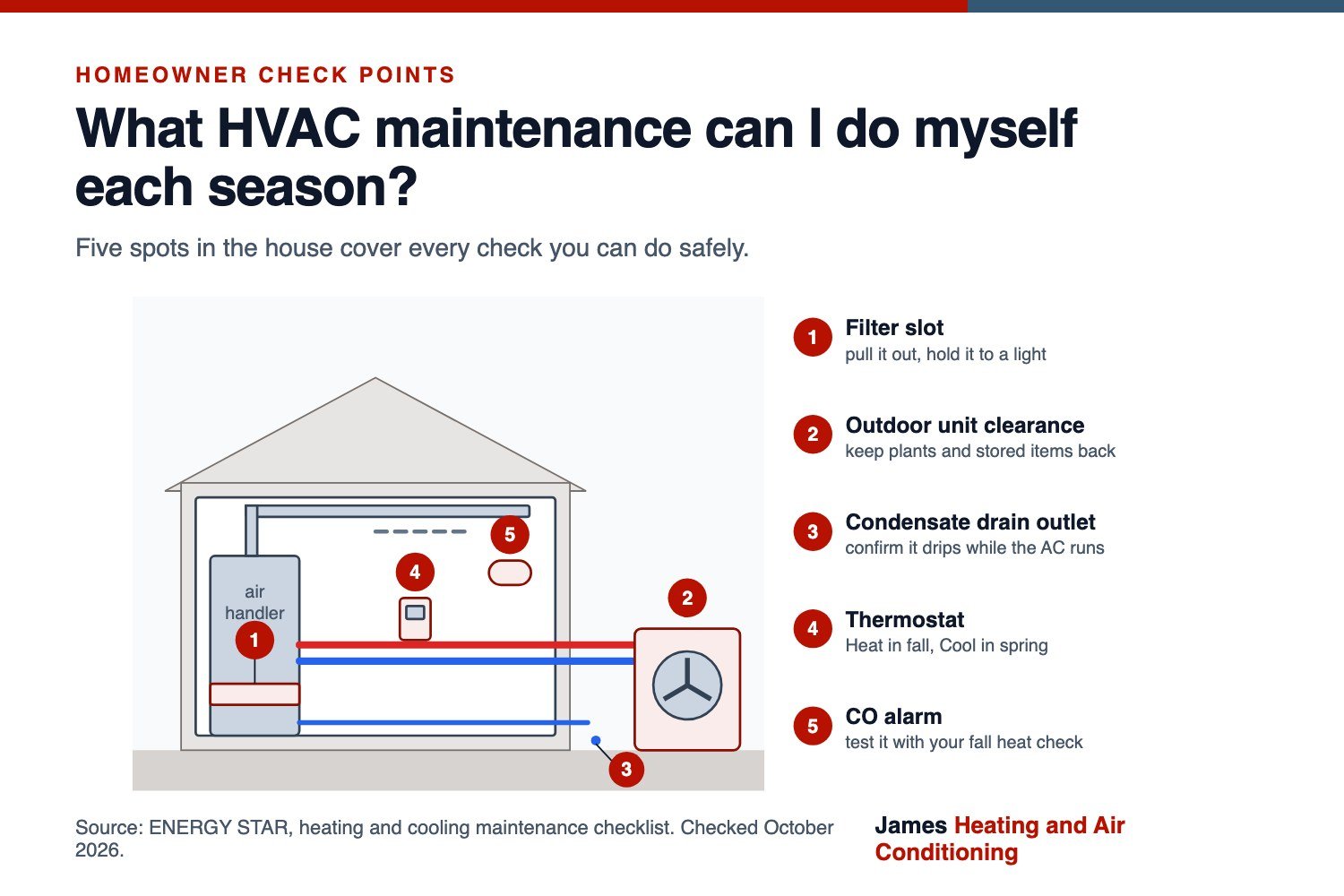
You can check the filter, clear the outdoor unit, look at the condensate drain, test the thermostat and test your carbon monoxide alarm without opening a panel. The drawing marks where each check sits in your house. ENERGY STAR covers the filter, drain and thermostat in its homeowner checklist, and we cover the rest below.
We service air conditioners, furnaces and heat pumps in Lane and Marion County. We check cooling in spring and heating in fall, and a heat pump gets both visits because it does both jobs. For the technician’s side, read what a professional tune-up checks.
| Season | Do it yourself | Book a technician |
|---|---|---|
| Fall, before the first cold week | New filter, heat-mode test, clear leaves from the outdoor unit, test the CO alarm | Heating check-up |
| Winter | Keep snow and leaves off a heat pump outdoor unit, let defrost run | Ice that stays, no heat, odd smells |
| Spring | Fresh filter after pollen, clear the unit, check the drain, test cooling | Cooling check-up |
| Summer | Monthly filter check, plants trimmed back, watch the drain | Weak cooling, ice, water at the air handler |
| After smoke | Inspect the filter within days | Ask us whether your system can take a MERV 13 |
The filter is the one job you repeat all year.
How often should I check my air filter?
Check your air filter once a month. The ENERGY STAR checklist says to inspect, clean or change it monthly in an air conditioner, furnace or heat pump.
Monthly is the check, not the change. Pull the filter out and hold it to a light. If you can’t see light through it, replace it.
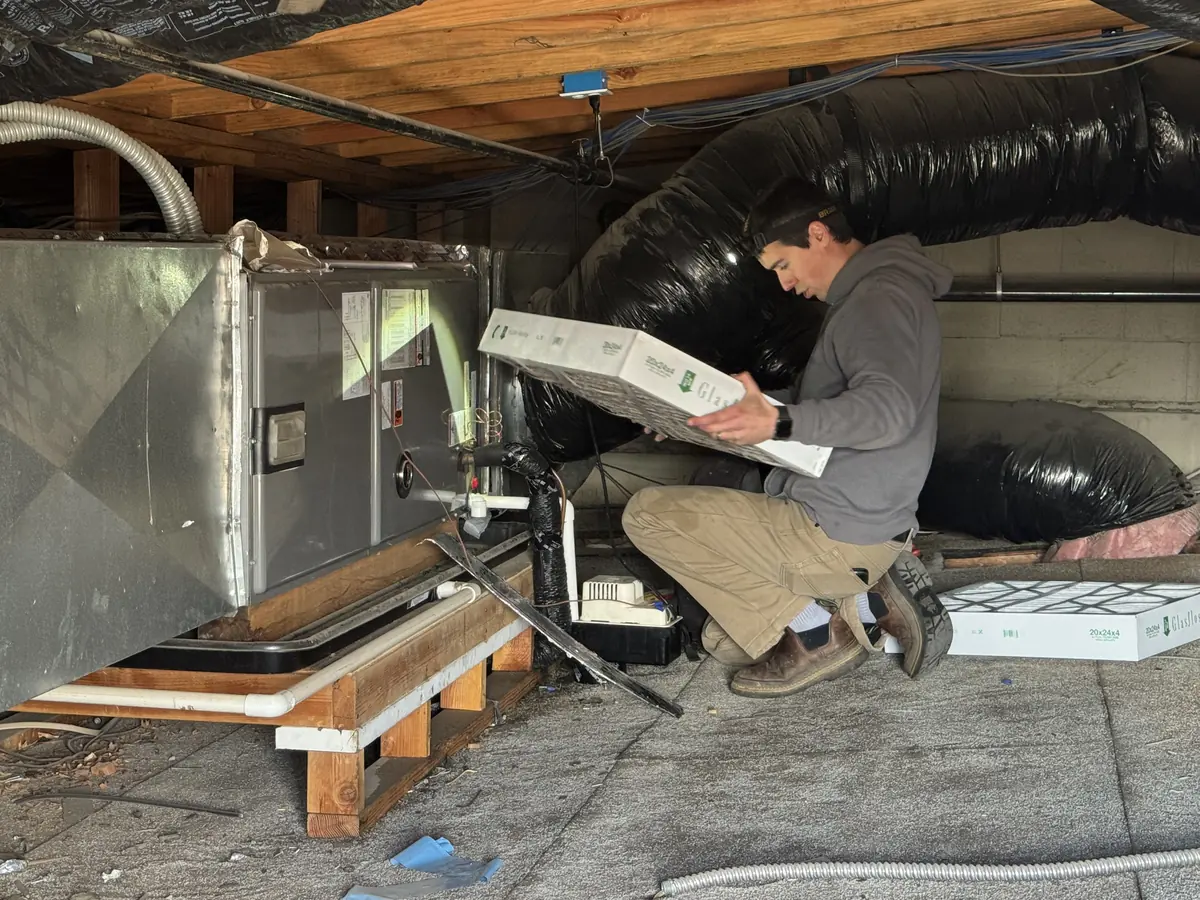
A dirty filter raises energy costs and can cause early equipment failure. Intervals sit in how often to change your air filter. If airflow stays weak after a swap, read weak airflow from vents. A fresh filter also starts your fall routine.
How do I get my furnace or heat pump ready for fall?
Run the heat on a mild day before the first cold week, with a new filter in place and the thermostat set to heat. Confirm the system starts, runs and shuts off.
A faint burning-dust smell on the first run is common, because summer dust burns off the heating parts. A gas smell is different. Leave the house, call your gas utility or 911 from outside, then call us once you’re safe. Test your carbon monoxide alarm the same day. At a heating check-up our technicians inspect the heat exchanger and test the gas connections, which you should not attempt yourself. Once the heat runs, the heat pump’s outdoor unit faces its own winter habit.
Is it normal for a heat pump to steam or frost over in winter?
Yes. In cold, damp air, frost builds on a heat pump’s outdoor coil, and the system reverses briefly to melt it.
During defrost the fan stops, the unit may whoosh and vapor can rise off the coil. HVAC School notes that standard defrost boards cap a cycle at 10 minutes. Brush snow and leaves off the unit by hand, and don’t chip at ice, because the fins bend. Call us if the unit stays encased in ice after defrost or the house won’t warm up. Our technicians test the defrost board and sensor first on those calls. Spring brings the opposite job.
When should I turn my AC on for the first time each year?
Turn your AC on in spring, before the first hot week, so a problem shows up while you don’t need cooling yet. Pollen loads a filter fast, so put in a fresh one first.
- Switch the power off at the outdoor disconnect.
- Pull leaves and grass clippings off the unit.
- Switch the power back on and set the thermostat to cool.
- Confirm cold air comes out of the vents and the outdoor fan runs.
If either check in step four fails, switch the system off and call us. At the spring check-up our technicians test the cooling output and inspect the electrical connections. The outdoor unit decides how well step four goes, so give it room. Our technicians run the full tune-up checklist at the yearly visit.
Can I clean my outdoor AC unit myself?
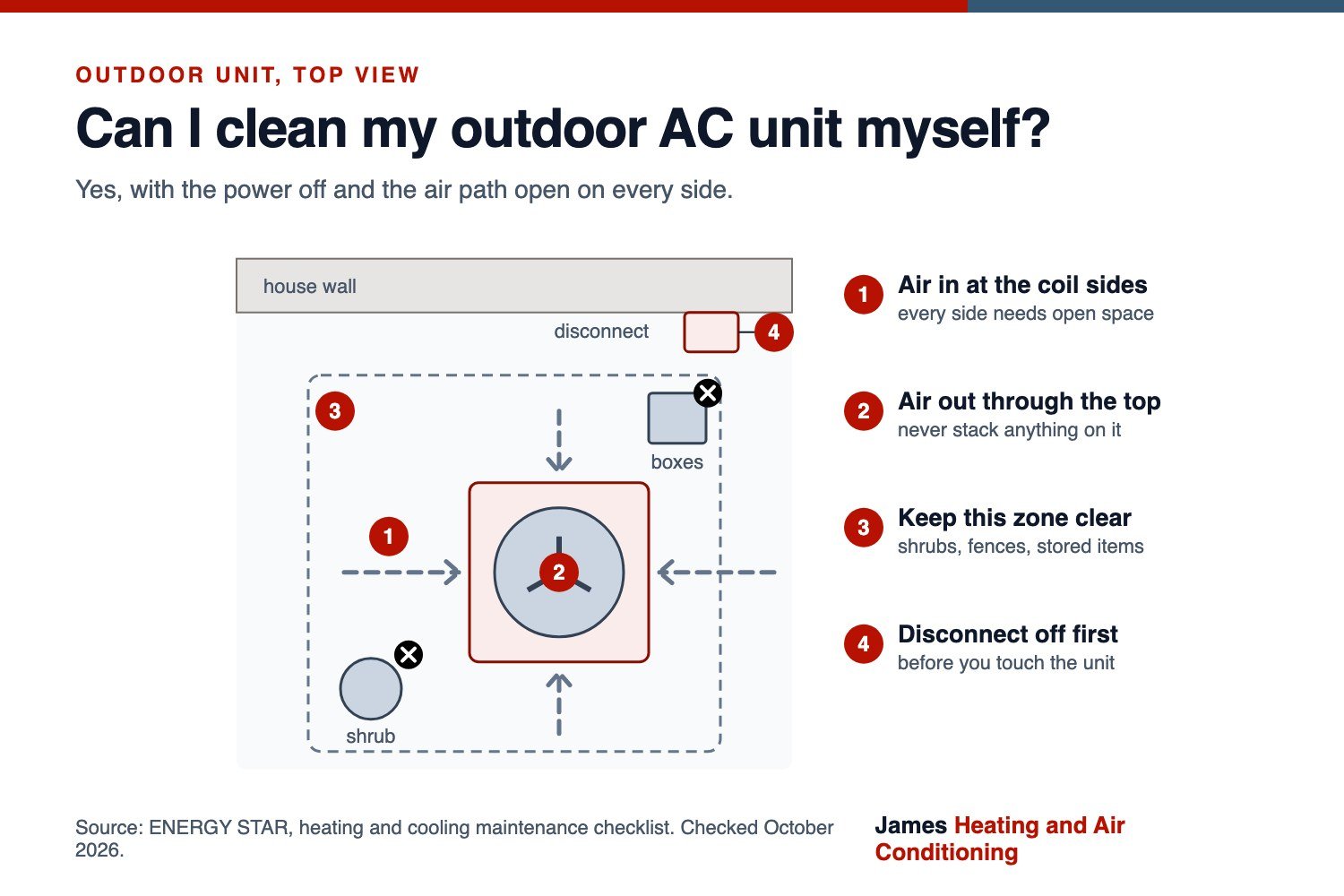
Yes, you can brush debris off the outdoor unit and rinse loose dirt with a gentle garden-hose spray, with the power off at the disconnect. Skip the pressure washer.
Keep shrubs, fences and stored items back from the unit so it can pull air through the coil. Your installation manual gives the exact clearance for your model. ENERGY STAR says dirty coils make the system run longer and reduce equipment life.
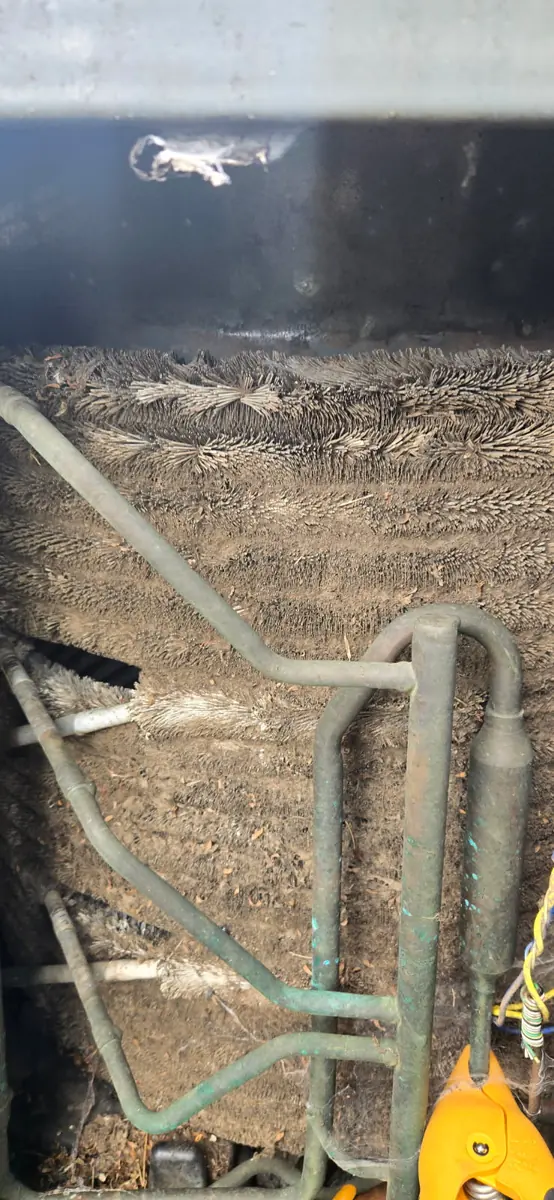
Our technicians clean coils with the system off and the fins protected, which is why deep coil cleaning stays off your list.
How do I check the condensate drain?
Find the condensate drain outlet and confirm it drips while the AC runs. The drain carries off water that forms on the indoor coil.
ENERGY STAR lists the drain as a check item on a central AC, furnace or heat pump in cooling mode, because a clog can cause water damage. Call us if water collects near the air handler. We inspect the drain line at a cooling check-up. A smoky summer adds one more filter question.
What filter should I use during wildfire smoke?
Use a MERV 13 filter, or the highest rating your system can take. The EPA’s wildfire smoke guidance recommends exactly that.
Not sure what your system accepts? Ask us, because a too-restrictive filter can choke airflow. We check what rating your system can handle. The EPA also says to close any fresh-air intake or use recirculate mode, set the fan to “On” instead of “Auto,” and replace filters sooner if they look soiled. Some jobs stay off your list even then.
Which HVAC jobs should I leave to a technician?
Leave refrigerant, electrical and gas work to a licensed technician. ENERGY STAR puts all three on the contractor’s list.
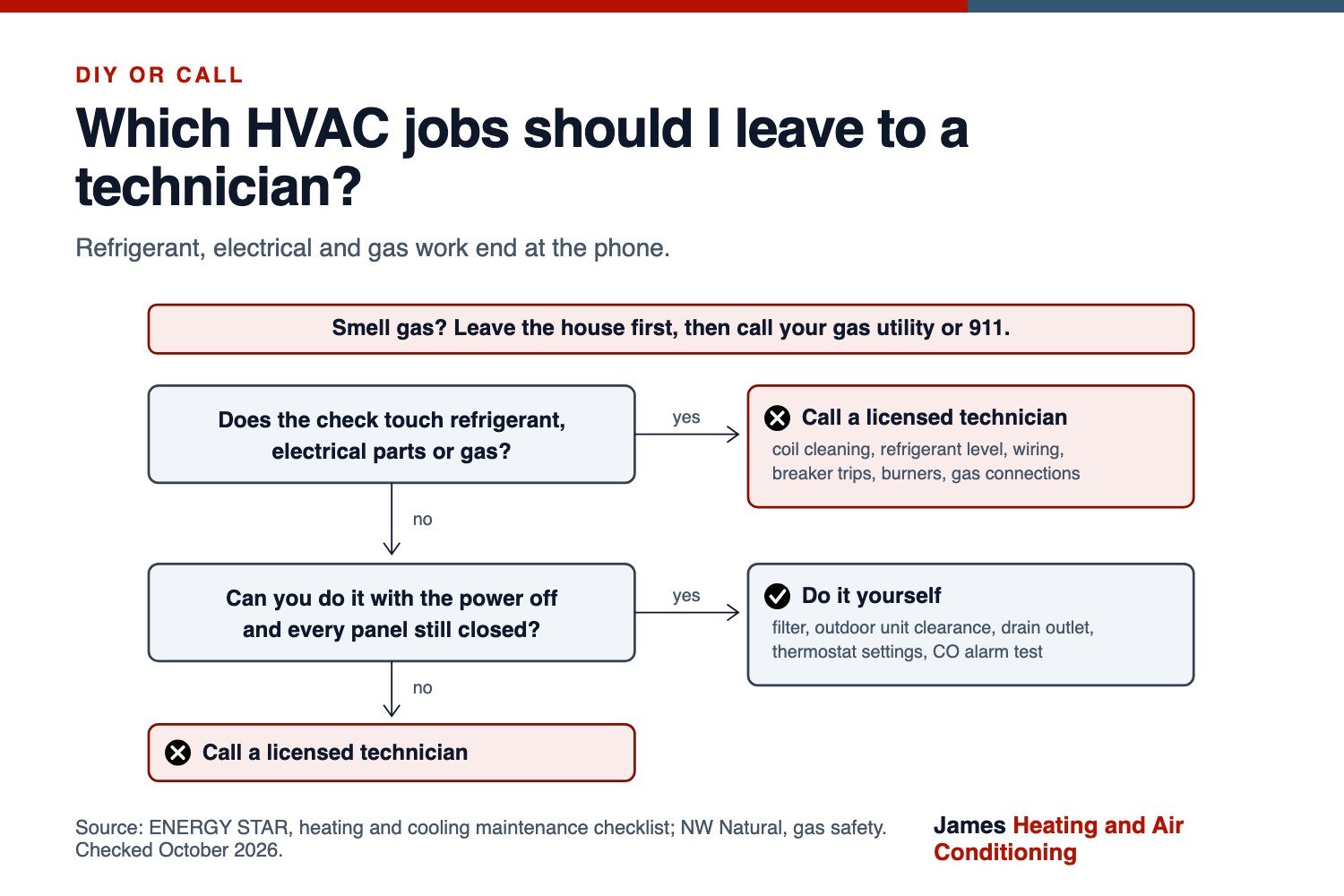
That list covers cleaning the evaporator and condenser coils, checking refrigerant, tightening electrical connections, measuring motor voltage and current, and checking gas connections, burners and the heat exchanger. Our technicians check the refrigerant charge and test the electrical connections on every cooling visit. Refrigerant needs certified handling, loose wiring makes a system unsafe, and a cracked heat exchanger creates a carbon monoxide risk. Some signs tell you to stop even a simple check.
What signs mean I should stop and call a technician?
Stop and call when you smell gas, see ice, find water or hear the system click without starting.
- A gas smell. Leave first, then call your gas utility or 911.
- Ice on the refrigerant lines or indoor coil. Switch the system off.
- Water pooling at the air handler or furnace.
- Clicking with no start, or a breaker that trips again after one reset.
- Ice that won’t clear from a heat pump outdoor unit.
Call (541) 461-2101 in Eugene or (503) 581-9982 in Salem, any hour. For repairs, see HVAC diagnostics and repair. For the yearly visit, see preventative maintenance.
Frequently asked questions
Does a heat pump need maintenance twice a year?
Yes, ideally. A heat pump heats and cools, so it gets the spring cooling check-up and the fall heating check-up that ENERGY STAR recommends. We service heat pumps in both seasons. We test the heating in fall and the cooling in spring.
Do I still need a technician if my system seems fine?
Yes. ENERGY STAR recommends a contractor check-up each year, because coil cleaning, refrigerant level and electrical connections can’t be judged from the outside. We inspect all three at the yearly visit.
Can I clean my AC unit myself?
You can brush debris off the outdoor unit and rinse loose dirt with a gentle hose spray, with the power off at the disconnect. Our technicians handle deep coil cleaning, because pressure bends the fins.
Call James Heating and Air Conditioning
Eugene, Springfield and Lane County dial (541) 461-2101. Salem, Keizer and Marion County dial (503) 581-9982. We answer both lines around the clock, and we hold Oregon CCB license #47396.