



You need a professional when your furnace won’t restart after the thermostat, filter and breaker checks, when a safety control keeps shutting it off, or when you smell gas or hear a carbon monoxide alarm. For gas or carbon monoxide, go outside first. For everything else, call us at (541) 461-2101, any hour.
What should you do if you smell gas or a carbon monoxide alarm sounds?
If you smell gas, leave the house at once and call 911 and NW Natural’s 24-hour line, 800-882-3377, from outside. Don’t stop to check anything. Just go.
NW Natural says natural gas smells like rotten eggs or sulfur and tells you to leave even when the smell seems mild. Don’t flip a switch, light a match, start a car or use a phone inside, and don’t search for the source. NW Natural answers its emergency line around the clock and sends a crew. We never troubleshoot a furnace in a house that smells like gas, and we wait until NW Natural clears it. No exceptions.
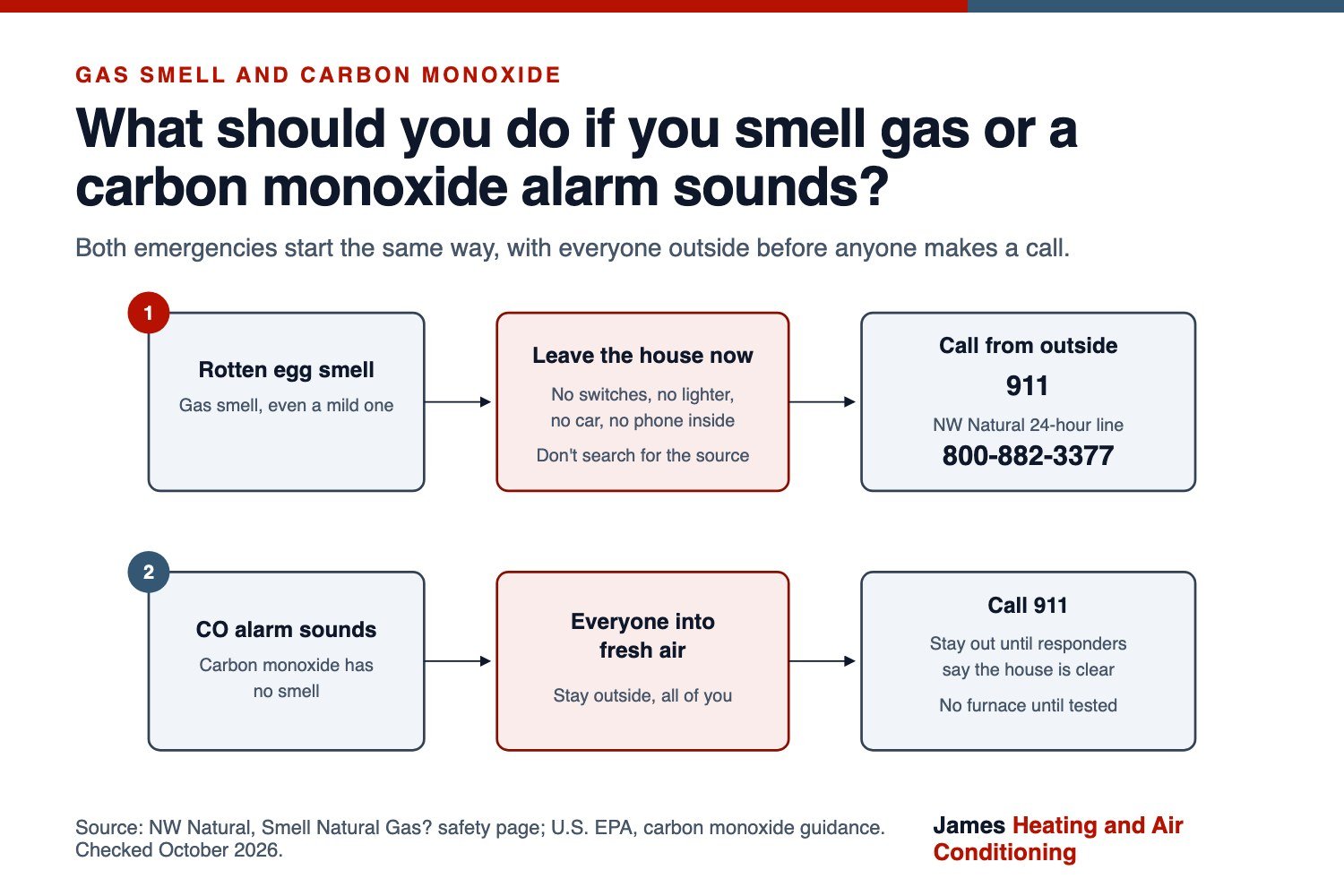
A carbon monoxide alarm follows the same order. Get everyone into fresh air, call 911 and stay out until responders say the house is clear. Count heads. Carbon monoxide has no smell. The EPA lists leaking furnaces and blocked or leaking flues among its sources. The EPA also notes that the Consumer Product Safety Commission recommends an alarm on each level, outside every sleeping area. Don’t run the furnace again until we test it. We inspect the flue and test the air before we restart anything, and that includes the burner that looked fine.
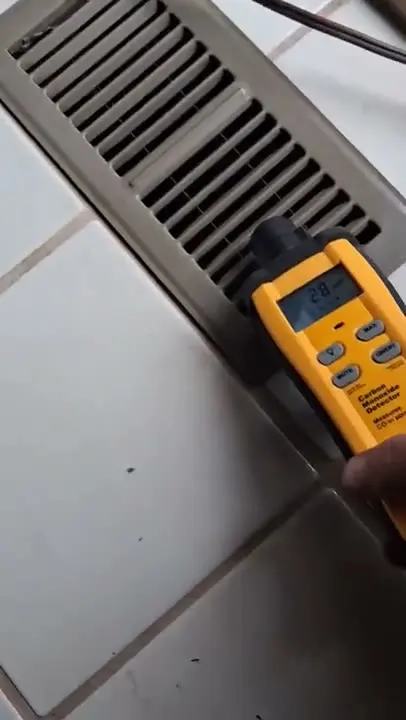
Neither emergency is the usual reason a furnace stops. So what are the other signs?
What are the signs my furnace needs a professional?
Your furnace needs a professional when it fails the basic checks, repeats a fault after a restart, or shows a flame, sound or smell that points to a safety problem. We sort every no-heat call by these symptoms, starting with the one you hear or see first.
| Symptom | Likely cause | Safe check | Call us? |
|---|---|---|---|
| No heat, blower silent | Power, thermostat, tripped safety | Steps 1 to 3 below | Yes, if it won’t restart |
| Blower runs, air is cold | Safety control shut the burners off, dirty flame sensor | Filter, outside vents | Yes, same day |
| Starts, then shuts off within minutes | Clogged filter, overheating, flame sensor | Filter | Yes, if it repeats |
| Clicking, no flame | Igniter or gas valve | None | Yes |
| Banging at startup | Delayed ignition | None | Yes, turn it off |
| Yellow or orange burner flame | Incomplete combustion, carbon monoxide risk | None | Yes, turn it off now |
| Dusty smell on the first heat of the season | Dust burning off | Run it 30 minutes | Only if it lingers or smokes |
A blower that runs with cold air isn’t an emergency. Still, a safety control shut the burners off for a reason. We diagnose that by when the cold air starts, so tell us the timing when you call. Before you call, which checks can you run safely yourself?
What can I check before I call for furnace repair?
You can check six things without tools or an open panel, and you should stop the moment you smell gas. Start with the thermostat. It’s the cheapest fix.
- Thermostat. Set it to Heat, at least 5 degrees above the room temperature, with fresh batteries if it takes them. Wait a minute.
- Filter. A clogged filter can overheat the furnace and trip its limit switch, so replace a dirty one.
- Breaker and furnace switch. Check the breaker, then the wall switch near the furnace, which looks like a light switch.
- Vents outside. On a high-efficiency furnace, look for leaves, snow or a nest in the white PVC intake and exhaust pipes. We clean the pipe ends and test the draft on a visit.
- Control board light. Read the blink pattern through the small window in the furnace door. It is a fault code, and the dispatcher can use it.
- Then stop. Don’t open the burner compartment, jump a safety switch or relight anything, because those parts protect your house.
If the furnace is still dead, a safety switch has probably done its job. We test those switches on every no-heat call, so where do they sit?
Which safety switches shut a furnace off?
Five switches and sensors shut a gas furnace off to protect your house, namely the door switch, flame sensor, pressure switch, limit switch and condensate safety switch.
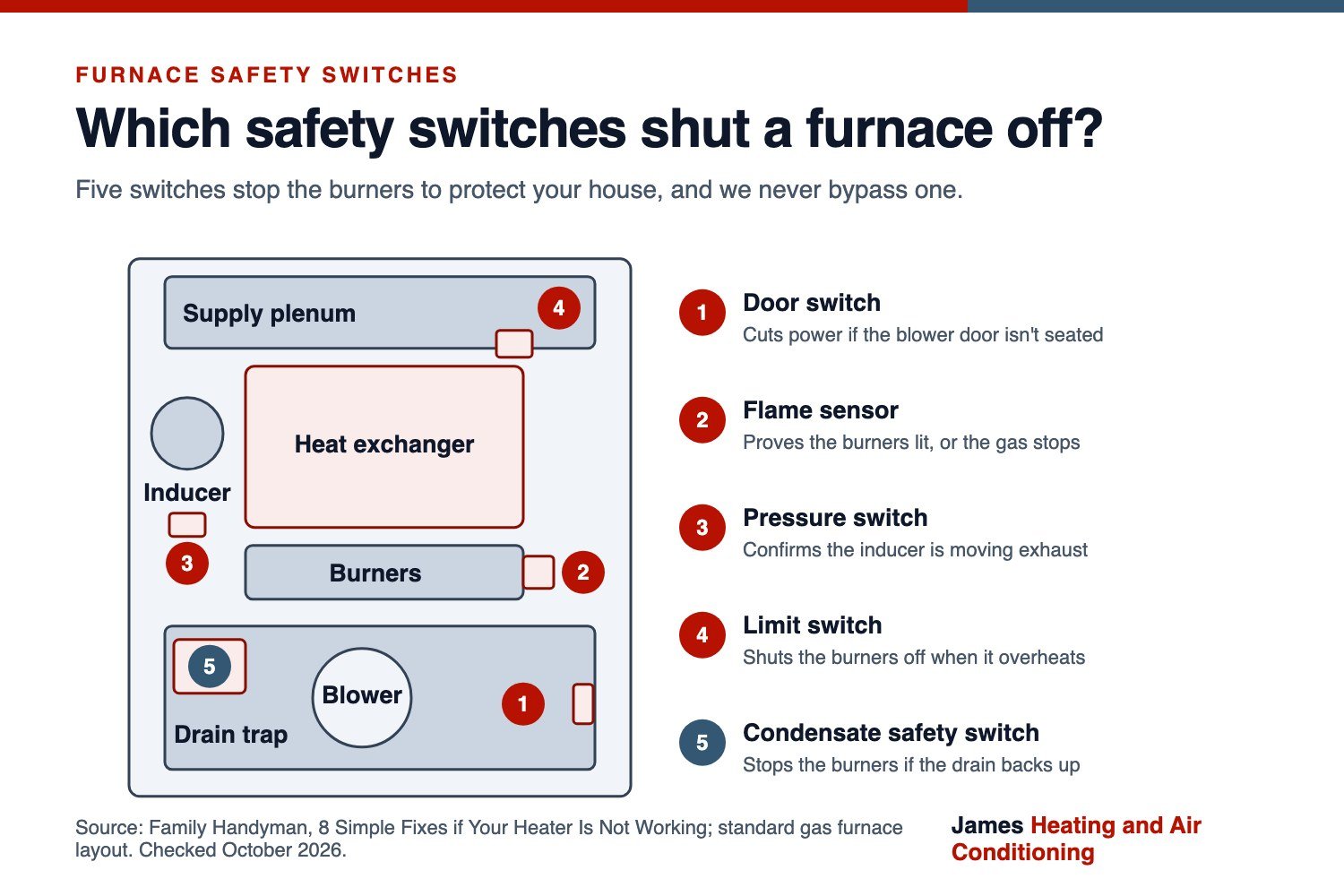
The door switch sits behind the blower door, and it cuts power if the panel isn’t fully seated. We check that switch first on a silent furnace. The flame sensor proves the flame is burning. We test it on every no-heat call. The pressure switch confirms the inducer motor is moving exhaust. The limit switch shuts the burners off when the furnace overheats. A high-efficiency furnace adds a condensate safety switch that stops the burners when the drain backs up, as Family Handyman explains.
Our technicians test each of these with a meter, and we never jump one to get heat back. We find what tripped the switch, because a tripped switch is a symptom. Repeat shutoffs are your cue.
Every switch in that diagram belongs to a gas furnace. Does yours have one?
Is your Eugene furnace gas, electric or a heat pump?
Most Eugene homes don’t have a gas furnace, so check your heating type before you follow gas furnace advice. That changes everything.
Oregon’s Department of Energy lists electricity as the primary heating source for 75 percent of Lane County homes, against 18 percent for natural gas, 5 percent for wood and 1 percent for propane, per its Lane County profile. That electric share includes heat pumps and baseboard heat, not only electric furnaces.
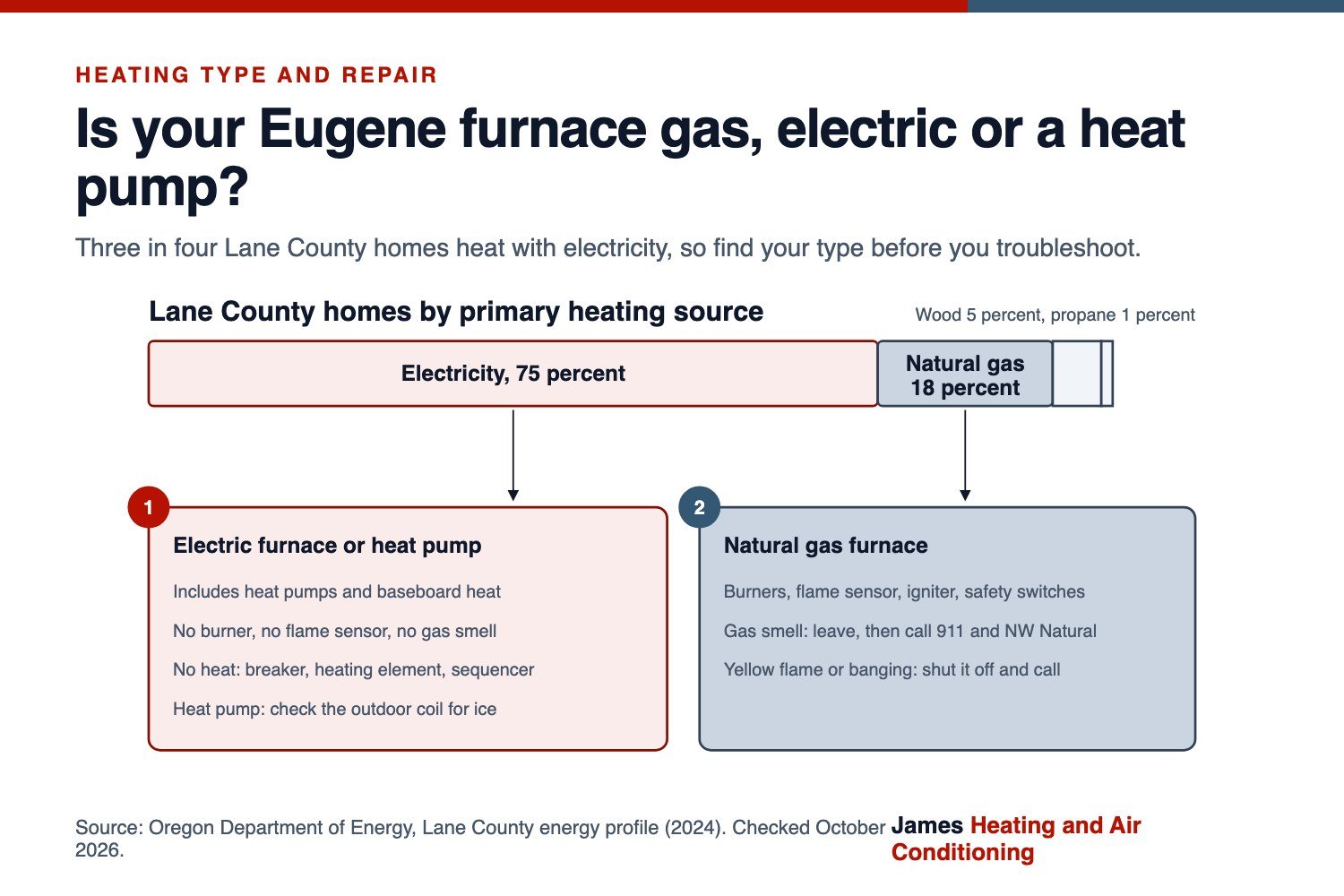
An electric furnace has no burner, so it has no gas smell and no flame sensor. No heat there usually means a tripped breaker, a failed heating element or a sequencer, and we test those three in that order. A heat pump that blows lukewarm air may be in defrost or iced up. Look at the outdoor unit and clear leaves from around it, but don’t chip at the coil. Ice breaks fins. We inspect the coil for ice before anything else on a heat pump call. NW Natural serves gas customers in Eugene, EWEB serves electric customers there, and Springfield Utility Board serves Springfield. We repair gas furnaces, electric furnaces and heat pumps. All three.
With the type settled, the next question is whether it is safe to wait.
Is it safe to keep running a furnace with a problem?
No for a yellow flame, banging, a lingering burning smell or any gas or carbon monoxide sign; a brief dust smell and a one-time cold blast are usually fine.
Turn the furnace off and call when the flame burns yellow or orange, the start-up bangs, or a smell lingers or comes with smoke. Don’t wait. We test the flue before we restart a furnace that burned yellow. Oregon DOE reports that 67 percent of Lane County homes were built before 1990, so older furnaces are common here. Age alone doesn’t make a furnace unsafe. An old unit with a repeat fault, though, deserves a technician’s look before another cold night. We inspect the heat exchanger and venting on a repair visit, because a cracked heat exchanger can release combustion gases.
Once you decide to call, what will it cost?
How much does furnace repair cost?
National guides put furnace repair at $50 to $300 for electric, $300 to $1,200 for gas and $400 to $1,500 for oil, with heat pump repairs at $300 to $600.
Inch Calculator’s guide sets those national ranges, and they aren’t a quote from us. We quote a firm price after the diagnosis and before any work starts. You approve it first. We repair a furnace when the repair makes sense, and we say so when it doesn’t.
| Repair | National range |
|---|---|
| Flame sensor | $80 to $250 |
| Igniter | $175 to $300 |
| Thermostat | $100 to $450 |
| Control board | $300 to $650 |
| Blower motor | $250 to $900 |
| Gas valve | $675 to $1,300 |
| Heat exchanger | $500 to $3,500 |
PickHVAC’s 2026 parts guide lists diagnostic fees at $75 to $150, often credited toward the repair, and a full heat exchanger replacement at $2,000 to $4,500. If your furnace is old and the quote is large, read how long a furnace lasts before you spend it. So what do you get for that visit?
What does a furnace repair visit include?
A repair visit starts with your symptom, then tests the parts in order, and you get a written price before any work starts.
Our technicians read the control board code, test the igniter and flame sensor, measure voltage with a multimeter and inspect the heat exchanger and venting. We test before we replace. You pay for the part that failed. We replace the failed part, then we run the furnace through a full heating cycle. Only then do we leave.
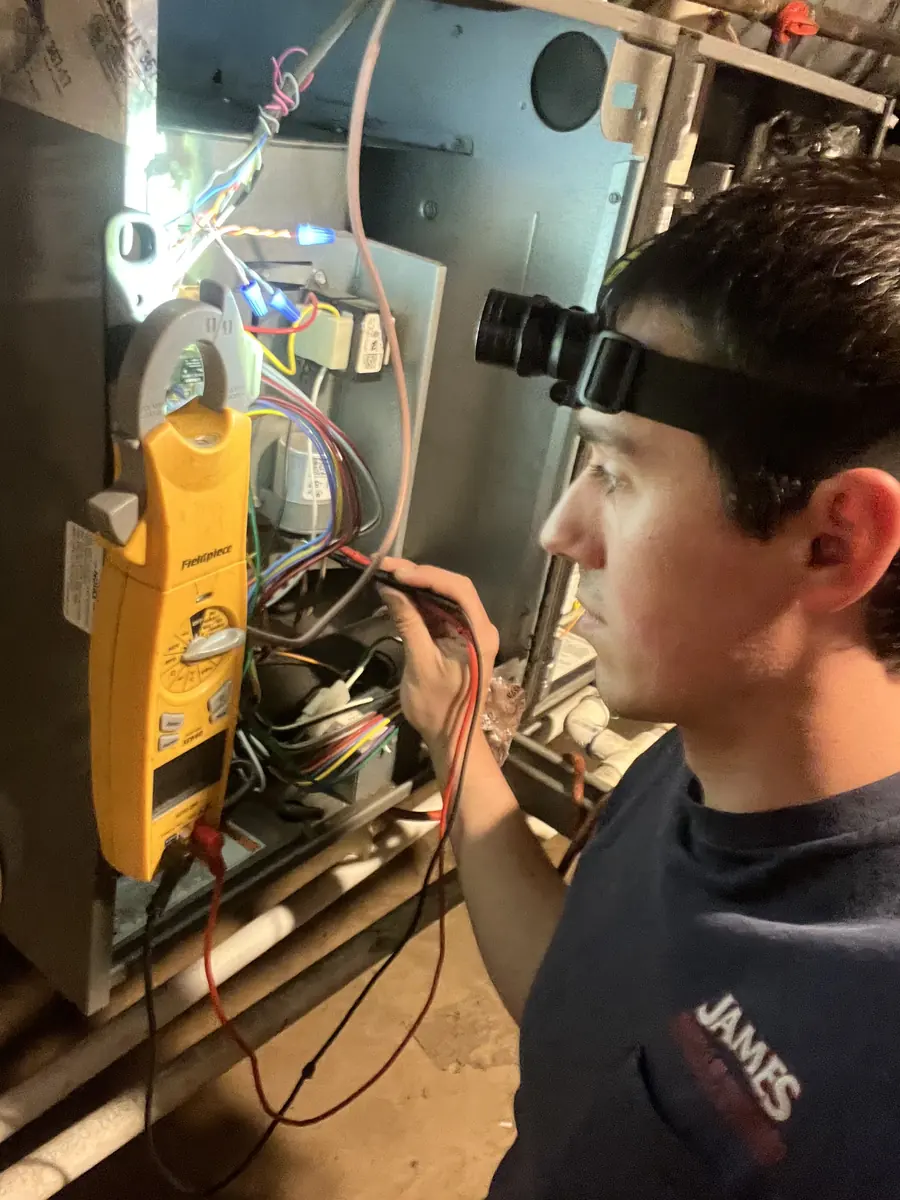
Our technicians handle every step, and our HVAC diagnostics and repair and heating repair and installation pages list the full service. If the furnace dies at midnight, who picks up?
Who answers a no-heat call in Eugene at night?
We do, because both James offices answer around the clock, seven days a week, and the Eugene line is (541) 461-2101.
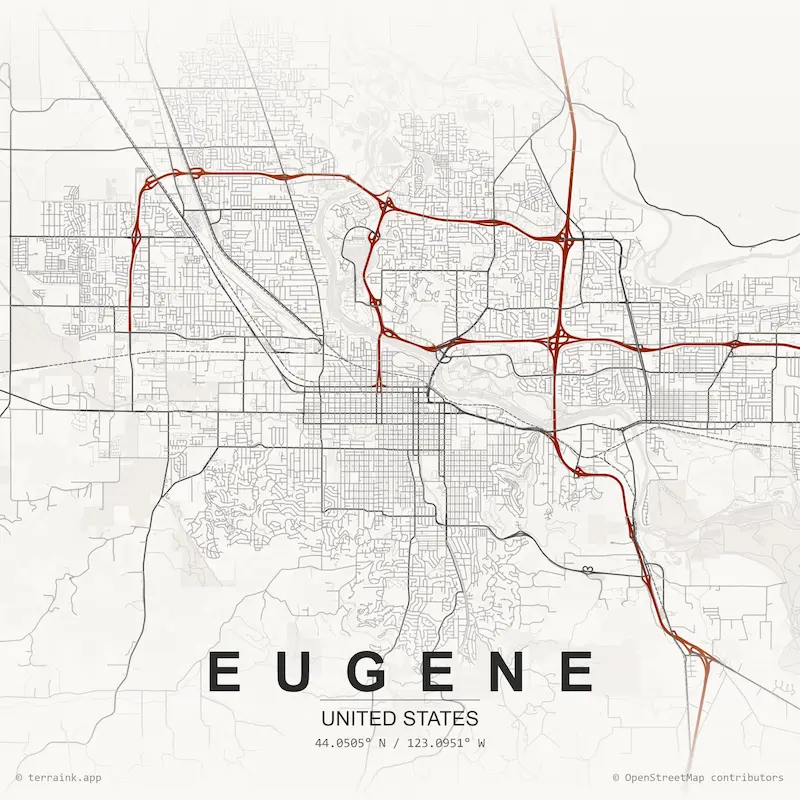
We dispatch from that line to Eugene, Springfield, Coburg, Junction City, Veneta, Creswell, Cottage Grove and the rest of our Eugene and Springfield service area. Our dispatchers answer every call and log your symptoms. Tell them what the furnace does, when it started and what the control board light is blinking.
Frequently asked questions
Why won’t my furnace turn on?
Start with the thermostat, the breaker and the wall switch. If those are fine, we test the igniter, the control board and the venting on a high-efficiency furnace. The blinking light on the board gives us the fault code.
Why does my furnace keep shutting off after a few minutes?
Overheating from a dirty filter or restricted airflow, or a flame sensor that can’t prove the flame, causes most of these shutoffs. Replace the filter first. Repeats? We test the limit switch and flame sensor.
Why does my furnace smell like it is burning?
A brief dusty smell on the first heat of the season is common. That’s dust. A smell that lingers, smells electrical or comes with smoke means shut it off and call. A rotten egg smell is different. Leave then call 911 and NW Natural.
How do I reset my furnace?
Turn the thermostat off, wait a minute, and turn it back to Heat. If the furnace has a reset button, press it once. If it shuts down again, don’t keep resetting it. Repeated resets point to a fault, and we diagnose it before we reset again.
Should I repair or replace an old furnace?
Look at the age, the repair quote and how often it has failed. Weigh all three. A big quote on an old furnace with repeat faults points toward replacement. We quote the repair in writing, and you can weigh it against the guide on how long a furnace lasts.
How often should a furnace be serviced?
Once a year before heating season is the standard advice, and on a tune-up we test the safety switches before they matter. Book a furnace tune-up in early fall.
Call James for furnace repair in Eugene
We answer (541) 461-2101 any hour. We hold Oregon CCB #47396 and have served the Eugene area since 1983. If the checks didn’t help, we diagnose the stalled part and repair it, and you get the price in writing first.