






HVAC Repair and Installation in Aurora, Oregon
James Heating and Air Conditioning repairs and installs heating, cooling, ventilation and water heater equipment in Aurora, Oregon. The work splits two ways here: colony-era houses inside the historic district where duct has nowhere to go, and acreage out on French Prairie running on electric or propane. Same family since 1983, Oregon CCB 47396, insured. Emergencies reach a person at any hour on (503) 581-9982.

HVAC services we provide in Aurora
Aurora began as a communal colony founded in 1856, and in 1974 the National Register listed roughly 150 acres and a dozen colony-era buildings. Retrofit planning drives most of the work inside that district and on the blocks around it. Outside the city limits the job changes completely, because French Prairie addresses sit on acreage with outbuildings, well water and no gas main.
Ductless heat pump installation for historic homes
Colony-era construction runs to heavy timber and braced framing with infill, not the uniform stud cavities modern equipment assumes, and there's rarely a chase between floors. A ductless heat pump system fits that reality, since a refrigerant line set needs a small penetration rather than a duct run. Zoning room by room also suits houses that have never held an even temperature.
Air ventilation, HRV and ERV
An old building tightened with new windows, insulation and air sealing stops shedding humidity the way it used to. Oregon's residential code has required whole-house mechanical ventilation in newer construction and substantial remodels, and what applies to a given project gets confirmed before design. On an air ventilation job a balanced HRV or ERV gets sized to the house rather than bolted on at the end of a remodel.
HVAC system installation
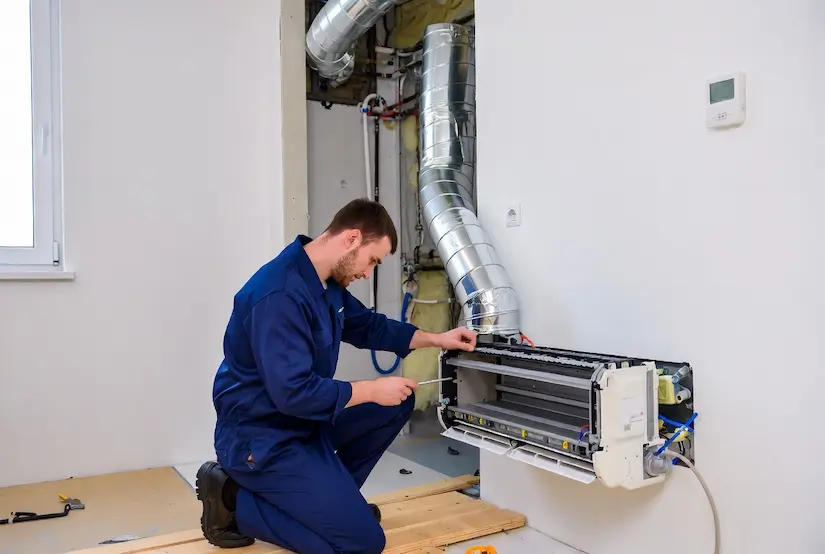
Where an attic or basement offers genuine working room, a low-static concealed-duct air handler can reach a bedroom wing through short runs, paired with a head in the main room. We settle outdoor unit placement, line-set routing and electrical capacity at the estimate during HVAC system installation. Running large trunk duct through original interior walls destroys fabric, and it's nearly always avoidable.
Furnace and heat pump repair
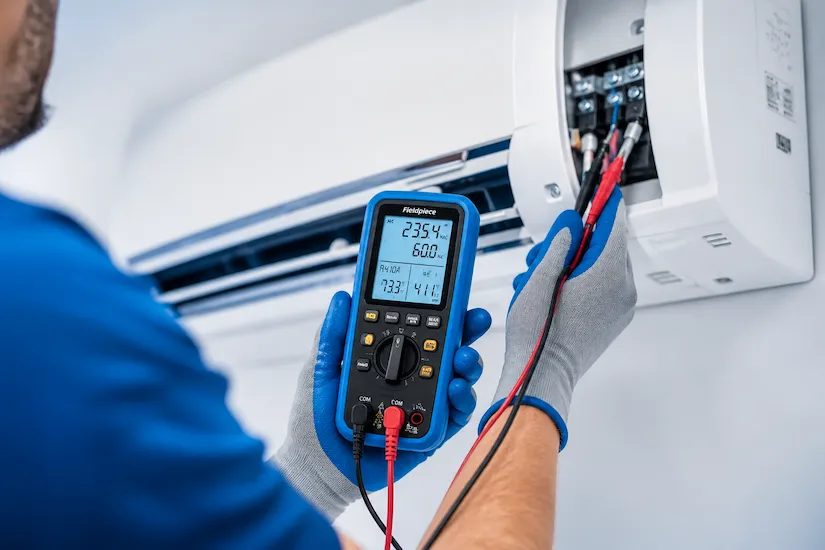
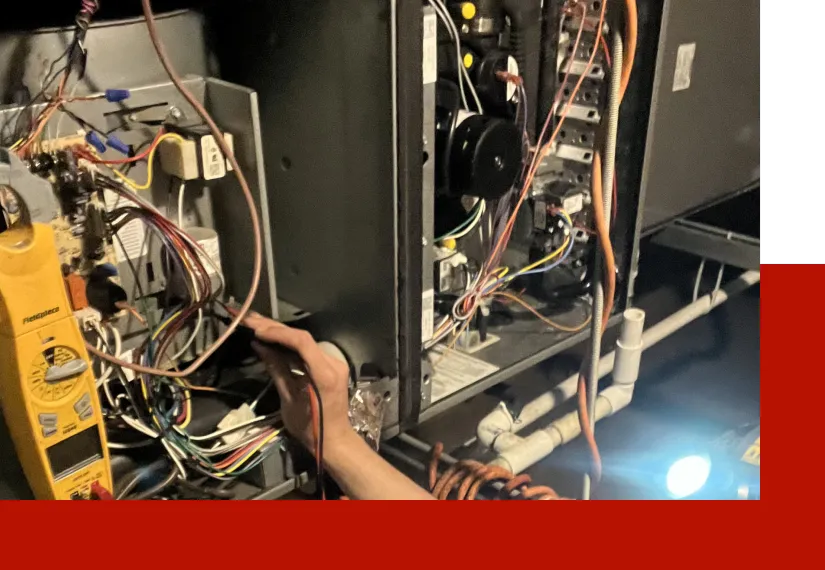
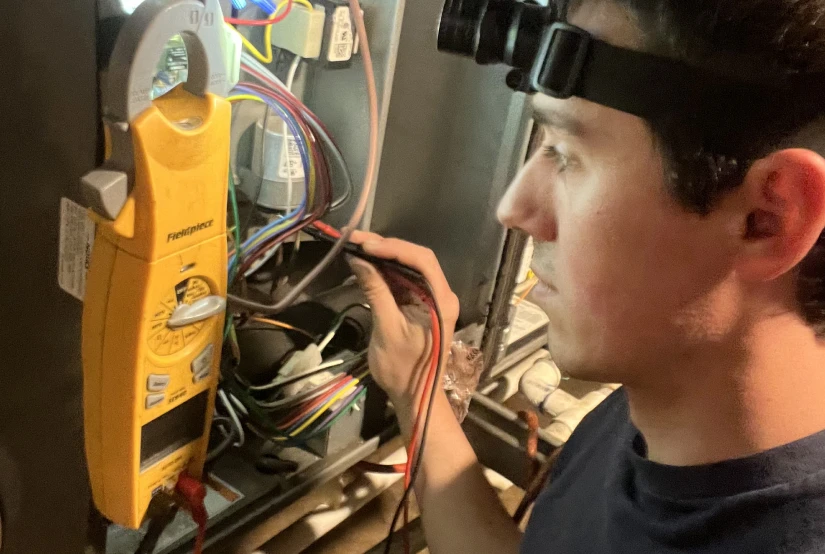
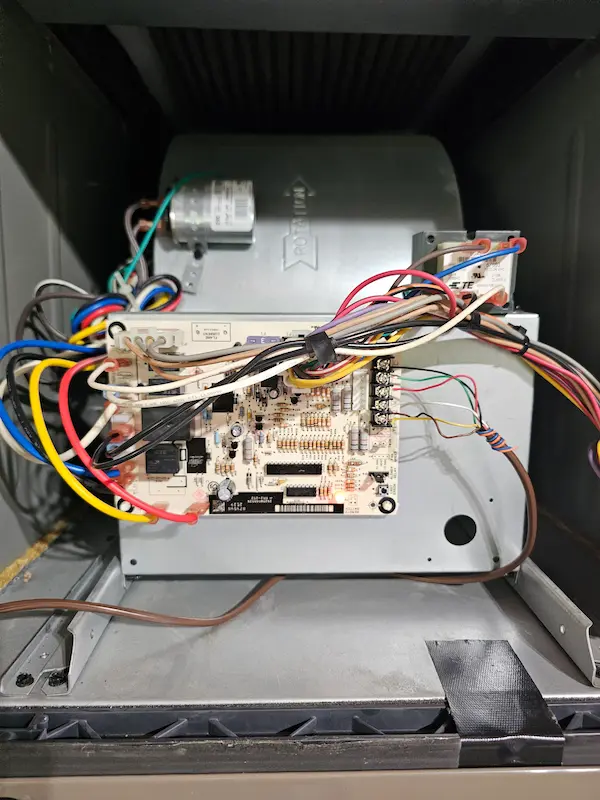
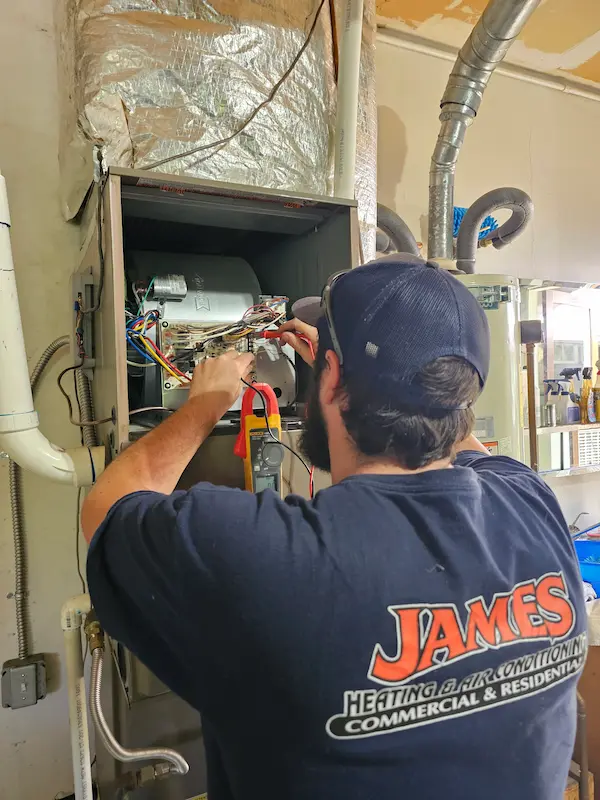
Repairs that don't touch the outside of a building are ordinary service work in Aurora, whatever the age of the house. We fix failed control boards, leaking coils, dead blower motors, ignition faults and refrigerant problems on an HVAC diagnostics and repair call, and the readings come before any parts get quoted.
Heat pump and ductless installation on acreage
A parcel outside town is a different design problem from a colony-era house on a town lot. There is usually no piped gas, the electrical service is older and at the end of a long drop, and a detached shop or barn office carries a load nobody planned for. A heat pump handles the house, and one ductless head usually serves the outbuilding for less than it costs to extend a trunk line out to it. HVAC system installation on acreage starts with the panel, because a heat pump plus strip backup can outgrow a rural service.
Preventative maintenance
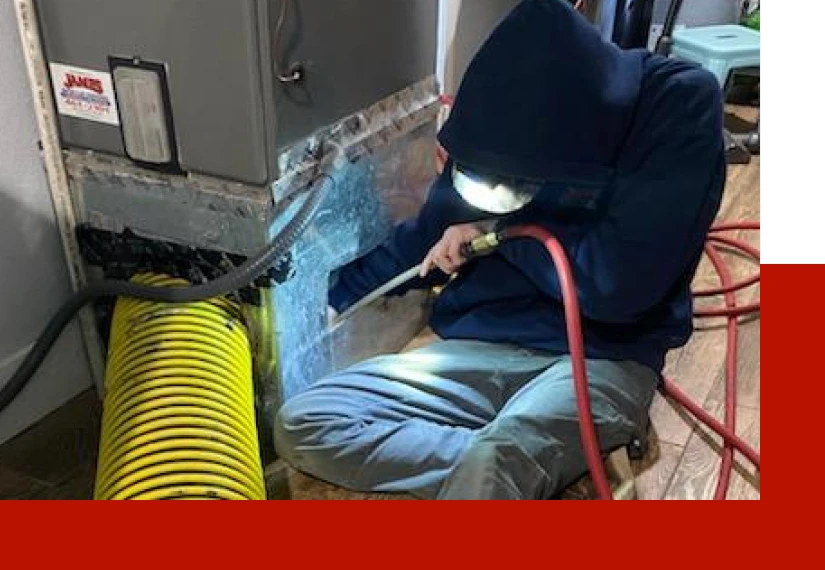
Equipment in older buildings works harder, and the crawlspaces it sits over are often damp. On a preventative maintenance visit we check combustion and venting, charge and defrost, airflow and condensate, plus the filters in each ductless head, which load faster than the manuals suggest. A heat pump wants two visits a year. A furnace wants one.
Common HVAC problems we solve in Aurora homes
Old buildings fail in their own particular ways, and several of these complaints come from the construction itself rather than the equipment.
Upstairs bakes while downstairs stays cold
Without a chase between floors, most older Aurora houses were never given a way to move conditioned air upstairs. Heat stacks, so the upper rooms run hot in summer and stuffy in winter while the ground floor lags. Opening windows moves the problem around instead of solving it. The lasting fix is a zoned system, and we put a head or a short concealed-duct branch upstairs.
The house feels damp and the windows fog
This usually follows a window or insulation upgrade. Moisture that used to leak out now stays inside, and a bare-earth crawlspace feeds it every day. A ground vapor barrier is the first and cheapest step, and we follow it with drainage. Then a balanced HRV or ERV moves the humidity out. A portable dehumidifier treats the symptom and runs up the bill.
Rooms with plaster walls never even out
Plaster and lath over heavy framing holds temperature differently than drywall over insulated cavities, and north-side rooms stay cold long after the thermostat is satisfied. Check for drafts at original windows and at the base of exterior walls first. Beyond that, the honest answer is zoning, since one thermostat in a hallway can't speak for the whole building.
The retrofit duct moves too little air
Where someone added duct to an old house after the fact, it got squeezed through whatever space existed, which means long pinched runs and too little return. Change the filter first. If the rooms stay starved, static pressure readings show whether the duct is the limit, and we route short generous runs rather than let a bigger blower fight an undersized path.
The outdoor unit sits out in the open and shows it
On a town lot a condenser has a fence, a hedge and a neighbour's wall breaking the wind. On open ground north of town it has none of that. Field dust packs the coil from the prevailing side, cottonwood seed mats it in June, and the fins take weather from every direction. A coil that cannot reject heat drives head pressure up and takes the compressor's life with it. Rinsing from the inside out once a season does most of the work. Siting matters more out here than it does in town, and so does getting the unit up off grade on a pad that will not settle.
Strange noises from old equipment
Rattling sheet metal, a squealing blower bearing and a boom at startup all mean different things. The boom matters most, since delayed ignition is a combustion issue. In houses with equipment tucked into closets and cellars, noise travels through framing, so a unit that sounds alarming upstairs may just need isolation pads and proper duct connections.

Emergency HVAC service in Aurora
Heating and cooling needs in Aurora: what 19th-century construction allows
The constraints that decide an Aurora job are physical rather than seasonal. There's usually no chase running between floors, so conventional duct has nowhere to go without cutting original fabric. Crawlspaces are often shallow or bare earth, which puts moisture into the floor system every day and rules out equipment sitting flat on the ground. Attics frequently lack working clearance. Plaster doesn't forgive careless cutting, and older wiring may need evaluation before any load is added. Those conditions favor small penetrations, zoned equipment and moisture control before capacity. They also mean the design work happens before anything is ordered, because a second attempt costs the wall twice.
Heating and cooling on acreage outside Aurora city limits
Cross the city limits and the constraints swap out. The gas main does not follow the road, so heating on French Prairie acreage runs on electricity, propane, wood, or some combination that arrived one appliance at a time. A heat pump does the most good on a house heating with resistance, and pairing one with an existing propane furnace as a dual-fuel system covers the cold snaps without paying propane prices right through the mild months.
Two rural details decide more jobs than the equipment does. Electrical capacity comes first. An older service at the end of a long rural drop may not carry a heat pump plus strip backup without an upgrade, and that gets checked at the estimate rather than discovered on install day. Outages come second. A well pump, a furnace control board and a heat pump all stop when the power does, so on a property that depends on a well it is worth settling the backup plan before winter instead of during it.
Permits work differently out there as well. An address inside the city goes through Aurora, and an address in unincorporated Marion County goes to the county. Confirm which one covers your parcel before work starts, because the inspection route follows the address rather than the contractor.
Aurora rebates run through Energy Trust because PGE serves the meter
Portland General Electric serves Aurora. PGE is investor-owned and funds Energy Trust of Oregon, so Aurora homes qualify under Energy Trust rather than a municipal or co-op program. Where NW Natural serves an address, NW Natural funds Energy Trust as well, so a gas furnace and a ductless heat pump in the same house can follow separate programs with separate paperwork. Energy Trust applies its own qualification rules to multi-zone ductless equipment, and eligibility turns on the specific model and efficiency tier. Requirements change, so we confirm them before ordering equipment.
| Program | Who administers it | What it covers |
|---|---|---|
| Energy Trust residential electric incentives | Energy Trust of Oregon, funded by PGE customers | Qualifying ductless and ducted heat pumps |
| Energy Trust residential gas incentives | Energy Trust of Oregon, funded by NW Natural customers | Qualifying gas furnaces and gas water heating |
| PGE customer programs | Portland General Electric | Electric measures for PGE-served homes |
Permits for HVAC work in Aurora are issued by the city
Aurora issues its own permits and administers its own inspections, contracting plan review and inspection to Northwest Code Professionals and handling paperwork at City Hall, 21420 Main Street NE. The Historic Review Board also reviews visible exterior change on properties inside the historic overlay district. We pull the mechanical permit, and the inspection gets booked on our end.
Residential HVAC we handle in Aurora
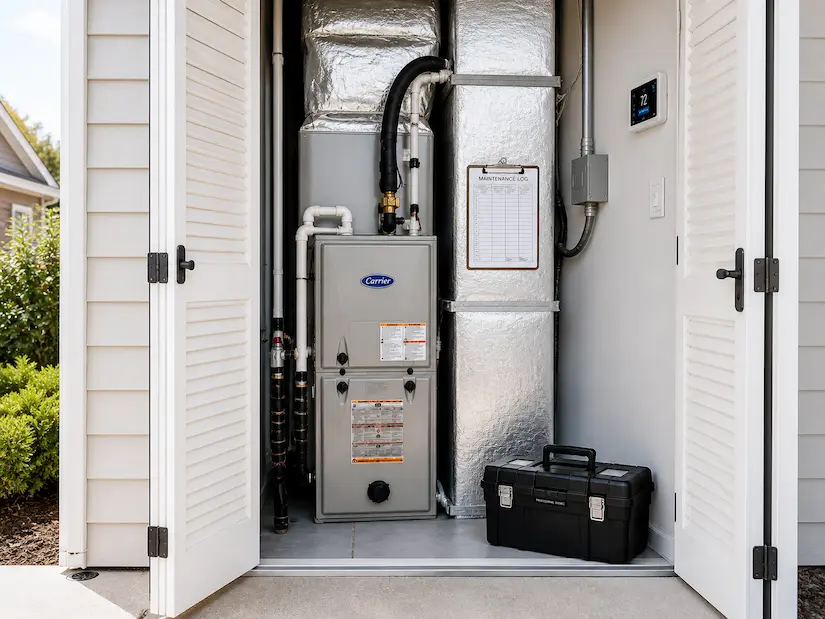
Residential work divides between colony-era houses and everything built later, and the dividing line is what the building will physically allow. In older homes we install zoned ductless equipment, place the outdoor unit with care, and control moisture in the crawlspace before adding ventilation to match any tightening work. Newer houses on the edges of town take conventional ducted systems and behave like any other valley-floor home. Where a property sits inside the overlay, anything visible from the street gets planned before it's ordered rather than after.
Commercial HVAC we service in Aurora
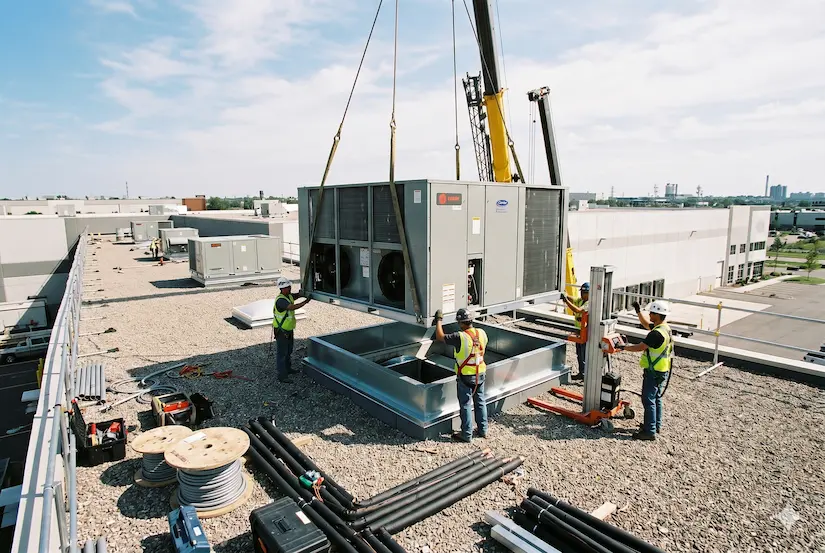
Storefronts and businesses along the 99E strip answer the same questions the houses do. A rooftop packaged unit or a new curb reads from the street as clearly as a condenser in a side yard, so placement gets settled early on any building inside the overlay. Rooftop units, split systems and exhaust fans on retail and light commercial buildings all come under our service, along with filters and belts, economizers and controls. Older buildings on that strip raise the same clearance and access problems the houses do, only with heavier equipment.
What to expect when you call James Heating
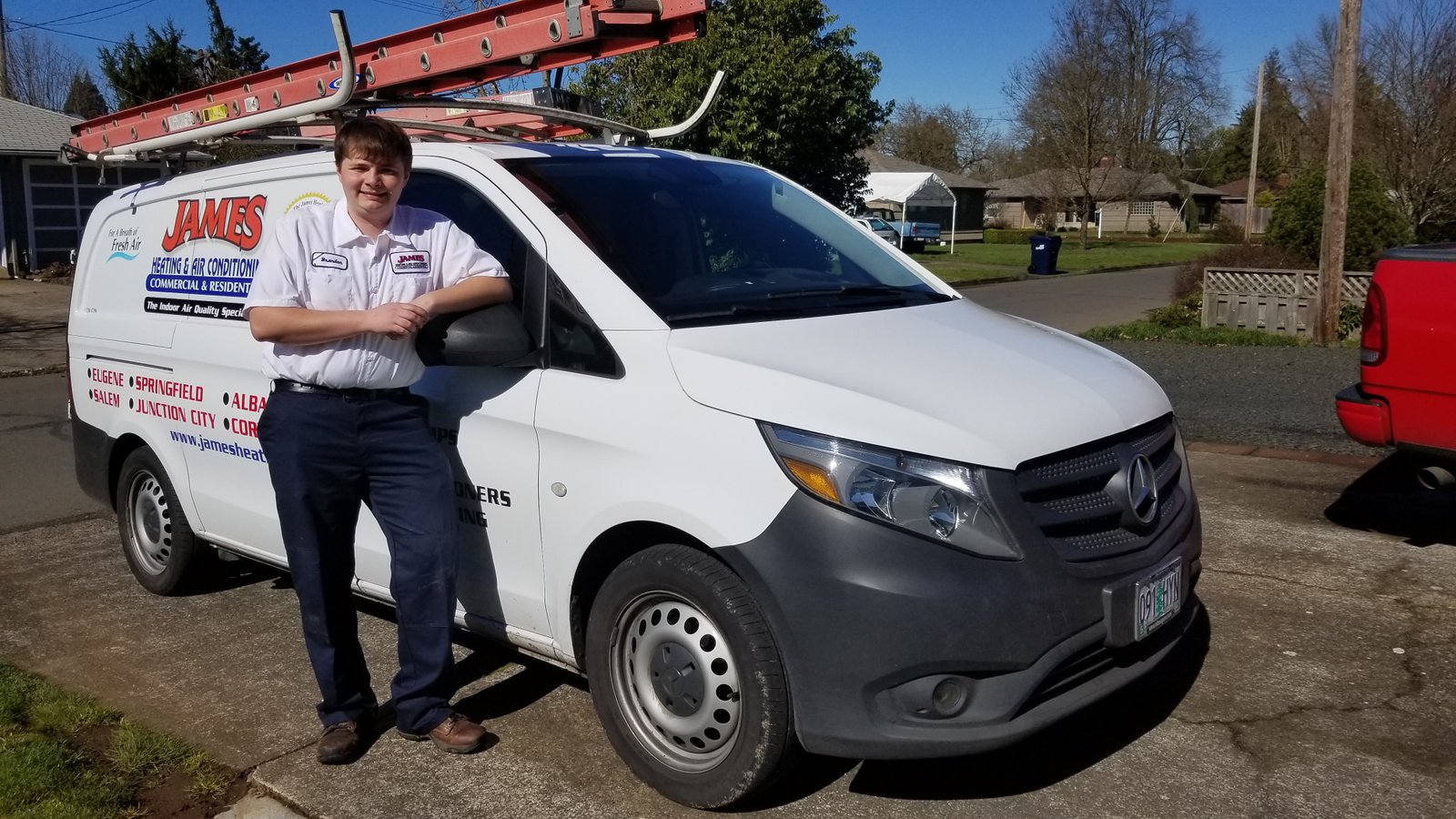
The sequence runs the same way on an 1870s house and a new one.
- Call (503) 581-9982 with the address and a description of the fault.
- Mention anything unusual about the building.
- Our technician inspects the equipment, the crawlspace and the electrical service, and takes readings.
- The findings come back with the options, including what each one won't fix.
- The scope goes nowhere without your approval.
- We finish the work, test it, and carry the permit and inspection to the end.
What we look at when we price HVAC work in Aurora
Cost follows the work. A diagnostic, a repair, maintenance and a full retrofit are separate scopes and price that way. Equipment type and size matter, and a four-zone ductless system involves more labor than a single head. Age and parts availability affect repairs. In a colony-era building those characteristics carry unusual weight. Wall construction, line-set routing, crawlspace access, electrical capacity and the design work behind equipment that has to sit where review will accept it all add to the total. Energy Trust can offset part of a qualifying replacement. The building gets assessed and the options explained before anything is ordered.
Emergency HVAC service we run in Aurora
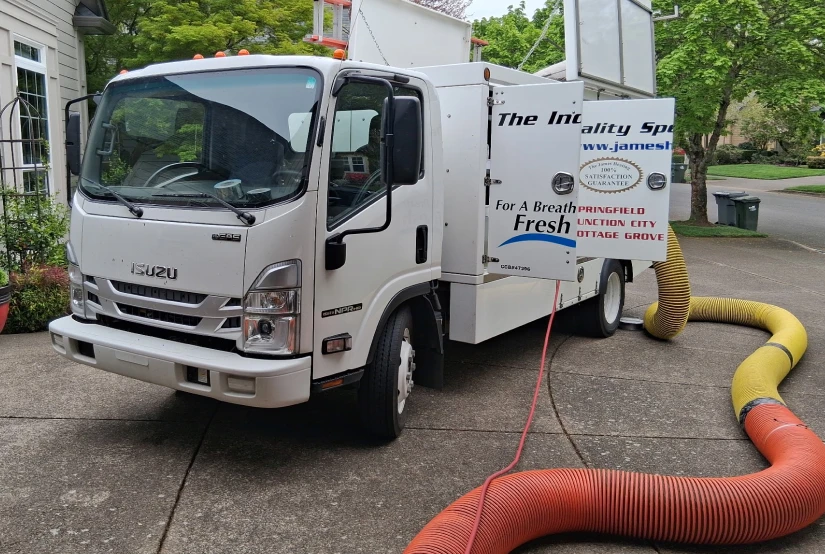
Aurora emergency work comes out of the Salem office, and (503) 581-9982 is answered at any hour of any day. Call for no heat in a freeze, no cooling in a heat wave, a gas smell at the furnace, or water at the air handler. One exception to calling us first: if you smell gas, get everyone out of the house, then ring the gas utility or 911 from outside and reach us once you are clear. Historic review attaches to visible exterior change, so an interior emergency repair is ordinary service work.
Frequently asked questions about HVAC in Aurora
How do I find out whether my property is inside the historic district?
The city's own shortcut is the water bill. If yours arrives blue, the property sits inside the historic district and under the Review Board. Two houses on the same street can land on different sides of that line, so confirm it with City Hall before a line-set route gets drawn. Sorting it early avoids redesigning after material arrives.
How long does a multi-zone ductless retrofit take in an old house?
Longer than in new construction, and the variable is the building rather than the equipment. Every head needs a line set, a condensate path and a penetration through walls that deserve care. Three or four zones run several days. Electrical work adds time, and the Review Board considers exterior placement before the schedule gets set.
Should I choose an HRV or an ERV?
Both bring in outside air and recover heat from the air leaving. The difference is moisture: an ERV also transfers humidity, which helps in a house that runs damp, while an HRV doesn't. In a tightened older building with a crawlspace problem, we deal with the crawlspace first, and the choice then follows how the house behaves.
Can a 19th-century house take a heat pump at all?
Yes, and the age of the building is rarely the obstacle. Electrical capacity and envelope condition are. A single-zone unit may run on 115V or 240V depending on model and capacity, so the panel decides part of it and a workable outdoor location decides the rest. Insulation done in ways that respect original fabric pays back well.
Can equipment go in an Aurora attic or cellar?
Sometimes, and headroom decides it. An air handler needs working clearance for filter changes, coil access and a condensate line with continuous fall, and many colony-era attics don't have it. Cellars can work when they're dry and reachable. If neither space is usable, we mount the heads on the wall and set the outdoor unit at grade, which avoids the problem altogether.
Does a heat pump water heater work in an old basement?
Often, though not in a small closet. A heat pump water heater pulls heat from the surrounding air, so it wants a reasonable volume of space, a condensate path, and an ambient temperature that stays above the manufacturer's minimum. It also cools and dries the room it sits in, which can help a damp cellar and can be a nuisance beside a finished room. We measure the space before recommending one.
What customers say
"Your salesman, installers, technicians, and office ladies were all professional, courteous and helpful. We have nothing but admiration for your company and will recommend you to everyone." - The Farsson Family
"When I think of 'hassle Free' service, James Heating & AC is first on my list." - P. Rollins
About James Heating and Air Conditioning
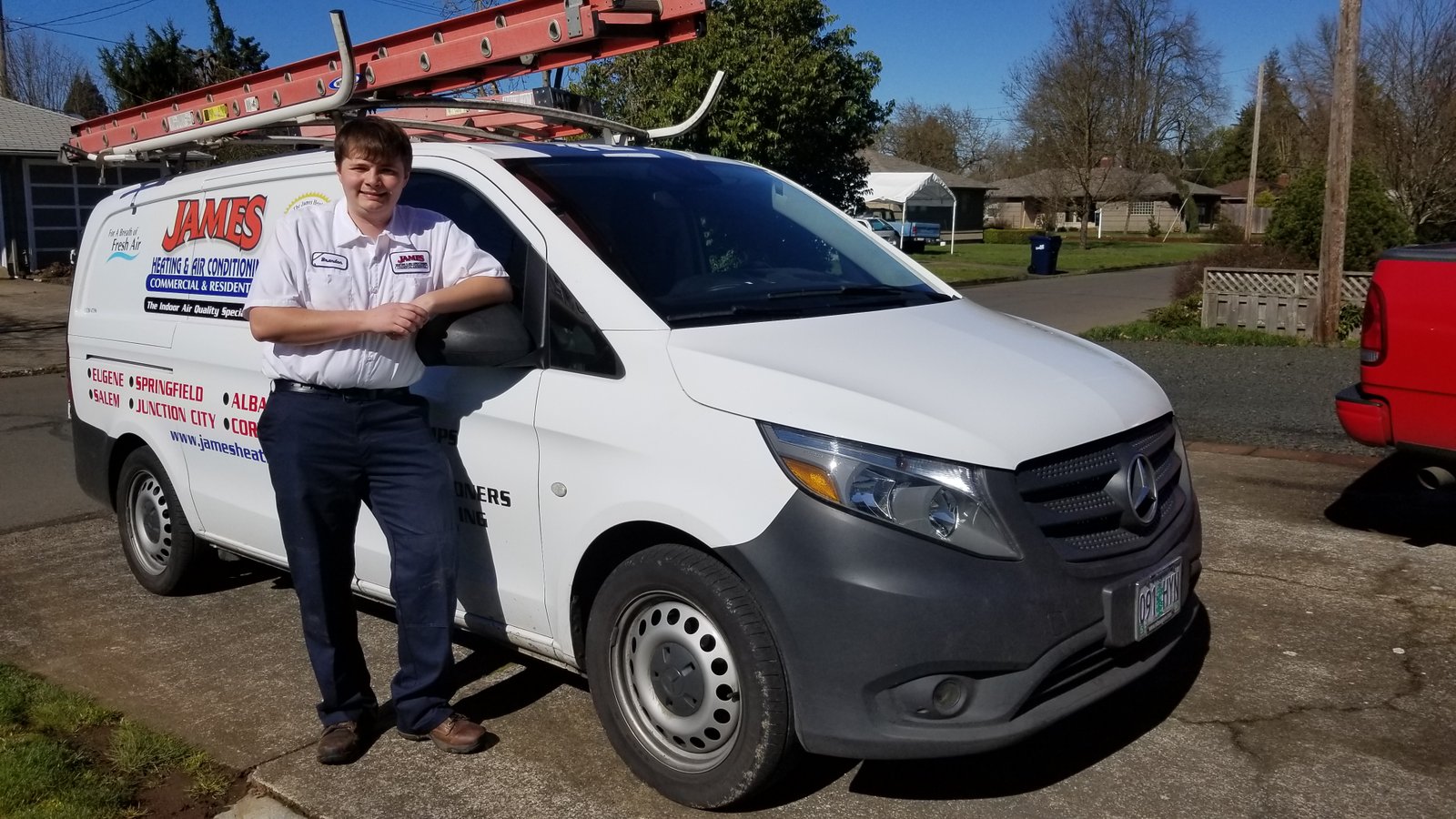
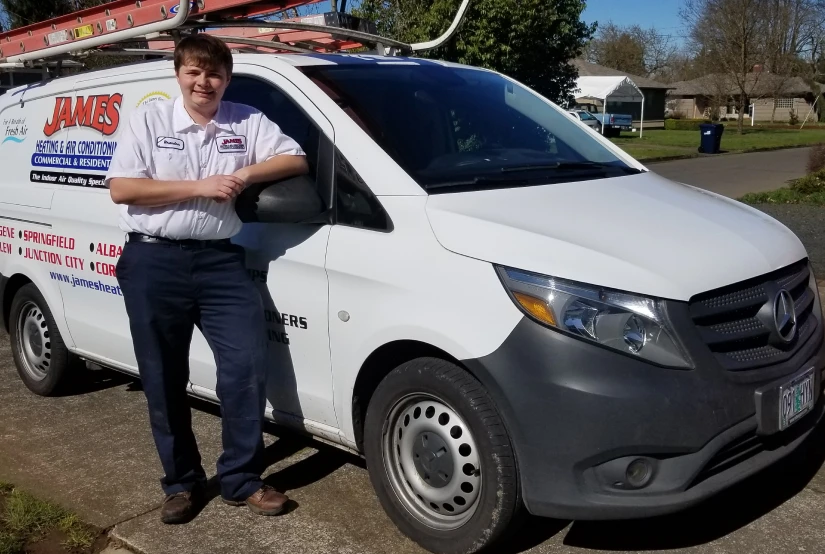
James Heating and Air Conditioning was founded by the James family in 1983 and operates on Oregon CCB license 47396. We run the Eugene office at 115 N. Lawrence St, Eugene, OR 97401, phone (541) 461-2101 for Lane County. We run the Salem office at 1935 Davcor St SE, Salem, OR 97302, phone (503) 581-9982 for Aurora and north Marion County. We install and service heating, cooling, heat pumps and ductless systems, and we handle diagnostics, maintenance, duct cleaning, ventilation and water heaters, residential and commercial.
Our service locations
Aurora is covered on the same run as the towns around it.
Explore our HVAC services
We provide all of these to Aurora homes and businesses.
Gallery
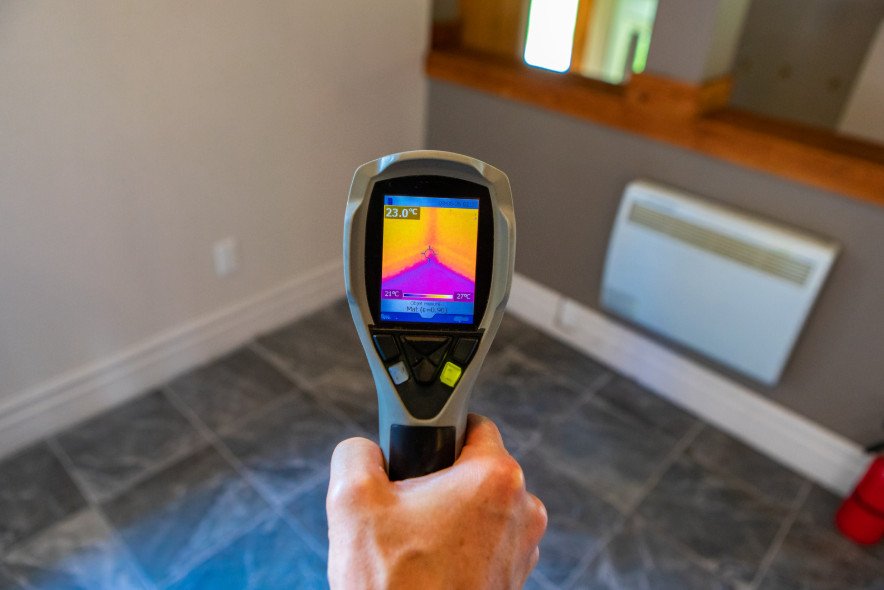
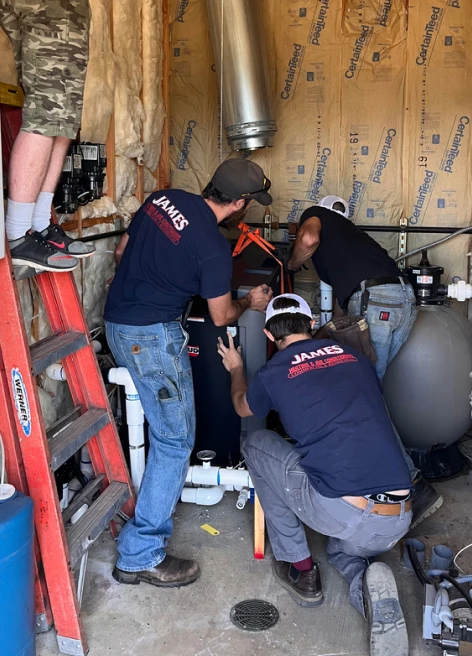
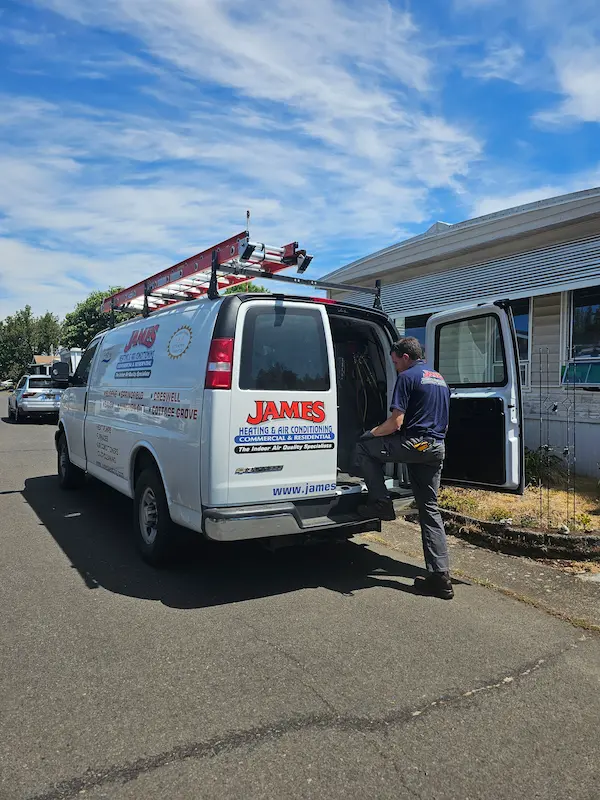
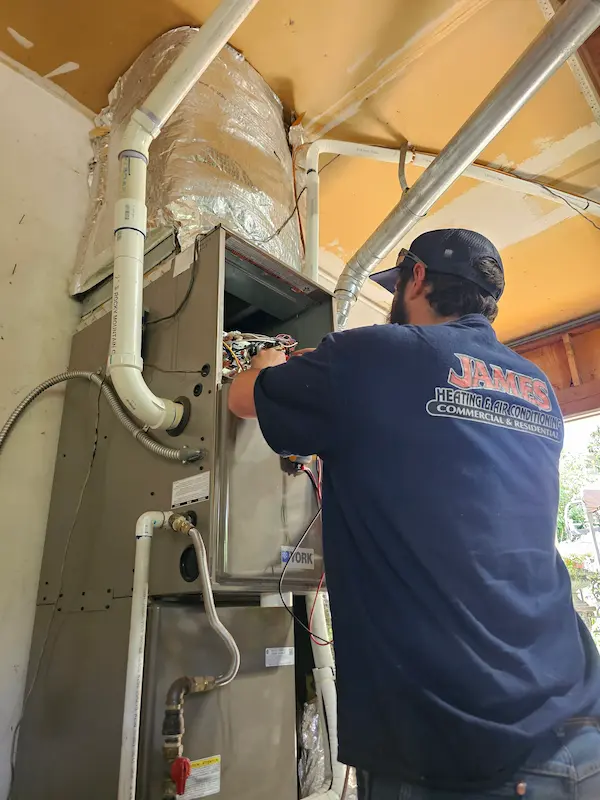
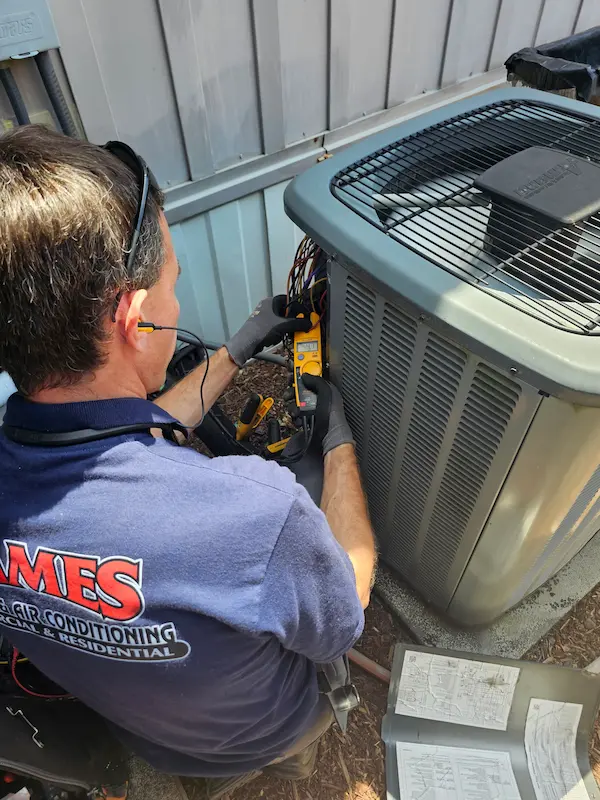
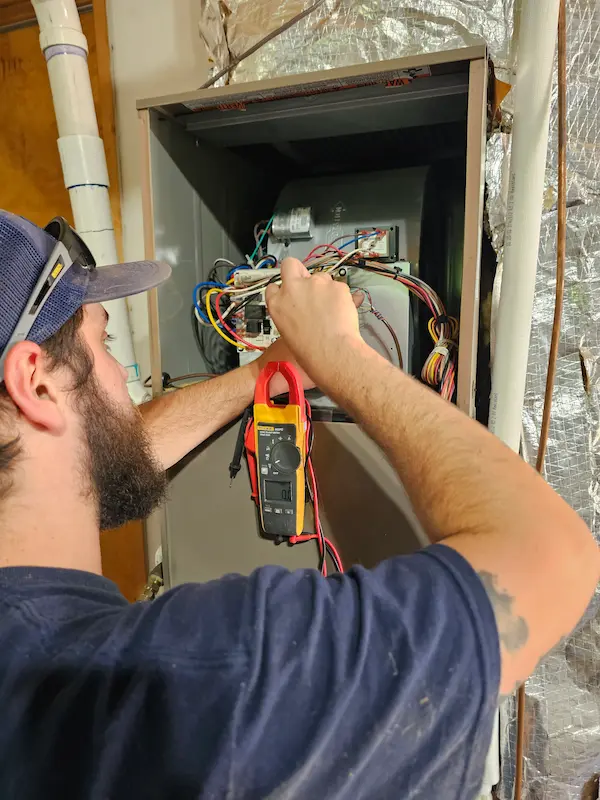
See James Heating and Air Conditioning at work. Explore our gallery of residential and commercial HVAC installations and repair services.

Book HVAC service in Aurora at (503) 581-9982
Call the Salem office at (503) 581-9982 to book a repair, a maintenance visit or a retrofit quote in Aurora. Emergency calls get a live answer whatever the hour. Tell us the address and whether the property sits inside the historic district.
Last updated: September 2026